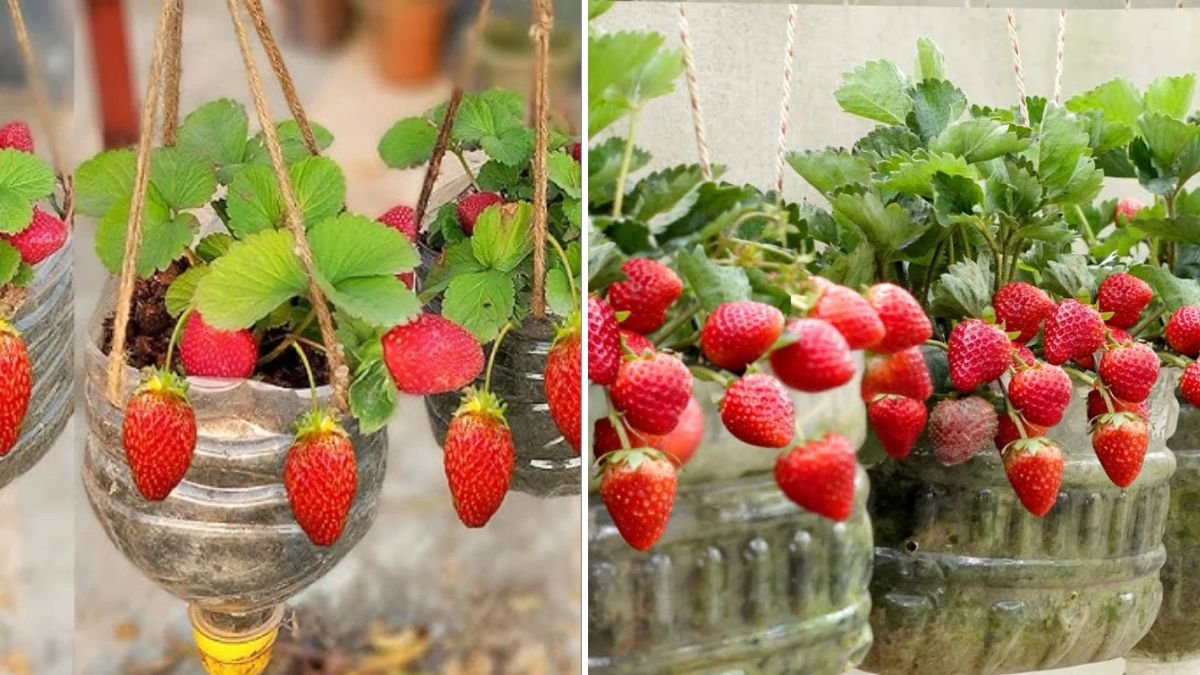
Strawberries are one of the most delicious fruits to grow at home. Even if you lack garden space, vertical systems can produce abundant harvests. Using plastic bottles, you can create a multi-level hanging garden. This approach saves space, reduces soil-borne disease, and allows easy maintenance. Strawberries love well-drained soil and consistent watering, which plastic bottles provide. Creative vertical gardening enhances aesthetics while being functional. Beginners can follow simple steps to build this structure. The 3-story design maximizes yield per square foot. Using recycled bottles is eco-friendly. This method combines productivity, sustainability, and beauty effortlessly.
1. Choosing the Right Strawberries
Select everbearing or day-neutral strawberry varieties for continuous production. June-bearing types can also work if managed carefully. Choose disease-resistant seedlings or runners. Healthy plants grow faster and produce more fruit. Avoid stressed or weak plants. Local climate adaptation improves survival rates. Evergreens thrive well in containers. Strong, vigorous plants adapt better to vertical systems. Selecting the right variety ensures maximum yield. Proper choice simplifies ongoing maintenance.
2. Preparing Plastic Bottles
Use 1.5 to 2-liter bottles for each plant. Clean bottles thoroughly to remove residues. Cut holes on the side for planting. Ensure drainage holes at the bottom. Smooth edges to prevent root damage. Label bottles for easy identification. Arrange bottles for proper stacking. Recycled bottles reduce environmental waste. Proper preparation ensures healthy root growth. Correctly cut bottles support sustainable vertical gardening.
3. Designing a 3-Story Hanging System
Stack bottles in three vertical levels using ropes or metal frames. Ensure each bottle is securely attached. Space bottles to avoid overcrowding and allow airflow. Maintain easy access for watering and harvesting. Consider balcony or wall placement. Balance is important to prevent toppling. Create a visually appealing arrangement. Level placement ensures even sunlight distribution. Strong support guarantees safety and productivity. Multi-level design maximizes yield per small area.

4. Preparing Soil Mix for Strawberries
Use well-draining soil for container growth. Mix compost, coco peat, and vermicompost. Avoid compacted or clay-heavy soil. Organic matter retains moisture and nutrients. Fertile soil promotes flowering and fruiting. Balanced pH ensures nutrient uptake. Fresh soil reduces disease risk. Soil depth should support root expansion. Quality soil improves fruit size and sweetness. Proper soil preparation is essential for success.
5. Planting Strawberries in Bottles
Fill each bottle with soil mix. Insert runners or small seedlings in side holes. Firm soil gently around roots. Water lightly after planting. Position plants to receive morning sunlight. Avoid overcrowding for better airflow. Use gloves to prevent damage. Proper planting reduces transplant shock. Healthy planting ensures rapid establishment. Correct positioning supports strong growth.
6. Watering Techniques
Strawberries need consistent moisture. Plastic bottles dry quickly in sunny areas. Water bottles from the top and allow drainage. Avoid waterlogging to prevent root rot. Mulching retains moisture. Early morning watering is ideal. Monitor daily in hot climates. Balanced watering promotes sweet, juicy fruits. Proper irrigation encourages healthy flowering. Efficient watering reduces waste.
7. Fertilization Schedule
Feed plants with organic liquid fertilizer every two weeks. Avoid excessive nitrogen, which encourages leaves over fruit. Phosphorus boosts flowering, potassium enhances fruit quality. Balanced nutrition supports continuous growth. Compost tea can supplement nutrients. Observe plant response for adjustments. Proper fertilization increases yield and flavor. Slow-release fertilizers reduce maintenance. Correct feeding ensures healthy, vigorous plants. Fertilization timing impacts production.

8. Sunlight Requirements
Strawberries need 6–8 hours of sunlight. Morning sun is preferable. Avoid scorching afternoon heat. Rotate or adjust bottle placement if needed. Insufficient sunlight reduces flowering. Proper sunlight improves fruit sweetness. Vertical systems allow better light distribution. Sunlight directly affects growth and taste. Observing light exposure maximizes output. Balance is key for quality harvests.
9. Supporting Growth and Preventing Damage
Secure bottles to prevent tipping. Tie vines gently to avoid breakage. Ensure airflow between bottles to reduce fungal infection. Clean support structures regularly. Adjust supports as plants grow. Strong support promotes uniform fruit development. Prevent contact with walls or other surfaces. Observing plant health prevents accidental damage. Support management ensures optimal production. Proper setup improves plant longevity.
10. Pruning and Maintenance
Remove dead leaves and runners to focus energy on fruit. Prune damaged or diseased parts. Regular maintenance prevents overcrowding. Encourage airflow to reduce pests. Trimming improves sunlight penetration. Healthy plants flower and fruit better. Monitor plant growth weekly. Pruning increases quality and yield. Proper care ensures maximum harvests. Systematic maintenance is essential.
11. Pollination Tips
Strawberries are self-pollinating but benefit from bees. Hand pollination improves fruit set indoors. Gently transfer pollen from one flower to another. Encourage airflow for natural pollination. Well-pollinated flowers yield larger fruits. Monitor flowering stage for maximum effect. Pollination directly affects harvest quality. Simple manual techniques improve productivity. Healthy pollination ensures uniformity. Proper timing enhances results.

12. Common Pests and Organic Control
Aphids, spider mites, and slugs are common. Inspect leaves regularly. Use neem oil or organic sprays. Remove infested leaves promptly. Avoid overcrowding. Healthy plants resist pests naturally. Early detection prevents major damage. Clean bottle surfaces and surrounding areas. Regular monitoring ensures minimal pest impact. Organic control protects fruit quality.
13. Disease Prevention
Good airflow reduces fungal infections. Avoid wetting leaves excessively. Use fresh soil annually. Remove infected plants immediately. Maintain cleanliness in hanging structures. Disease prevention is easier than treatment. Healthy plants resist pathogens. Balanced watering reduces root rot. Monitor weekly for early signs. Proper care ensures long-term production.
14. Harvesting Strawberries
Pick fruits when fully red and ripe. Avoid overripe or underdeveloped fruits. Harvest every 2–3 days for continuous production. Use gentle handling to avoid bruising. Morning harvest preserves freshness. Frequent picking encourages new flowers. Timely harvest improves yield. Monitor fruit size and quality. Proper harvesting techniques increase longevity. Regular care maximizes productivity.
15. Extending Production Season
Evergreen varieties allow long harvests. Protect plants during extreme temperatures. Shade nets or indoor relocation may be needed. Vertical mobility enables seasonal adaptation. Stagger planting for continuous supply. Container strawberries respond well to controlled conditions. Year-round harvest is possible with planning. Proper care extends fruiting period. Environment management boosts results. Long-term production is achievable.

16. Cost and Space Efficiency
Recycled bottles reduce material costs. Multi-level system maximizes output in limited space. Low maintenance reduces labor. High yield per square foot. Fresh strawberries at home save grocery costs. Container gardening requires minimal land. Space-efficient design suits urban homes. Budget-friendly yet productive. Vertical systems allow continuous harvest. Investment pays off quickly.
17. Sustainability Benefits
Reusing plastic reduces waste. Organic practices protect the environment. Efficient water use conserves resources. Vertical gardens reduce soil erosion. Eco-friendly urban gardening improves city aesthetics. Sustainability encourages responsible food production. Small urban farms inspire community participation. Minimal resources provide maximum output. Growing at home reduces food miles. Sustainable techniques yield healthy fruit.
18. Flavor and Quality Advantages
Homegrown strawberries are sweeter and juicier. Control over soil and nutrients enhances flavor. Freshly picked fruits retain maximum nutrients. Chemical-free growth ensures health benefits. Balanced care improves texture and aroma. Vertical systems produce clean, unblemished fruit. Stress-free plants enhance taste. Regular harvesting maintains peak quality. Home-grown flavor outshines store-bought. Quality and nutrition are key benefits.
19. Common Mistakes to Avoid
Overcrowding limits growth. Inconsistent watering reduces sweetness. Neglecting pruning affects yield. Improper sunlight exposure slows flowering. Ignoring pests damages crops. Using compacted soil hinders roots. Learning from mistakes improves harvests. Awareness prevents failure. Experience ensures better outcomes. Small corrections make a big difference.

20. Conclusion: Your Hanging Strawberry Haven
Plastic bottles allow creative, space-saving strawberry gardens. Vertical systems produce abundant, high-quality fruit. With proper watering, fertilization, and sunlight, yields are maximized. Pest and disease management ensures healthy plants. Multi-story design makes harvesting easy. Even beginners can enjoy success. Cost-effective, sustainable, and productive. Fresh strawberries at home improve health and lifestyle. Start your vertical garden today. Enjoy sweet, juicy harvests year-round.
Table: 3-Story Strawberry Hanging Garden Quick Guide
| Factor | Requirement | Benefit |
|---|---|---|
| Container | 1.5–2L plastic bottle | Root space & drainage |
| Soil | Compost + coco peat | Fertile & well-draining |
| Sunlight | 6–8 hours | Flowering & fruiting |
| Water | Consistent, moderate | Sweet, juicy fruit |
| Support | Ropes/frames | Vertical growth, safe & accessible |