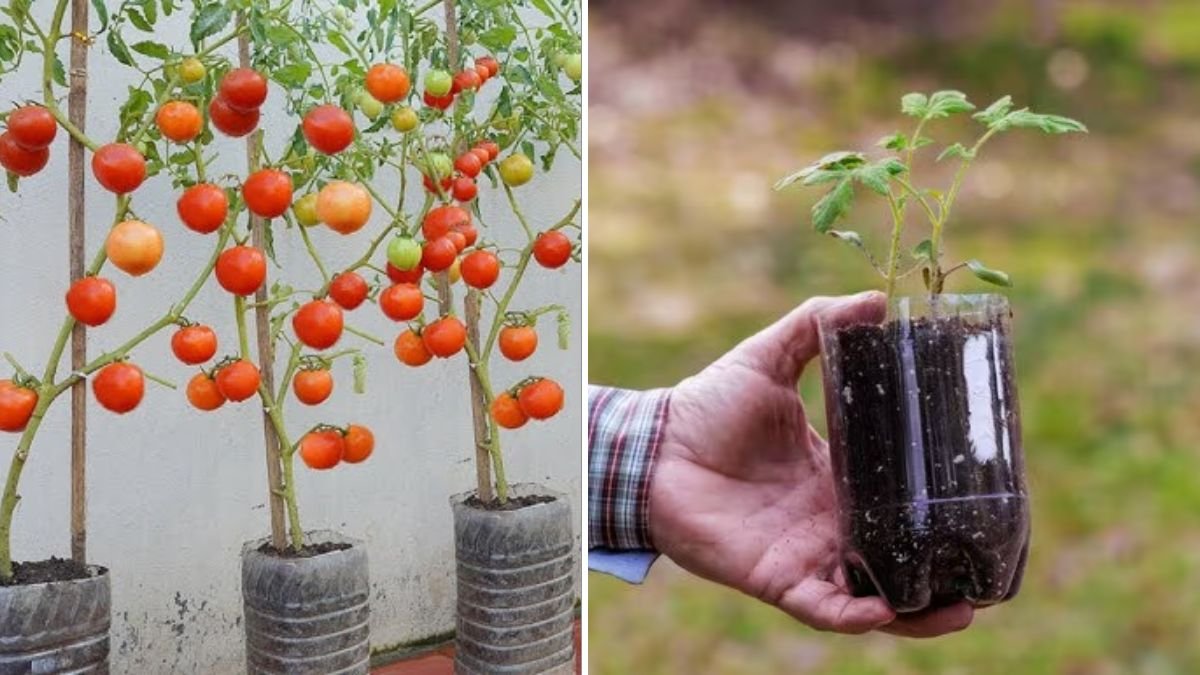
Growing tomatoes in plastic bottles is a smart and eco-friendly gardening method. It allows anyone to grow fresh vegetables at home. This technique is ideal for balconies and small spaces. Plastic bottles are easily available and reusable. Tomatoes adapt well to container environments. Proper care leads to healthy and productive plants. This method reduces gardening costs. Homegrown tomatoes are fresher and chemical free.
Why Plastic Bottles Are Perfect for Tomato Growing
Plastic bottles retain warmth around roots. Warm soil improves tomato growth speed. Bottles allow better control of water and nutrients. Drainage can be customized easily. Pests are easier to manage in containers. Bottles save space and reduce soil wastage. Vertical or horizontal setups are possible. This flexibility makes bottles ideal for tomatoes.
Choosing the Right Plastic Bottles
Large plastic bottles work best. Bottles should be clean and strong. Avoid bottles that stored chemicals. Transparent bottles allow root observation. Dark bottles reduce algae growth. Ensure bottles can be cut easily. Size affects root development. Proper selection improves plant health.
Preparing Bottles for Planting
Cut bottles to create planting openings. Make drainage holes at the bottom. Smooth sharp edges carefully. Wash bottles thoroughly. Add small stones for drainage. Proper preparation prevents waterlogging. Prepared bottles create a safe growing space. This step is essential for success.

Best Soil Mix for Bottle Tomatoes
Use loose and fertile soil. Mix garden soil with compost. Add coco peat for aeration. Avoid heavy clay soil. Soil must drain well. Organic matter supports steady growth. Healthy soil produces strong roots. Soil quality determines yield.
Choosing Tomato Varieties for Bottles
Cherry tomatoes are ideal for bottles. Determinate varieties suit small containers. Disease-resistant varieties reduce problems. Local varieties adapt better to climate. Avoid large sprawling types. Healthy varieties grow compactly. Variety choice impacts productivity.
Planting Tomatoes in Plastic Bottles
Plant seedlings slightly deep. Bury part of the stem. This encourages extra root growth. Firm soil gently around roots. Water immediately after planting. Avoid overcrowding bottles. Proper planting ensures strong plants.
Sunlight Requirements
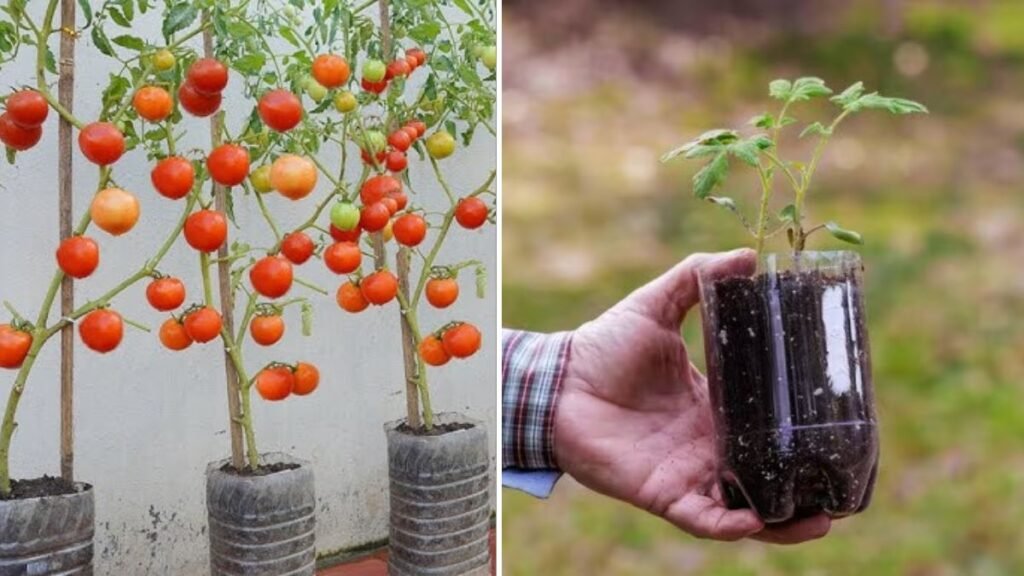
Tomatoes need full sunlight. Provide six to eight hours daily. Place bottles near windows or balconies. Rotate bottles regularly. Morning sunlight is ideal. Insufficient light reduces fruiting. Light directly affects yield.

Watering Tomatoes Correctly
Water regularly but moderately. Keep soil moist not soggy. Morning watering is best. Bottles dry faster than ground soil. Check moisture daily. Avoid overwatering. Proper watering prevents root rot.
Fertilizing for Healthy Growth
Tomatoes are heavy feeders. Use compost during planting. Feed every ten to fifteen days. Avoid excess nitrogen after flowering. Potassium improves fruit size. Organic fertilizers are safer. Balanced feeding boosts yield.
Mulching in Plastic Bottles
Mulch helps retain moisture. Dry leaves or straw work well. Mulching reduces watering frequency. It keeps soil temperature stable. Prevents weed growth. Protects surface roots. Mulching improves plant health.
Supporting Tomato Plants
Use small stakes or strings. Support prevents plant breakage. Keeps fruits off soil. Improves airflow. Makes harvesting easier. Strong support allows more fruit load. Support is necessary even in bottles.

Pollination for Better Fruit Set
Tomatoes self-pollinate. Gentle shaking helps. Bees improve pollination naturally. Morning pollination is most effective. Proper pollination reduces flower drop. More flowers turn into fruits.
Managing Pests Naturally
Inspect plants regularly. Remove pests by hand. Neem oil controls insects. Keep surroundings clean. Healthy plants resist pests. Avoid chemical pesticides. Early action prevents damage.
Preventing Diseases
Avoid wetting leaves. Ensure airflow. Remove infected leaves quickly. Use clean tools. Healthy soil reduces disease risk. Prevention saves harvest. Clean practices are essential.
Harvesting Tomatoes from Bottles
Harvest tomatoes when fully colored. Pick gently to avoid damage. Frequent harvesting encourages more fruit. Morning harvest improves taste. Avoid overripe fruits. Proper timing increases yield.

Extending the Harvest Season
Continue light feeding. Maintain watering routine. Remove old leaves. Protect from extreme heat. Consistent care prolongs production. Bottle plants can fruit longer.
Common Mistakes to Avoid
Using small bottles. Poor drainage. Overwatering. Insufficient sunlight. Excess fertilizer. Ignoring pests. Avoiding support. Avoid these for success.
Plastic Bottle Tomato Growing Summary Table
| Factor | Best Practice | Benefit |
|---|---|---|
| Container | Large plastic bottle | Strong roots |
| Soil | Loose and organic | Healthy plants |
| Water | Regular and balanced | Juicy tomatoes |
| Sunlight | Full sun | Heavy fruiting |
Conclusion
Growing tomatoes in plastic bottles is simple and effective. It saves space and money. Proper soil and sunlight ensure success. Balanced watering and feeding improve yield. Pest control keeps plants healthy. Anyone can grow tomatoes at home. This method provides fresh and healthy vegetables. Start growing today.
