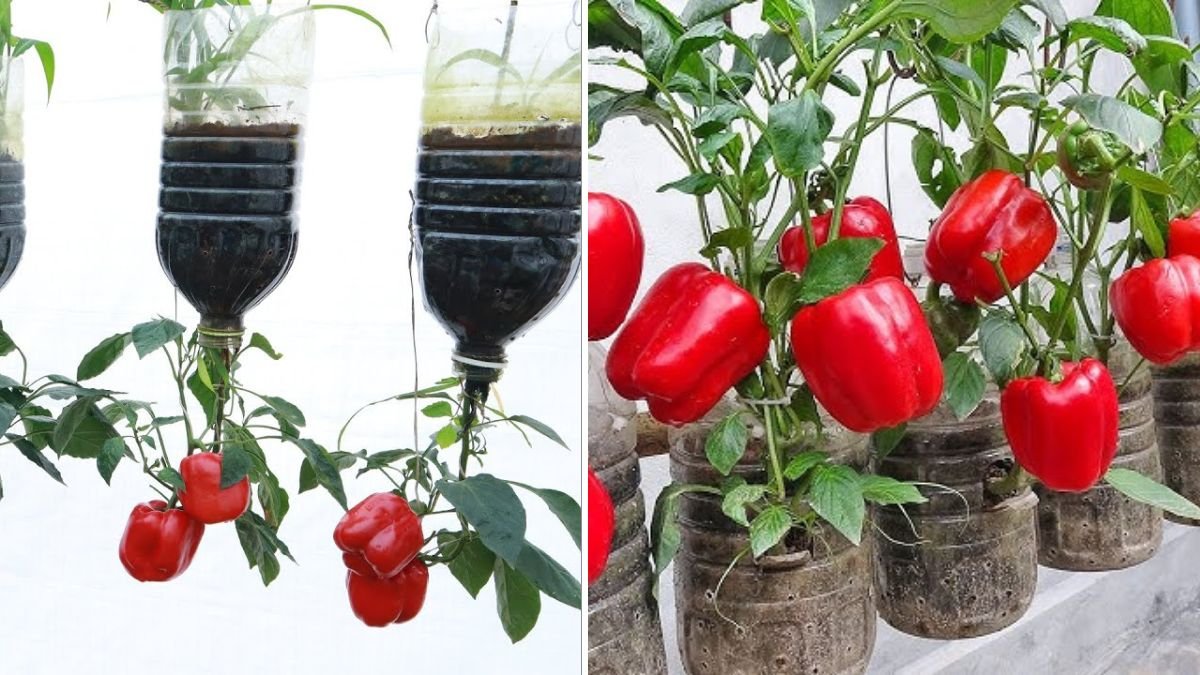
1. Introduction to Bottle Gardening
Plastic bottle gardening is an innovative way to grow vegetables in small spaces. Bell peppers adapt extremely well to containers. This method uses recycled materials efficiently. Bottles allow controlled soil and watering conditions. Home gardeners can grow peppers on balconies, terraces, or walls. The method is cost-effective and eco-friendly. Proper care results in surprisingly large harvests. Even beginners can succeed easily. This guide explains every step clearly. Bottle gardening transforms waste into food.
2. Why Bell Peppers Thrive in Bottles
Bell peppers have compact root systems. They do not require deep soil like other crops. Bottles retain moisture efficiently. Controlled space reduces weed growth. Vertical arrangement saves space. Easy mobility allows sunlight adjustment. Bottles warm quickly, speeding growth. Less soil means easier nutrient control. Healthy roots produce abundant fruits. Bottles maximize productivity.
3. Choosing the Right Pepper Varieties
Compact bell pepper varieties work best. Sweet varieties adapt easily to containers. Disease-resistant seeds improve success rate. Early-maturing types yield faster. Avoid oversized varieties for bottles. Seed quality affects fruit size. Local varieties adapt better to climate. Colorful peppers grow well in containers. Read seed information carefully. Correct variety selection ensures massive harvests.
4. Selecting and Preparing Plastic Bottles
Use large plastic bottles for best results. Cut bottles horizontally or vertically. Make drainage holes at the bottom. Clean bottles thoroughly before use. Transparent bottles should be covered to block light. Hanging or standing arrangements both work. Secure bottles properly to prevent tipping. Bottle size affects root growth. Recycled bottles reduce cost. Preparation is crucial.

5. Soil Mix for Bottle Gardening
Lightweight soil works best. Mix garden soil, compost, and cocopeat. Vermicompost improves nutrient availability. Avoid heavy clay soil. Good drainage prevents root diseases. Soil should retain moisture evenly. Organic matter supports healthy growth. Proper soil boosts flowering. Balanced mix increases yield. Soil quality determines success.
6. Planting Pepper Seeds or Seedlings
Seedlings are easier for beginners. Plant one seedling per bottle. Handle roots gently. Water immediately after planting. Keep seedlings shaded initially. Avoid overcrowding. Proper planting reduces stress. Healthy roots establish quickly. Correct depth prevents stem rot. Planting technique matters.
7. Sunlight Requirements
Bell peppers need at least six hours of sunlight. Morning sunlight is ideal. Rotate bottles for uniform exposure. Avoid extreme afternoon heat. Insufficient light reduces fruiting. Bright light improves color. Consistent sunlight boosts flowering. Balcony orientation matters. Adjust placement regularly. Light directly affects yield.
8. Watering in Plastic Bottles
Bottles dry faster than ground soil. Water frequently but moderately. Avoid waterlogging. Drainage holes are essential. Morning watering is preferred. Consistent moisture prevents flower drop. Mulching inside bottles helps retain moisture. Overwatering causes root rot. Monitor soil daily. Balanced watering improves harvest.

9. Fertilization Strategy
Bell peppers respond well to organic fertilizers. Compost tea every two weeks works well. Avoid excess nitrogen. Potassium improves fruit size and sweetness. Banana peel water is beneficial. Liquid fertilizers suit bottle gardening. Regular feeding maintains growth. Nutrients influence color and taste. Balanced nutrition increases yield. Fertilization is key.
10. Supporting Pepper Plants
Pepper plants may need support as fruits grow. Use small sticks or strings. Prevent stems from bending. Secure plants gently. Upright growth improves airflow. Support prevents breakage. Proper support increases fruit size. Bottles must remain stable. Vertical support improves appearance. Strong plants yield more.
11. Pruning and Maintenance
Remove yellow or damaged leaves. Light pruning improves airflow. Avoid excessive pruning. Focus energy on fruit production. Regular maintenance keeps plants healthy. Clean surroundings reduce pests. Pruning improves light penetration. Healthy leaves support photosynthesis. Balanced care enhances yield. Maintenance ensures longevity.
12. Pollination in Bottle Gardens
Bell peppers are self-pollinating. Gentle shaking helps pollination. Morning hours are best. Hand pollination improves fruit set. Balcony conditions may reduce natural pollinators. Pollinated flowers develop faster. Poor pollination reduces yield. Simple techniques improve success. Pollination ensures harvest. Small effort yields big results.

13. Pest Control Methods
Common pests include aphids and mites. Neem oil spray works effectively. Inspect leaves regularly. Remove infected parts quickly. Healthy plants resist pests better. Avoid chemical pesticides. Clean bottles prevent infestations. Early control saves plants. Organic methods are safest. Pest management is essential.
14. Disease Prevention
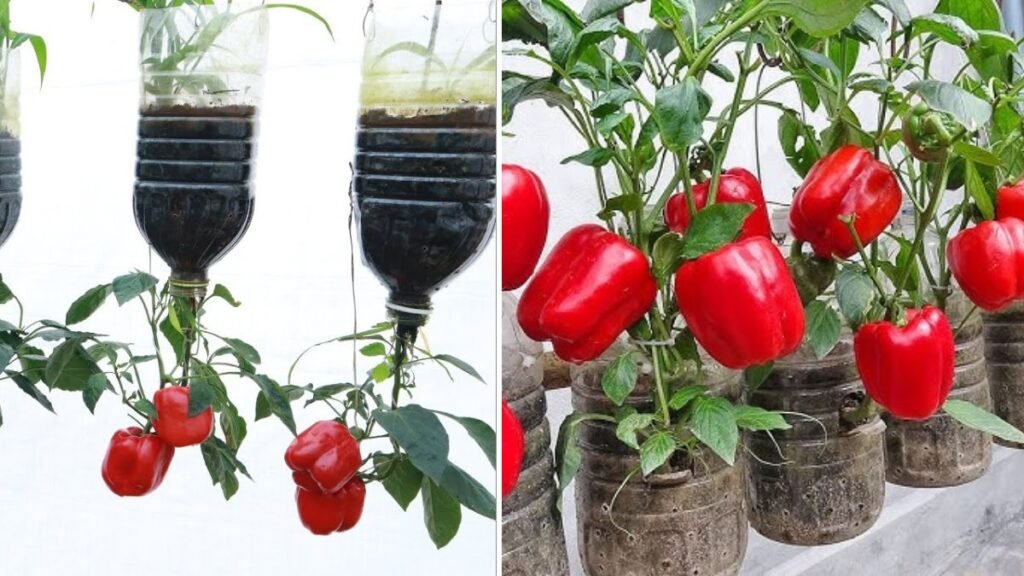
Ensure proper airflow. Avoid wet leaves at night. Use clean soil and tools. Remove infected plants promptly. Good drainage prevents root diseases. Disease-free plants produce more fruits. Preventive care reduces losses. Regular inspection helps early detection. Healthy environment ensures success. Disease control protects yield.
15. Harvesting Bell Peppers
Harvest peppers when firm and glossy. Green peppers can be harvested early. Colored peppers require more time. Use scissors to cut fruits. Avoid pulling fruits. Regular harvesting encourages more production. Morning harvest preserves freshness. Timely harvesting improves plant health. Gentle handling prevents damage. Harvesting frequency increases yield.
16. Storage and Use
Fresh peppers store well in cool places. Refrigerate after harvesting. Use within a week for best flavor. Excess peppers can be frozen. Proper storage maintains nutrients. Home-grown peppers taste superior. Avoid washing before storage. Handle carefully to prevent bruising. Storage completes the cycle. Freshness is key.

17. Common Mistakes
Overwatering causes root problems. Poor drainage leads to disease. Insufficient sunlight reduces yield. Crowding plants limits growth. Excess fertilizer harms roots. Ignoring pests reduces harvest. Wrong bottle size restricts roots. Awareness prevents failure. Learn from experience. Improvement comes with practice.
18. Seasonal Tips
Grow peppers during warm seasons. Protect plants from cold winds. Increase watering during hot weather. Reduce feeding during cooler periods. Adjust care as seasons change. Seasonal awareness improves productivity. Proper timing boosts harvest. Climate plays a major role. Adapt methods accordingly. Seasonal care ensures success.
19. Bell Pepper Bottle Growing Table
| Factor | Recommendation |
|---|---|
| Bottle size | Large plastic bottles |
| Soil | Lightweight, compost-rich |
| Sunlight | 6–8 hours daily |
| Watering | Frequent, moderate |
| Fertilizer | Organic liquid |
20. Conclusion
Growing bell peppers in plastic bottles is surprisingly effective. This method saves space and resources. Proper soil, sunlight, and watering ensure success. Bottle gardening is eco-friendly and productive. Beginners can achieve massive harvests. Consistent care leads to continuous yields. Organic methods keep produce healthy. Small spaces become productive gardens. Follow these steps carefully. Enjoy fresh, colorful bell peppers at home.
