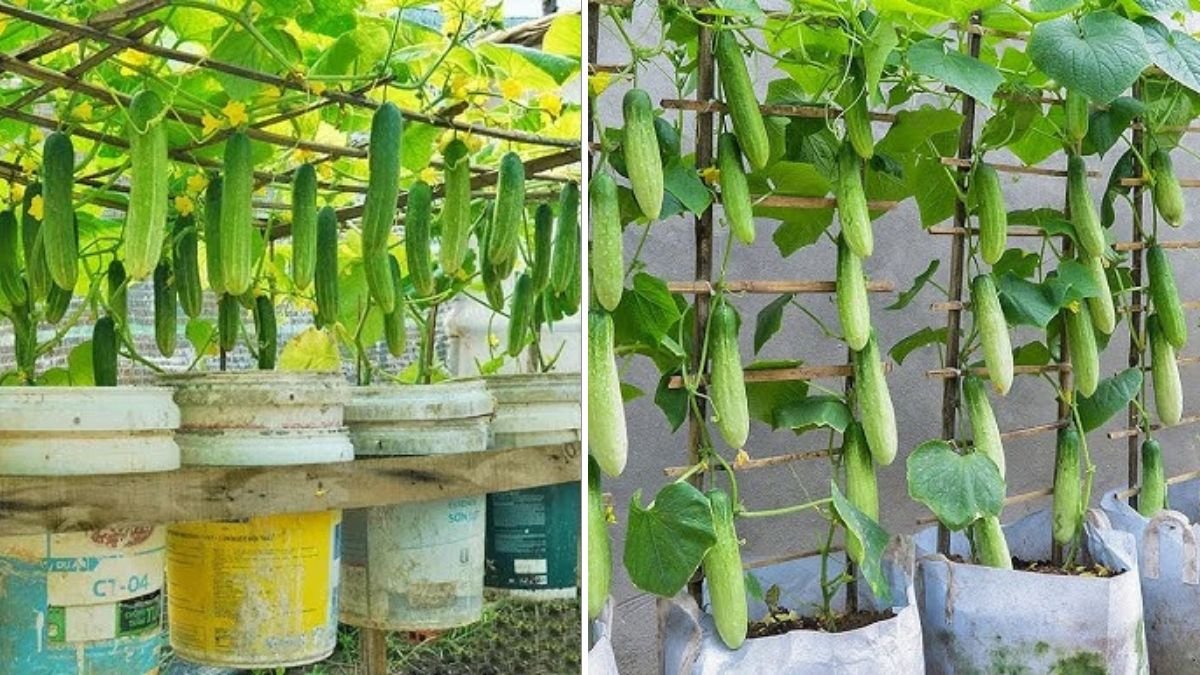
Cucumbers are fast-growing and ideal for container gardening. Using plastic containers and kitchen waste, you can grow them efficiently and sustainably. Kitchen waste such as vegetable scraps, fruit peels, and eggshells can enrich soil naturally. This method saves money, recycles waste, and improves plant health. Container cucumbers are cleaner than garden-grown plants. Even urban gardeners with limited space can achieve high yields. Proper care ensures continuous flowering and fruiting. This approach is beginner-friendly and eco-conscious. It maximizes both space and resources. With the right technique, cucumbers grow healthy and productive year-round.
Benefits of Using Plastic Containers
Plastic containers are lightweight, affordable, and easy to manage. They allow efficient root growth and prevent waterlogging. Containers can be moved to optimize sunlight exposure. Drainage holes prevent rot and fungal disease. Container gardening reduces weed competition and pest problems. Plastic containers are reusable and durable. Urban gardeners can save space using vertical or stacked arrangements. Soil nutrients can be monitored easily. Container gardening allows efficient harvesting. Overall, plastic containers enhance yield and convenience.
Choosing the Right Cucumber Varieties
Compact, bush, or hybrid varieties are ideal for containers. Salad cucumbers and slicing cucumbers perform well. Disease-resistant seeds require less maintenance. Early-maturing varieties provide quicker harvests. Local climate-adapted seeds grow reliably. Avoid sprawling varieties that need large horizontal space. Compact growth habits ensure better nutrient use. Seed quality directly affects fruit size, taste, and yield. Choosing the right variety is essential. Proper selection sets the stage for successful container gardening.

Selecting and Preparing Containers
Choose tubs or containers at least 15–18 inches deep. Wider containers allow multiple plants. Drill sufficient drainage holes at the bottom. Clean containers thoroughly. Use food-grade plastic if possible. Recycled containers are acceptable if cleaned properly. Elevate containers slightly to improve drainage. Light-colored containers prevent overheating of roots. Proper container preparation prevents root crowding. Well-prepared containers enhance productivity.
Creating Nutrient-Rich Soil with Kitchen Waste
Kitchen waste can improve soil fertility naturally. Fruit and vegetable scraps, eggshells, and coffee grounds are ideal. Chop waste finely and compost for a few weeks. Mix composted waste with garden soil, cocopeat, and vermicompost. Avoid meat, dairy, or oily scraps. Well-composted kitchen waste prevents odors and attracts beneficial microbes. Nutrient-rich soil promotes flowering and fruiting. Regular addition of compost enhances soil health. Kitchen waste supports sustainable gardening. Healthy soil ensures high cucumber yields.
Planting Cucumbers in Containers
Plant cucumber seeds or seedlings in loose, enriched soil. Cover lightly with soil and water gently. Keep seedlings in partial shade initially. Gradually expose to full sunlight. Space plants to allow airflow. Proper planting reduces transplant shock. Roots should be spread evenly in the container. Healthy starts lead to continuous flowering. Proper planting ensures early harvest. Good planting technique supports strong growth.

Sunlight Requirements
Cucumbers need six to eight hours of sunlight daily. Morning sunlight is particularly beneficial. Lack of sunlight reduces flower production. Place containers in open areas. Rotate containers for even exposure. Avoid shaded walls or corners. Adequate sunlight ensures larger, sweeter fruits. Sunlight strengthens leaves and stems. Consistent exposure guarantees continuous production. Proper sunlight management maximizes yield.
Watering Techniques
Cucumbers require regular, deep watering. Containers dry out faster than garden soil. Morning watering is ideal. Ensure excess water drains to prevent root rot. Mulch retains soil moisture and regulates temperature. Avoid wetting leaves excessively to prevent fungal diseases. During hot weather, watering may be needed daily. Balanced watering ensures crisp, healthy fruits. Consistent hydration improves yield. Water management is critical for container-grown cucumbers.
Fertilization Using Kitchen Waste
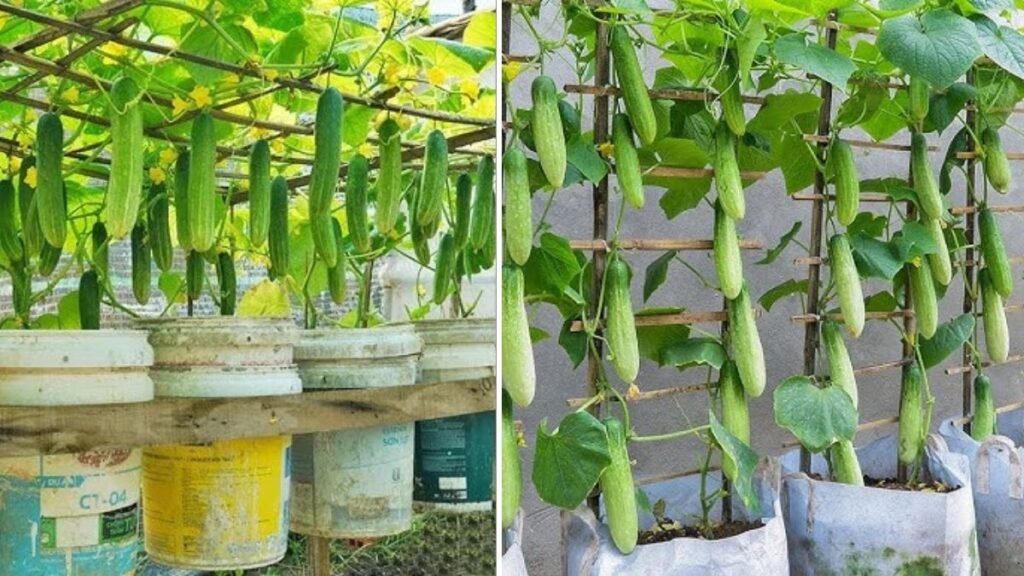
Composted kitchen waste provides nutrients. Banana peels supply potassium. Eggshells provide calcium for strong stems. Coffee grounds improve nitrogen content. Organic compost tea every 10–14 days enhances growth. Avoid chemical fertilizers to maintain soil microbe health. Balanced nutrients encourage flowering and fruiting. Regular feeding ensures larger fruits. Nutrient management increases yield and quality. Eco-friendly fertilization sustains soil health.

Providing Support for Vertical Growth
Cucumbers benefit from trellises or bamboo stakes. Vertical growth saves space and improves airflow. Fruits remain clean and straight. Tie vines gently to prevent damage. Proper support prevents stem breakage. Vertical cucumbers are easier to harvest. Support improves flower and fruit development. Air circulation reduces disease risk. Vertical gardening maximizes yield per container. Supported plants remain healthy and productive.
Pollination Tips
Hand pollination can improve fruit set in container cucumbers. Use a soft brush to transfer pollen between flowers. Morning hours are best. Proper pollination prevents misshapen cucumbers. Frequent pollination encourages continuous flowering. This is particularly helpful on balconies or high-rise gardens. Hand-assisted pollination is simple and effective. Successful pollination ensures consistent fruit production. It directly affects yield quantity and quality. Pollination is key for container-grown cucumbers.
Pest and Disease Management
Aphids, mites, and beetles are common pests. Neem oil or organic sprays control infestations. Remove damaged leaves promptly. Avoid overcrowding containers to improve airflow. Healthy soil enhances plant immunity. Regular inspection prevents spread of pests. Organic care ensures safe, edible produce. Prevention is simpler than treatment. Clean containers and soil reduce disease risk. Effective pest control ensures consistent harvests.
Harvesting Cucumbers
Harvest cucumbers when firm and green. Overripe fruits become bitter. Use scissors to cut stems gently. Frequent harvesting encourages more flowering. Morning harvest preserves freshness. Avoid leaving mature fruits on plants. Timely harvest improves taste and quality. Proper harvesting extends the productive season. Fresh cucumbers can be eaten immediately. Correct harvesting ensures maximum yield.
Table: Cucumber Container Gardening with Kitchen Waste
| Factor | Best Practice |
|---|---|
| Container size | 15–18 inches deep |
| Soil | Garden soil + cocopeat + composted kitchen waste |
| Sunlight | 6–8 hours daily |
| Watering | Deep, consistent |
| Support | Trellis or bamboo stakes |
Why This Method Works
Using kitchen waste enhances soil fertility naturally. Plastic containers provide controlled conditions. Roots grow efficiently, reducing stress. Vertical support maximizes space and yield. Pest and weed issues are minimized. Containers are easy to monitor and harvest. Urban gardeners benefit from space and cost efficiency. Continuous flowering ensures regular harvests. Eco-friendly practices improve sustainability. This method delivers high-quality, productive cucumbers.