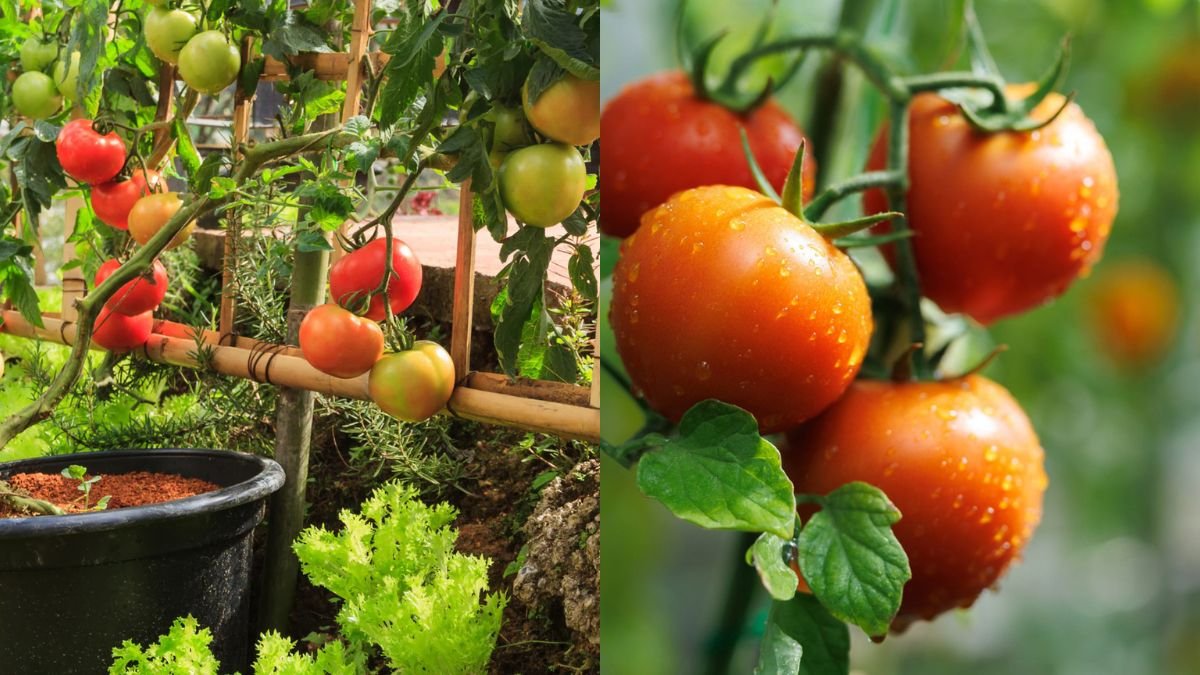
Tomato plants are highly adaptable, which makes them perfect for small-space and container cultivation. Unlike root-heavy crops, tomatoes can thrive in confined spaces if their roots are well-supported and receive enough nutrients.
Several reasons make garden-free tomato growing so effective:
- Adaptability to Containers – Tomatoes do not require wide garden beds. Pots, grow bags, or even recycled bottles can be used successfully with proper drainage. (GNTTV)
- Sunlight Exposure – Most urban balconies and terraces receive sufficient sunlight, providing the 6–8 hours per day that tomatoes need to flower and fruit abundantly. (NewsBytes App)
- Soilless Possibilities – Hydroponic methods allow tomatoes to grow without soil entirely, providing nutrients directly through water, making them perfect for indoor or rooftop cultivation. (Kratky Tomatoes)
- Urban Gardening Trends – The rise of small-space and indoor gardening has created innovative ways to grow vegetables in cities, with tomatoes becoming a popular choice due to their ease of growth and productivity. (NDTV)
Whether you have a small balcony, rooftop, or indoor space, tomatoes can thrive in well-managed containers or hydroponic systems.
Best Methods for Garden-Free Tomato Growing
1. Container Gardening
Container gardening is the simplest way to grow tomatoes without a garden. All you need is a large pot (12–20 liters) with drainage holes and quality potting mix. This method works for balconies, terraces, and patios.
Key Steps:

- Choose a sunny spot receiving 6–8 hours of direct sunlight.
- Use a container with adequate drainage to prevent waterlogging.
- Fill it with well-draining potting mix enriched with organic compost.
- Plant seeds or seedlings and water consistently.
This method is inexpensive, easy to manage, and ideal for beginners. Urban gardeners have successfully grown lush, productive tomato plants in recycled bottles, large plastic containers, and decorative pots, demonstrating that even minimal spaces can produce a healthy harvest. (GNTTV)
2. Hydroponic Tomato Growing
Hydroponics, or soil-less growing, has become a favorite method for urban gardeners. In particular, the Kratky method allows tomatoes to grow entirely in nutrient-rich water without pumps or complex systems.
How It Works:
- A container is filled with water and dissolved nutrients.
- Plants are suspended above the nutrient solution, with roots partially submerged.
- The plant draws water and nutrients directly from the solution.
Hydroponics can be set up indoors or on terraces, enabling year-round tomato cultivation. It’s also space-efficient and reduces problems like soil-borne diseases. Hydroponically grown tomatoes often grow faster and produce higher yields compared to container soil gardening. (Kratky Tomatoes)
3. Water-Root Propagation
A simpler, DIY approach involves rooting tomato cuttings in water. While not ideal for full harvests, this method demonstrates the plant’s resilience. By placing healthy cuttings in water until roots develop, gardeners can later transplant them into soil or hydroponic systems.

This method is ideal for experimenting, propagating new plants, or teaching children about plant growth. It underscores how adaptable tomatoes are, making them excellent candidates for small-space cultivation. (Reddit Hydroponics)
Step-By-Step Guide to Growing Tomatoes Without a Garden
Step 1: Choose the Location
Tomatoes need at least 6–8 hours of sunlight daily. South- or west-facing balconies, terraces, and windowsills work best. Rotate containers if light distribution is uneven.
Step 2: Select Suitable Containers
Use pots, grow bags, or even DIY containers like recycled bottles. Ensure they are deep enough (12–15 liters) for root growth and have drainage holes.
Step 3: Prepare Nutrient-Rich Medium
For soil planting, mix organic compost, coco peat, and garden soil for a well-draining medium. For hydroponics, follow a nutrient solution recipe suitable for tomatoes.
Step 4: Plant Seeds or Seedlings
Start seeds indoors or purchase healthy seedlings. Transplant seedlings when they are strong and outdoor temperatures are suitable.
Step 5: Water Consistently
Keep soil moist but not waterlogged. In hydroponic systems, check nutrient levels weekly and top up as necessary.
Step 6: Support the Plants
Tomatoes grow tall and benefit from stakes, cages, or trellises to prevent bending and breakage, especially in confined container spaces.
Step 7: Harvest Regularly
Pick tomatoes when they are fully colored and firm. Frequent harvesting encourages continuous fruit production.
Success Stories
- Home Balcony Yield: Urban gardeners report harvesting up to 30 kilograms of tomatoes from just a few large pots when containers are managed carefully. (Navbharat Times)
- Rooftop Hydroponics: Farmers in Bihar have demonstrated that hydroponics can support soil-less vegetable cultivation including tomatoes, even on rooftops. (NDTV)
These examples prove that garden-free tomato cultivation can be highly productive, even in urban settings.
Tips for Maximum Yield
- Choose high-quality seeds or seedlings – healthy plants produce more fruit. (Seedy.Farm)
- Ensure adequate sunlight – rotate containers if needed.
- Use proper containers – large enough to accommodate roots and with good drainage.
- Provide nutrients – fertilize regularly, especially during flowering and fruiting.
- Prune and support plants – remove lower leaves and use stakes to prevent overcrowding.
Background: Urban Tomato Gardening Trend
Urban gardening is a growing movement as people seek sustainable, home-grown food. Innovations like container gardening, hydroponics, and rooftop farms are making it possible for city dwellers to produce their own vegetables, even without traditional garden space. Tomatoes are particularly suited for these setups because they are adaptable, productive, and easy to manage.
In countries like India, hydroponics and container gardening are being adopted widely to overcome space limitations, water shortages, and urban constraints. These methods are helping urban households produce fresh, healthy vegetables year-round, reducing dependence on store-bought produce. (NDTV)
Recommended Authoritative Sources
- Grow Tomatoes in Pots & Bottles – practical container gardening guide. (GNTTV)
- Hydroponic Tomato Guide (Kratky Method) – simple soilless tomato cultivation. (Kratky Tomatoes)
- Urban Terrace Farming Tips – examples of rooftop hydroponics and small-space vegetable cultivation. (NDTV)
- Expert Container Tips for Maximum Yield – guidance on high-yield urban tomato gardening. (Navbharat Times)
Conclusion
Tomatoes can be successfully grown without a traditional garden, whether in containers, grow bags, or hydroponic systems. These garden-free methods are easy, productive, and ideal for urban spaces, allowing anyone to enjoy fresh, homegrown tomatoes.
With the right variety, proper sunlight, adequate nutrients, and a little care, even small balconies or rooftops can yield abundant, juicy tomatoes. Garden-free tomato gardening is not only practical but also a rewarding way to bring fresh, healthy produce to your table — right from your home.
No garden? No problem. Start growing your own tomatoes today and enjoy the taste, beauty, and satisfaction of a productive garden-free harvest.