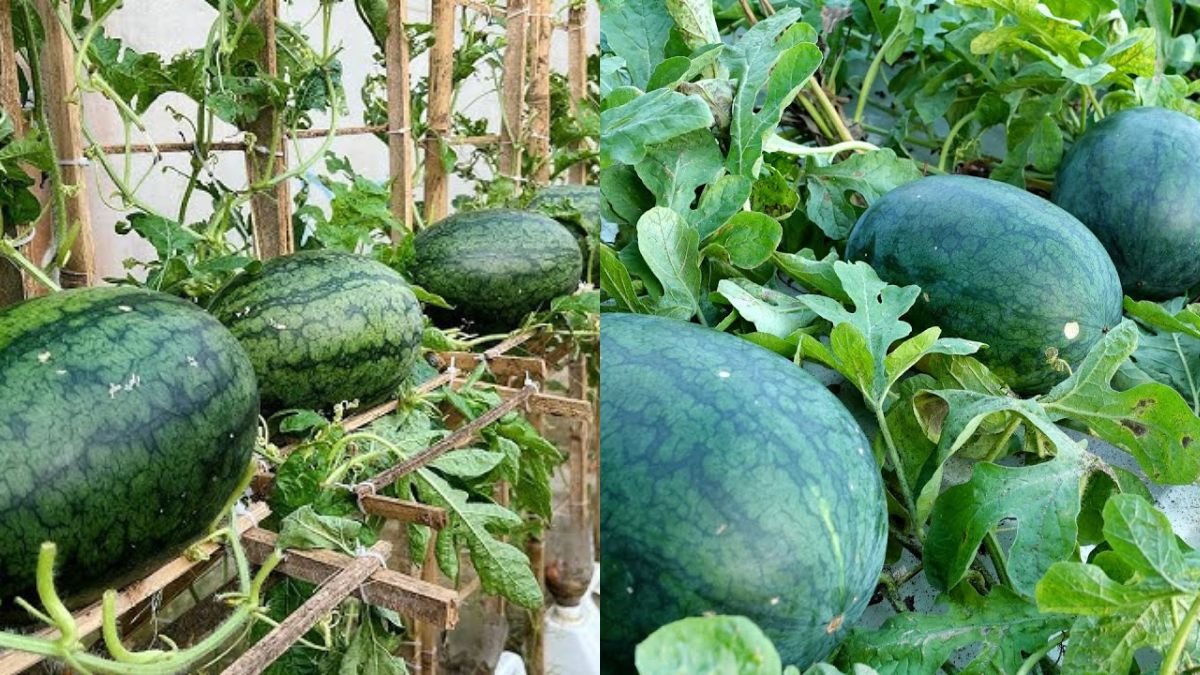
Watermelon (Citrullus lanatus) is one of the most refreshing fruits of summer, loved for its sweetness, juiciness, and hydrating properties. Traditionally grown on large farms, watermelons are now accessible for home gardeners thanks to new hybrid varieties and small-space cultivation techniques. Modern gardening practices allow enthusiasts to grow these fruits in backyards, raised beds, or even containers and large grow bags.
Home-grown watermelons have several advantages: they taste fresher than store-bought fruit, contain fewer chemicals, and are highly rewarding for gardeners seeking high-yield results. With the right knowledge and simple care, growing watermelons at home can be surprisingly easy and satisfying. (Almanac)
🪴 Why Watermelon Is Easier to Grow at Home Than You Might Think
Many beginners assume watermelon cultivation requires large fields and complex care. In reality, small-space gardening techniques have made watermelon cultivation simple, productive, and accessible. Key reasons why watermelons can thrive at home include:
- 🌞 Adaptable to Small Spaces: Modern hybrid varieties can be grown in containers, raised beds, or limited garden plots without sacrificing fruit size or quality. (Almanac)
- 🍉 Short-to-Medium Grow Time: Many varieties mature in 70–100 days, making it feasible to enjoy fruits within a single growing season.
- 🌱 Improved Varieties: New hybrids are bred for disease resistance, fast growth, and higher yields even under limited space conditions. (Growing Produce)
- 🧑🌾 Beginner-Friendly Cultivation: By following a few proven techniques—soil preparation, watering schedules, and fertilization—gardeners can ensure big, healthy fruit production without specialized tools.
These innovations allow anyone, even urban gardeners, to grow juicy, sweet watermelons at home without needing acres of farmland.

🌱 Step 1: Choosing the Right Watermelon Variety
Choosing a high-yield, beginner-friendly variety is critical for success. Some of the best options include:
- F1 Hybrid High-Yield Seeds: Designed for vigorous growth, disease resistance, and large, sweet fruits. (Garden Hub Care)
- Black Icebox F1 Hybrid: Compact variety suitable for smaller spaces, produces early and flavorful melons. (Golden Hills Farm)
- Green Stripes F1 Hybrid: Classic watermelon look with bright red, juicy flesh. Ideal for home gardens. (Golden Hills Farm)
- Big Oblong F1 Seeds: Produces large oblong fruits, perfect for medium to large backyard plots. (Golden Hills Farm)
Selecting the right variety ensures strong growth, abundant fruit, and a more predictable harvest. Hybrids are particularly recommended for beginners because they are resilient and yield consistently.
🌿 Step 2: Preparing the Soil and Planting Site
Watermelons thrive in well-drained, fertile soil and full sunlight. Proper soil preparation lays the foundation for high-yield growth.
- 📍 Sun Exposure: Plant watermelons in a spot that receives 6–8 hours of direct sunlight daily.
- 🌱 Soil Composition: Sandy, well-drained soil enriched with compost or aged manure is ideal. A slightly acidic to neutral pH (6.0–7.0) promotes vigorous growth. (Garden Hub Care)
- 🥄 Planting Space: For standard watermelon vines, leave 90–120 cm between plants to allow sprawling growth and proper air circulation. Hybrid or bush varieties can be grown closer together or even in large containers.
Pro Tip: Raised beds or large grow bags can maximize yield in limited spaces while providing good soil aeration and moisture retention.

💧 Step 3: Watering and Fertilization
Watering and nutrition are key to achieving sweet, juicy watermelons:
- 💦 Watering: Keep soil consistently moist until fruits begin forming. Watering in the morning reduces the risk of fungal infections.
- 🍓 Reduce Water Late: As fruits mature, slightly reducing water increases sugar concentration and sweetness.
- 🌿 Fertilizing: Use a balanced fertilizer early on, switching to phosphorus and potassium-rich fertilizer when vines start flowering. Organic fertilizers like compost or seaweed extract improve soil health and fruit development. (Almanac)
Avoid overwatering or allowing stagnant water, as this can cause root rot and reduce fruit quality.
🌻 Step 4: Pollination and Fruit Setting
Watermelon plants have separate male and female flowers. Successful pollination is critical for fruit production:
- 🐝 Encourage Pollinators: Bees are the primary pollinators. In urban gardens with fewer pollinators, hand-pollination may be necessary.
- 🍉 Identifying Female Flowers: Female flowers have a small swelling at the base that develops into the fruit after pollination. Proper pollination ensures more fruit per vine. (Almanac)
Ensuring good pollination is essential for maximizing yield and producing evenly sized, sweet fruits.

🍉 Step 5: Harvesting
Harvesting at the right time ensures the best flavor:
- 🧠 Signs of Ripeness: Look for a dull thump when tapped and a creamy yellow color on the underside where the fruit touches the ground.
- ✂️ Harvesting Technique: Use sharp scissors or shears to avoid damaging vines. Typical harvest time ranges from 70–100 days depending on variety. (Almanac)
Regular harvesting encourages continued fruit production and prevents overripe melons from attracting pests.
⚠️ Common Mistakes to Avoid
Even experienced gardeners can make simple errors that reduce yield:
- ❌ Poor Soil Preparation: Can stunt growth and reduce fruit size.
- ❌ Insufficient Sunlight: Reduces flowering and fruit production. (Almanac)
- ❌ Overwatering: Causes root rot and can dilute fruit flavor.
- ❌ Ignoring Pollination: Leads to fewer fruits.
With careful preparation and attentive care, these mistakes can be avoided, resulting in large, sweet, homegrown watermelons.
📚 Authoritative Sources
- The Old Farmer’s Almanac – Watermelon Growing Basics – Step-by-step planting and care guide. (Almanac)
- GrowingProduce.com – Watermelon Varieties to Grow in 2026 – Insights on productive, home-friendly varieties. (Growing Produce)
- Better Homes & Gardens – How to Grow Watermelon – Practical home gardening techniques for fruit quality and yield. (BHG)
- Southern Living – Watermelon Cultivation Tips – Expert advice on soil, watering, and pest control. (Southern Living)
These sources provide additional guidance for gardeners aiming for high-yield, home-grown watermelon success.
🌟 Final Thoughts
Growing watermelon at home can be surprisingly easy, even in small spaces, with the right seeds, soil, and care. By selecting high-yield varieties, preparing fertile soil, maintaining proper watering, and ensuring good pollination, you can enjoy sweet, juicy melons right from your garden or balcony.
With patience and a little attention to detail, home-grown watermelons provide satisfaction far beyond what store-bought fruits can offer. Start small, experiment with hybrid varieties, and soon your garden will yield juicy, refreshing melons perfect for summer. 🍉🌞
Growing watermelons is not only about producing fruit; it’s a rewarding journey that connects you to nature, encourages healthy eating, and brings the joy of harvesting something truly homegrown.