Why Growing Potatoes at Home Makes Sense
Potatoes are uniquely suited to home growing for several reasons. They are hardy plants, adapt well to different environments, and produce multiple tubers from a single seed potato. Unlike many vegetables, potatoes grow underground, which means soil preparation and simple care can dramatically increase yield.
Homegrown potatoes are often more flavorful and fresher than store-bought ones. You also gain full control over what goes into your food, avoiding chemical treatments commonly used on commercial potatoes. Most importantly, potatoes are incredibly economical: a small investment in seed potatoes can provide months of harvests.
The Simple Potato Growing Method That Changes Everything
The method that makes potato growing so easy is container or grow-bag cultivation combined with hilling. This approach works especially well for beginners because it removes many common challenges, such as poor garden soil, pests, and difficult harvesting.
Instead of planting potatoes directly in the ground, you grow them in containers where soil quality, drainage, and moisture are easy to manage. As the potato plant grows, you gradually add soil around the stems, encouraging the plant to produce more tubers. This simple process can significantly increase yields.

What You Need to Get Started
You don’t need expensive tools or special equipment. The essentials include:
- Seed potatoes (preferably certified, disease-free)
- Large containers or grow bags with drainage holes
- Loose, fertile soil mix combined with compost
- A sunny location with at least six hours of sunlight
- Water and basic care
Grow bags, buckets, or even sturdy plastic containers can work well as long as they allow excess water to drain.
Step-by-Step Guide to Growing Potatoes Successfully
1. Prepare the Container and Soil
Choose a container that is at least 18 inches deep and wide. Good depth allows potatoes to form multiple layers of tubers. Fill the bottom with about 4–6 inches of loose soil mixed with compost. Potatoes prefer soil that is airy, well-draining, and rich in organic matter.
2. Plant the Seed Potatoes
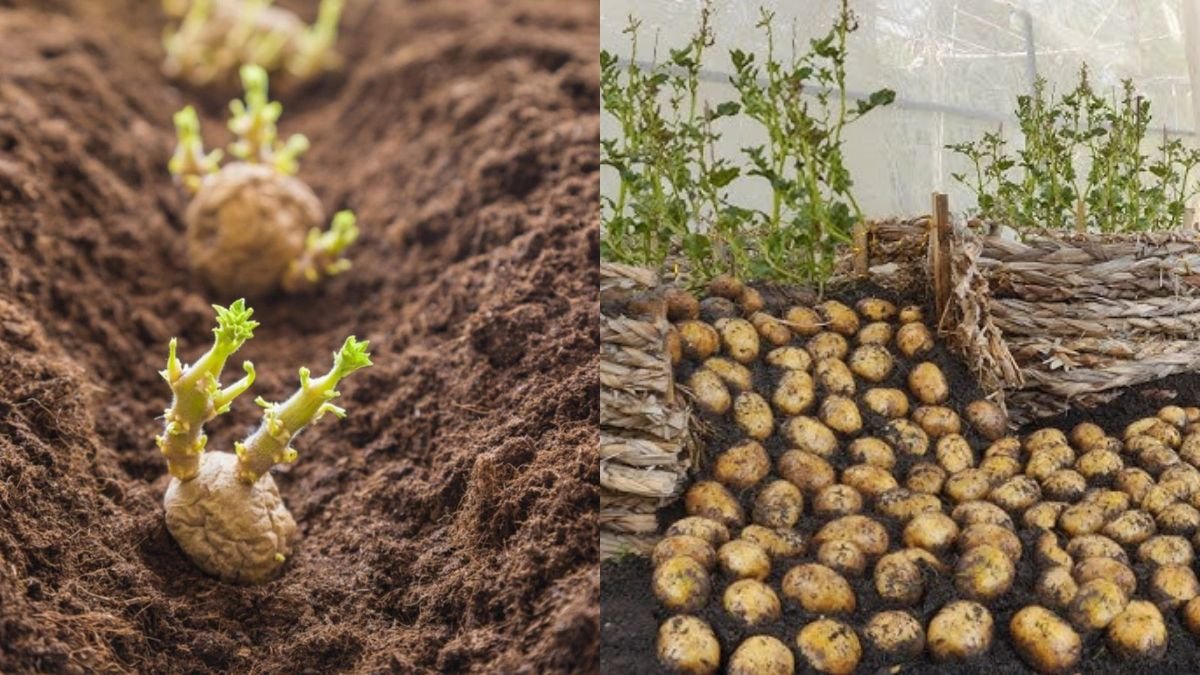
Seed potatoes often have small sprouts, known as “eyes.” Place them with the eyes facing upward and cover with a few inches of soil. You can plant one or two seed potatoes per container, depending on its size. Avoid overcrowding, as potatoes need space to grow.
3. Provide Sunlight and Water
Place containers in a spot that receives six to eight hours of direct sunlight daily. Water thoroughly after planting and keep the soil consistently moist but not soggy. Overwatering can cause rot, while underwatering can reduce tuber development.
4. Hill the Plants for Bigger Harvests
Hilling is the secret behind this method. As potato plants grow and reach about 6–8 inches tall, add more soil around the stems, leaving only the top leaves exposed. Repeat this process every time the plant grows taller.
Hilling encourages the plant to produce more tubers along the buried stems, significantly increasing yield. This step is what transforms a simple planting into a high-yield potato system.
5. Feed and Maintain
Potatoes benefit from occasional feeding with compost or a balanced fertilizer. Avoid fertilizers high in nitrogen late in the season, as they promote leafy growth instead of tuber development. Remove weeds if they appear, and check plants regularly for pests or diseases.

Why This Method Works So Well
This potato growing method is effective because it solves many traditional gardening problems:
- Better soil control: Containers allow you to create the ideal growing environment.
- Improved drainage: Prevents waterlogging and root rot.
- Easy harvesting: Simply tip over the container to collect potatoes.
- Space efficiency: Perfect for urban homes and small gardens.
- Higher yields: Hilling encourages more tubers to form.
For beginners, this approach removes guesswork and reduces failure risk.
When and How to Harvest Potatoes
Potatoes can be harvested at different stages depending on your needs. New potatoes can be harvested when plants are still green and flowering, usually after 8–10 weeks. These are smaller, tender, and perfect for immediate use.
For mature potatoes, wait until the plant’s foliage turns yellow and dies back completely. This signals that tubers are fully developed. Gently empty the container and collect your harvest. Allow potatoes to dry for a short time before storing.
Storing Homegrown Potatoes
After harvesting, cure potatoes by storing them in a cool, dark, and well-ventilated place for about one to two weeks. This helps thicken their skins and improves storage life. Once cured, potatoes can last for months when kept in proper conditions.
Common Mistakes to Avoid
Even though this method is beginner-friendly, avoid these mistakes:
- Using containers without drainage holes
- Overwatering the soil
- Skipping the hilling process
- Planting treated grocery store potatoes
- Growing in low-light conditions
Avoiding these issues ensures healthy plants and abundant harvests.
Why You May Never Need to Buy Potatoes Again
Once you experience how productive and reliable this potato growing method is, it becomes easy to grow potatoes regularly. By staggering plantings every few weeks, you can enjoy a continuous supply throughout the year. Many home gardeners find they harvest far more than expected, often enough to last until the next planting season.

Growing potatoes at home also provides peace of mind, knowing your food is fresh, chemical-free, and grown sustainably.
Authoritative Sources for Further Reading
- University Extension Programs on Potato Growing
- Homes & Gardens: Potato Growing Guides
- Good Housekeeping: Container Potato Gardening
- Agricultural Research Publications on Tuber Crops
These resources provide in-depth knowledge for gardeners who want to expand their skills further.
Final Thoughts
Potato growing doesn’t have to be complicated. With this simple container and hilling method, even complete beginners can grow an abundant supply of potatoes at home. It saves money, reduces trips to the store, and offers the satisfaction of harvesting your own food.