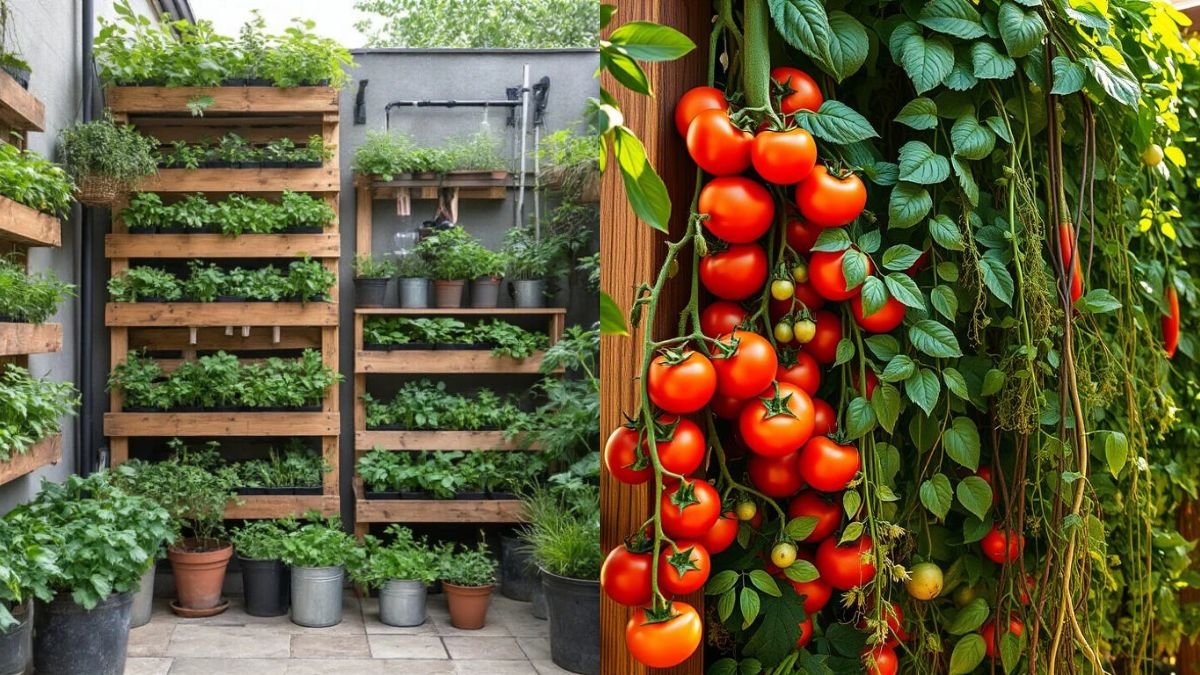
Why Vertical Vegetable Gardens Are Ideal for Garden-Less Homes
Vertical gardening is perfect for modern urban living. Here’s why:
- Maximizes small spaces: Balconies, patios, and even walls can become productive garden areas.
- Boosts yield per square foot: Growing upward allows more plants in less horizontal space.
- Enhances accessibility: Plants at eye level make watering, pruning, and harvesting easier.
- Improves air quality: Vegetation helps filter pollutants and adds greenery to urban spaces.
- Saves water: Drip irrigation and recirculating watering in vertical systems reduce water waste.
- Adds beauty and mental health benefits: Vertical gardens are visually appealing and offer a calming connection to nature. (gardenerspinner.org.uk)
What Is a Vertical Vegetable Garden?
A vertical vegetable garden is any system where plants grow upward rather than on the ground. There are several types:
- Wall-mounted pockets or planter boxes: Simple systems for herbs and leafy greens.
- Stacked containers: Tiered planters for small fruiting vegetables like tomatoes and peppers.
- Trellises and climbing supports: For beans, peas, cucumbers, and vining crops.
- Modular green wall panels: Professional, pre-built units with integrated irrigation.
- Hydroponic or aeroponic towers: Soil-free vertical systems using nutrient solutions.
- DIY recycled structures: Pallets, gutters, bottles, or shoe organizers can be repurposed into vertical gardens. (gardenersgrangepark.org.uk)
Each system allows plants to grow upward, making the most of unused vertical spaces, which is especially important for people with no garden.

Benefits of Vertical Vegetable Gardens
1. Space Efficiency
Vertical gardens transform unused walls, fences, or balcony areas into productive garden space. Even apartments and small terraces can produce substantial yields without traditional garden beds. (gardenersspinning.org.uk)
2. Increased Yield
Stacking plants vertically or using tiered systems can produce significantly more vegetables per square foot compared to horizontal planting. This is ideal for small-space growers who want maximum output.
3. Water Conservation
Vertical gardening systems often incorporate drip irrigation or self-watering features, which reduce water usage by up to 90% compared to conventional methods. (gardenersbarbican.org.uk)

4. Improved Air Quality
Plants in vertical gardens absorb CO₂ and filter pollutants, contributing to a healthier living environment in urban areas. (gardenersberrylands.org.uk)
5. Accessibility
Raised and wall-mounted gardens make watering, pruning, and harvesting less physically demanding, a big advantage for older adults or those with mobility challenges.
6. Aesthetic Value and Mental Health
Vertical gardens transform plain walls or fences into lush, vibrant spaces, offering both visual beauty and stress relief. (gardenersarchway.org.uk)

Top Vertical Gardening Ideas for Garden-Less Spaces
1. Wall Pockets and Hanging Planters
- Perfect for herbs, leafy greens, and small vegetables.
- Can be mounted on balconies, fences, or indoor walls.
- Easy to install, maintain, and harvest. (thespruce.com)
2. Stacked Containers and Tiered Systems
- Use shelves or plant stands to create multiple planting layers.
- Suitable for small tomatoes, peppers, or leafy vegetables.
- Optimizes vertical space while allowing airflow and sunlight penetration.
3. Trellises and Climbing Supports
- Ideal for beans, peas, cucumbers, and vining crops.
- Supports vertical growth, preventing overcrowding on the floor.
- Increases productivity by encouraging upward rather than outward growth. (foodgardenlife.com)
4. Modular Green Wall Panels
- Pre-built vertical garden panels with integrated irrigation.
- Suitable for herbs, vegetables, and decorative plants.
- Can be customized and expanded for balconies or walls. (gardenersgrangepark.org.uk)
5. Hydroponic or Aeroponic Towers
- Soil-free vertical gardening systems using nutrient solutions.
- Perfect for leafy greens, herbs, and strawberries.
- Encourages rapid growth, high yield, and efficient water use. (gardenersbarnsbury.org.uk)
6. DIY Recycled Structures
- Upcycle pallets, gutters, or bottles into vertical planting systems.
- Cost-effective and environmentally friendly.
- Customizable for your space and plant types. (gardenersgrangepark.org.uk)
Tips for Success in Vertical Gardening
1. Choose Suitable Plants
Some vegetables thrive in vertical systems more than others:
- Herbs: Basil, parsley, mint
- Leafy greens: Lettuce, spinach, kale
- Climbing vegetables: Beans, peas, cucumbers
- Compact fruiting plants: Cherry tomatoes, peppers (abc.net.au)
2. Optimize Sunlight
Most vegetables require 6–8 hours of sunlight. Place vertical gardens where they receive maximum light, or use LED grow lights indoors. (gardenersbarnsbury.org.uk)
3. Water Efficiently
Install drip irrigation or self-watering systems to maintain consistent moisture, as vertical systems can dry out faster than traditional garden beds. (gardenersforestgate.org.uk)

4. Use Quality Soil and Nutrients
High-quality potting mix with compost supports root growth and nutrient absorption. Periodically feed plants with organic fertilizer for best results.
5. Prune and Harvest Regularly
Trim spent leaves, harvest mature crops, and remove overcrowded plants to encourage continuous production.
Authoritative Sources
For further guidance, explore these trusted resources:

- Gardeners Forest Gate – Benefits of Vertical Gardening (gardenersforestgate.org.uk)
- Gardeners Grange Park – Innovative Vertical Gardening Ideas (gardenersgrangepark.org.uk)
- Gardeners Barbican – Sustainable Urban Vertical Gardening (gardenersbarbican.org.uk)
- The Spruce – Vertical Garden DIY Inspiration (thespruce.com)
- House Beautiful – Top Indoor Vertical Gardens (housebeautiful.com)
Conclusion: Vertical Gardening Makes Growing Easy
Vertical vegetable gardens are revolutionizing urban gardening. By growing upward rather than outward, you can produce fresh, nutritious vegetables even without a backyard or traditional garden plot. From simple DIY planters to high-tech hydroponic towers, vertical gardening offers space efficiency, higher yield, and aesthetic appeal.
Whether you’re growing herbs on a kitchen wall, leafy greens on your balcony, or climbing vegetables on a trellis, vertical gardens let anyone enjoy homegrown produce, save space, and improve their living environment. Start your vertical garden today and experience the convenience, productivity, and joy of growing your own vegetables without a garden.