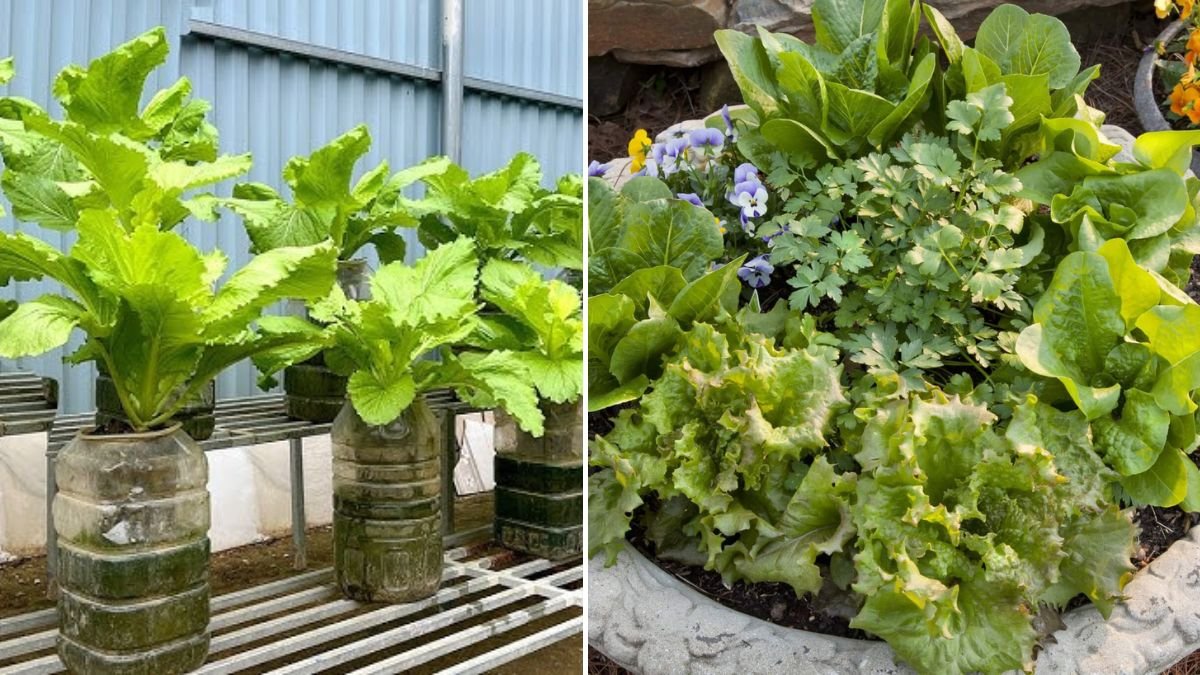
🥬 Introduction: The Soil-Free Gardening Revolution
Imagine harvesting crisp lettuce, tender spinach, juicy tomatoes, and fresh herbs in just a few weeks, all without touching a single scoop of soil. Thanks to soil-free growing methods like hydroponics, aeroponics, and aquaponics, this is no longer just a dream. These innovative techniques allow plants to grow using only water, nutrients, and light, making gardening possible even in apartments, rooftops, or limited-space urban settings.
Gardeners around the world are adopting these systems to save space, conserve water, and grow faster-yielding crops. From urban balconies to greenhouse farms, soil-free vegetable gardening is proving to be both practical and highly productive. (Times of India)
🍅 What Is Soil-Free Growing and Why It Works
Soil-free gardening allows plants to grow without traditional soil by providing all necessary nutrients directly through water. There are three main techniques:

- Hydroponics – Plants’ roots grow directly in water enriched with minerals and essential nutrients. (NAL USDA)
- Aquaponics – Combines fish farming with plant growing; fish waste provides nutrients for the plants, while the plants filter and clean the water. (Onmanorama)
- Aeroponics – Plants are suspended, and roots are misted with a nutrient solution, maximizing oxygen exposure and nutrient uptake. (BBC Earth)
These methods accelerate plant growth because nutrients are directly absorbed by roots, eliminating the slow nutrient extraction from soil. Plants often mature faster, produce higher yields, and require less space. (NAL USDA)
🌱 How Soil-Free Systems Work
The secret lies in a balanced nutrient solution that supplies nitrogen, phosphorus, potassium, and trace elements directly to plant roots. In hydroponics, plant roots are submerged in water that is oxygenated and enriched with nutrients, allowing for faster growth and larger, healthier plants.
Popular soil-free systems include:
- Deep Water Culture (DWC) – Roots float in nutrient-rich water and are oxygenated using an air pump. (Wikipedia DWC)
- Kratky Method – A passive, no-pump hydroponic method ideal for beginners, where plants grow in a nutrient solution in a container. (Wikipedia Kratky)
- Nutrient Film Technique (NFT) – A thin stream of nutrient solution flows over plant roots for continuous feeding. (NAL USDA)
Each system has its own benefits, but all share the advantage of eliminating soil while boosting plant growth rates.
🚀 Global Developments in Soil-Free Vegetable Growing
1. Hydroponics in India
In Indore, scientists at Government Holkar Science College are growing vegetables indoors without soil or natural sunlight, using hydroponics and aeroponics. Their experiments show how water-only systems can conserve water by up to 90% compared to soil-based gardening. (Times of India)
2. Kerala Farmers Leading the Way
Farmers like Amal A. Ashok have embraced hydroponics for high-yield, soil-free vegetable production. These systems allow continuous production year-round and reduce reliance on land and soil fertility. (Onmanorama)

3. Education and Sustainability
Schools in New York and Utah are teaching students about sustainability and science by growing vegetables without soil. Students learn biology, ecology, and nutrient cycles while harvesting fresh produce in weeks, demonstrating soil-free gardening as both educational and practical. (WBHM, Fox13 Utah)
These initiatives highlight that soil-free growing is no longer just a hobby, but a scalable, practical solution for homes, schools, and commercial farms.
🥬 Step-by-Step: Start Your Soil-Free Vegetable Garden
Step 1: Choose Your System
- Beginner: Kratky method – low-maintenance, no pumps needed.
- Intermediate: Deep Water Culture with an air pump for aeration.
- Advanced/Home tech: Automated hydroponics systems with sensors for monitoring nutrients and pH.
Step 2: Pick Suitable Vegetables
- Leafy greens like lettuce, spinach, kale
- Herbs such as basil, parsley, mint
- Fruiting plants like tomatoes and peppers with proper trellising
Start with leafy greens, which are fast-growing and easy to manage.
Step 3: Prepare Nutrient Solution
Mix water with hydroponic nutrient mix designed for vegetables. This solution provides all the minerals plants normally extract from soil.
Step 4: Provide Light
Plants need 6–8 hours of sunlight or full-spectrum grow lights for indoor systems. Light directly affects photosynthesis and growth speed. (NBC News)
Step 5: Maintain pH and Nutrients
- Keep pH between 5.5–6.5.
- Check nutrient levels every 3–4 days.
- Adjust solution to ensure fast, healthy growth.
Step 6: Harvest Quickly
- Many leafy greens are ready to harvest in 3–6 weeks.
- Herbs can be picked continuously once they reach usable size.
- Fruiting plants may take slightly longer but still produce faster than traditional soil-based methods.
🌍 Advantages of Soil-Free Vegetable Gardening
- Water Efficiency – Uses up to 90% less water than traditional soil farming. (Reddit Hydroponics)
- Space-Saving – Ideal for balconies, rooftops, or urban apartments.
- Faster Growth – Nutrients directly available to roots accelerate growth.
- Year-Round Harvest – Controlled environments allow vegetables to grow anytime, independent of outdoor seasons.
- Sustainable & Environmentally Friendly – Reduces land use, soil degradation, and transportation carbon footprint. (FAO)
🧠 Common Misconceptions
- “Plants can grow in plain water alone.”
False — water must contain balanced nutrients, otherwise plants won’t thrive. - “Hydroponics is only for experts.”
Simple systems like the Kratky method make it accessible even for beginners. - Maintenance:
Checking pH and nutrient levels regularly is essential, but manageable with basic tools.
📚 Recommended Resources
- USDA – Hydroponics Overview (NAL USDA)
- FAO – Hydroponics and Aquaponics Systems (FAO)
- Wikipedia – Kratky Method (Wikipedia)
- Wikipedia – Deep Water Culture (Wikipedia)
🌟 Conclusion
Soil-free vegetable gardening is fast, efficient, and beginner-friendly. With water, nutrients, and proper light, anyone can grow leafy greens, herbs, and even fruiting vegetables in weeks. These systems save water, reduce dependency on soil, and allow year-round harvests in small spaces.
Whether you’re a beginner wanting fresh greens on your balcony or a seasoned gardener looking to maximize yield and sustainability, soil-free gardening is a game-changer. Start small with the Kratky method or go fully automated — either way, you’ll enjoy fresh, nutrient-rich vegetables faster than ever before.