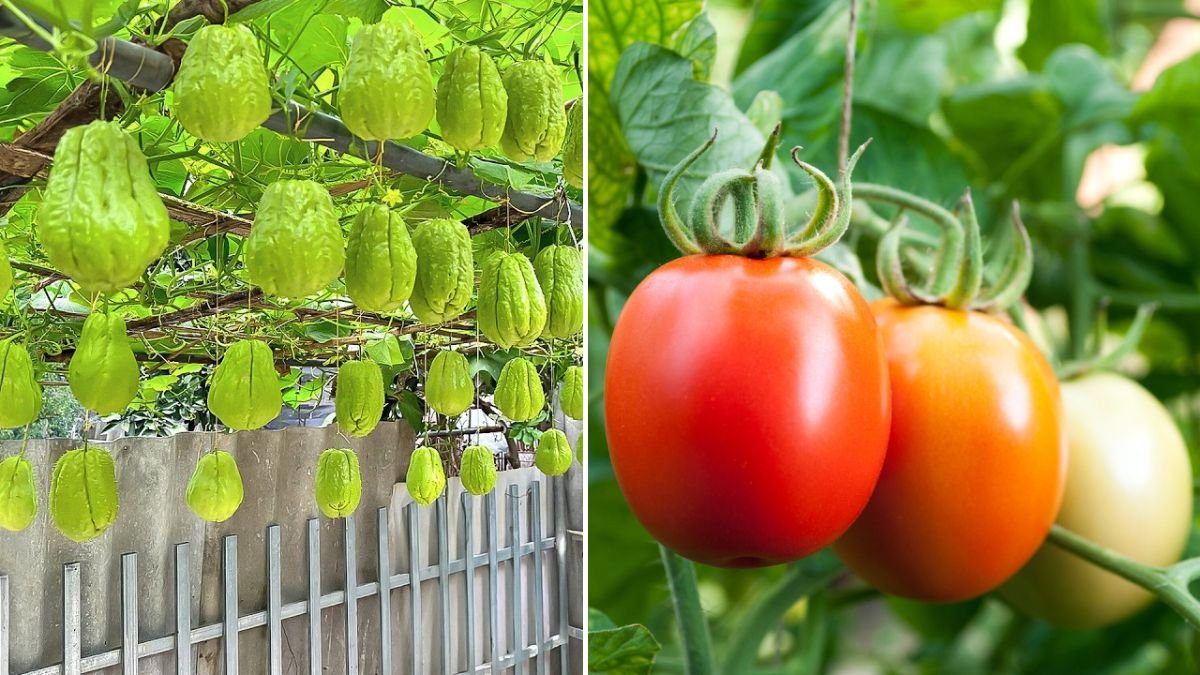
Background: Why Tomatoes and Chayotes Respond Well
Tomatoes
Tomatoes are heavy producers when environmental conditions and plant care are optimized. Even though they are self-pollinating, flowers often fail to set fruit if pollination is inadequate or the plant is stressed. Proper pruning, nutrient balance, sunlight exposure, and pollination techniques can dramatically improve fruit set. (gardeningknowhow.com)
Scientific studies support this. For example, grafting tomatoes onto vigorous rootstocks enhances nutrient uptake, stress tolerance, and overall fruit production — sometimes multiple times more than ungrafted plants. (frontiersin.org)
Chayotes
Chayotes are climbing vines in the gourd family that naturally produce multiple fruits once established. A healthy chayote vine with proper pruning, support, and nutrient care can produce dozens of fruits throughout the season. Unlike many crops, chayotes improve yield year after year, making them ideal for gardeners seeking high productivity. (motherearthgardener.com)
By understanding the natural growth patterns of these plants, gardeners can implement simple techniques to maximize flowering, fruit set, and overall productivity.

The Simple Trick That Works
The viral tip that sparked attention online isn’t a single magic solution. Instead, it’s a combination of practical, easy-to-implement strategies that together result in up to 3× more fruit. Here’s a breakdown:
1. Improve Pollination
Tomato flowers are self-pollinating but need pollen transfer to produce fruit. Gently shaking flowers, using a soft brush, or allowing bees access can dramatically increase fruit set. For chayotes, pollinator access is equally important; bees, flies, and natural wind help flowers develop into fruit. (gardeningknowhow.com)
2. Prune Strategically
Pruning redirects the plant’s energy from leaf growth to fruit production. For tomatoes:
- Remove lower leaves and suckers
- Focus the plant’s resources on main stems and fruit-bearing branches
For chayotes:

- Remove old, crowded, or shaded branches
- Encourage new shoots for flowering and fruiting
Pruning improves airflow, sunlight penetration, and energy allocation — all crucial for higher yields.
3. Provide Structural Support
Both crops benefit from vertical growth:
- Tomato cages, stakes, or trellises prevent fruit from touching the ground
- Chayote vines thrive on trellises, poles, or fences for better light exposure and healthier fruit
Structural support also reduces disease risk and allows plants to expand fully, improving fruit quantity and quality.
4. Strengthen Root Systems
Strong roots absorb more water and nutrients, supporting larger and healthier fruits. For tomatoes, burying part of the stem when planting encourages additional root growth. Chayote roots also respond to loose, well-drained soil that allows expansion. (gardeningknowhow.com)

5. Feed Plants Appropriately
Balanced nutrients are critical for flowering and fruiting. Fertilizers high in potassium and phosphorus encourage fruit set, while compost or foliar sprays support overall vigor. Timely feeding ensures the plant allocates energy efficiently, supporting more flowers and higher fruit production. (li01.tci-thaijo.org)
6. Consider Companion Planting
Companion planting improves yield indirectly by enhancing pollination, deterring pests, and improving microclimates. For example:
- Basil near tomatoes can reduce pests and improve air circulation
- Certain leafy plants near chayotes can act as living mulch
While this doesn’t directly triple production alone, it amplifies the effects of the other techniques when combined. (en.wikipedia.org)
How These Techniques Add Up
When applied together, these strategies create a synergy that leads to dramatically higher yields:

| Technique | Impact on Fruit Production |
|---|---|
| Improved pollination | More flowers set fruit |
| Pruning | Energy directed to fruit rather than foliage |
| Structural support | Healthier plants, less disease |
| Strong root systems | Better nutrient and water uptake |
| Strategic feeding | Increased flowering and fruit size |
| Companion planting | Healthier microclimate and pest reduction |
Individually, each method improves production. Combined, they can triple harvest output compared to basic care methods.
Real-World Results
Gardeners following these techniques report:
- 3× increase in tomato harvests, with more fruits per branch
- 3× more chayote fruits, thanks to stronger vines and better flowering
- Improved fruit quality, size, and flavor
- Healthier, more resilient plants overall
Even small backyard gardens can become highly productive using these accessible and affordable adjustments, without needing special chemicals or expensive tools.
Expert Insights
- Tomatoes: Grafting and proper pruning can improve fruit yields and plant resilience. (frontiersin.org)
- Practical tips: Gardening Know How highlights pruning, fertilization, and pollination techniques that directly improve yield. (gardeningknowhow.com)
- Chayotes: Mother Earth Gardener emphasizes support, pruning, and nutrient care to maximize fruiting potential. (motherearthgardener.com)
These sources confirm that simple, strategic gardening practices can produce remarkably higher yields in both vegetables and vine crops.

Conclusion: Maximize Your Garden’s Potential
Tripling your harvest of tomatoes and chayotes doesn’t require magical techniques. It requires smart gardening practices:
- Encouraging pollination
- Pruning strategically
- Providing support for healthy growth
- Strengthening roots
- Feeding plants at the right time
- Utilizing companion planting
By understanding your plants’ natural needs and applying these simple, low-cost adjustments, you can achieve much higher yields, even in small or challenging spaces. This is exactly why home gardeners around the world are now implementing this viral trick with amazing results — and why it’s a perfect example of