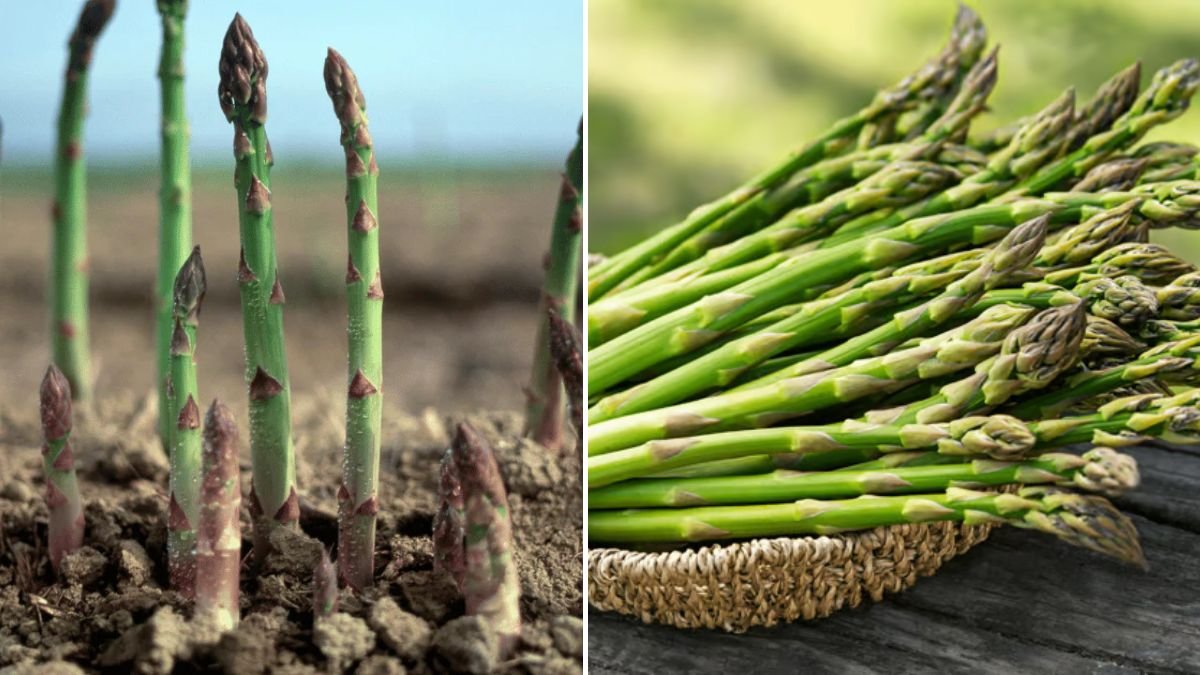
1. Asparagus (Asparagus officinalis)
Asparagus is one of the most iconic perennial vegetables. Once established, asparagus beds can produce tender, flavorful spears for 15–20 years. It prefers full sun and well-drained soil enriched with compost. After planting, minimal maintenance is required beyond annual fertilization and weed control. Asparagus’s deep root system improves soil structure and reduces erosion, making it a cornerstone of sustainable gardens. Early spring harvests offer a nutrient-rich start to the season, and properly maintained beds continue producing year after year.
2. Rhubarb (Rheum rhabarbarum)
Rhubarb is a hardy perennial vegetable grown for its tart stalks, which are ideal for pies, jams, and sauces. It thrives in fertile, moist soil and tolerates partial shade. Once established, rhubarb plants can produce harvests for decades. Its large leaves provide soil cover and reduce evaporation, while its long lifespan reduces the need for yearly replanting. Only the stalks are edible, as rhubarb leaves contain oxalic acid. The tangy flavor and nutritional content of rhubarb make it a valuable addition to any sustainable garden.

3. Sorrel (Rumex acetosa)
Sorrel is a leafy perennial with a lemony flavor that brightens salads, soups, and sauces. It grows well in well-drained soil and tolerates partial shade, making it adaptable to a variety of garden conditions. Sorrel often self-seeds, ensuring it returns year after year without additional effort. Early spring harvests make it one of the first greens available in the season. Regular harvesting encourages tender new leaves and prolongs productivity throughout the year, making it a versatile addition to perennial vegetable beds.
4. Walking Onion (Allium × proliferum)
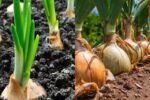
Walking onions, also known as Egyptian or tree onions, are hardy perennials that produce clusters of small bulbs at the tips of stalks. These “walking” bulbs bend to the ground, take root, and form new plants. Walking onions are easy to grow, low-maintenance, and produce both edible green shoots and mature bulbs. Their self-propagating habit ensures a steady supply of onions each year with minimal input, making them ideal for sustainable gardens and permaculture systems.

5. Lovage (Levisticum officinale)
Lovage is a perennial herb with celery-like stalks and leaves that add flavor to soups, stews, and salads. It grows tall and produces aromatic foliage that attracts beneficial insects such as lacewings and pollinators, supporting garden biodiversity. Lovage thrives in fertile, well-drained soil with minimal maintenance. Once established, it returns each year, providing a reliable and flavorful crop while enhancing the ecological health of your garden.
6. Horseradish (Armoracia rusticana)
Horseradish is a robust perennial known for its spicy roots. Once planted, it requires very little care and can thrive in a variety of soils, though it prefers fertile, well-drained conditions. Horseradish spreads via rhizomes, so it’s best grown in a contained area to prevent it from overtaking other plants. Its bold flavor makes it a culinary favorite, and its resilience and long lifespan make it a valuable perennial for sustainable gardens.
7. Sea Kale (Crambe maritima)
Sea kale is a lesser-known perennial vegetable valued for its tender shoots and edible leaves. It thrives in sandy, well-drained soil and full sun, making it ideal for coastal or challenging garden sites. Sea kale’s ornamental foliage adds structure to perennial beds while supporting pollinators and beneficial insects. It can be blanched to produce delicate shoots similar to asparagus, and it continues producing leaves year after year with minimal effort.
8. Globe Artichoke (Cynara scolymus)
Globe artichokes are large, perennial vegetables grown for their edible flower buds. They require fertile soil and full sun but offer multiple seasons of harvest once established. Artichokes also attract pollinators with their vibrant flowers, contributing to overall garden health. Their silvery foliage provides visual interest, while their long harvest period adds continuous edible value. Artichokes are ideal for sustainable gardens that prioritize low-maintenance, long-lived crops.
9. Good King Henry (Chenopodium bonus-henricus)
Good King Henry, also known as Lincolnshire spinach, is a perennial green with nutrient-rich leaves and shoots. It is hardy, low-maintenance, and adaptable to a range of soil conditions. Good King Henry grows quickly in spring and early summer, providing tender greens similar to spinach. Its resilience, self-seeding capability, and edible shoots make it a valuable addition to perennial vegetable gardens, especially for those seeking low-input, sustainable crops.
10. Watercress (Nasturtium officinale)
Watercress is a fast-growing, perennial aquatic or semi-aquatic vegetable with peppery leaves that are highly nutritious. It thrives in wet soil or slow-moving water with full sun or partial shade. Watercress requires consistent moisture, but its rapid growth and high nutrient content make it a valuable perennial crop for home gardeners. Its ability to grow year after year with minimal intervention adds both culinary and ecological value to sustainable gardens.