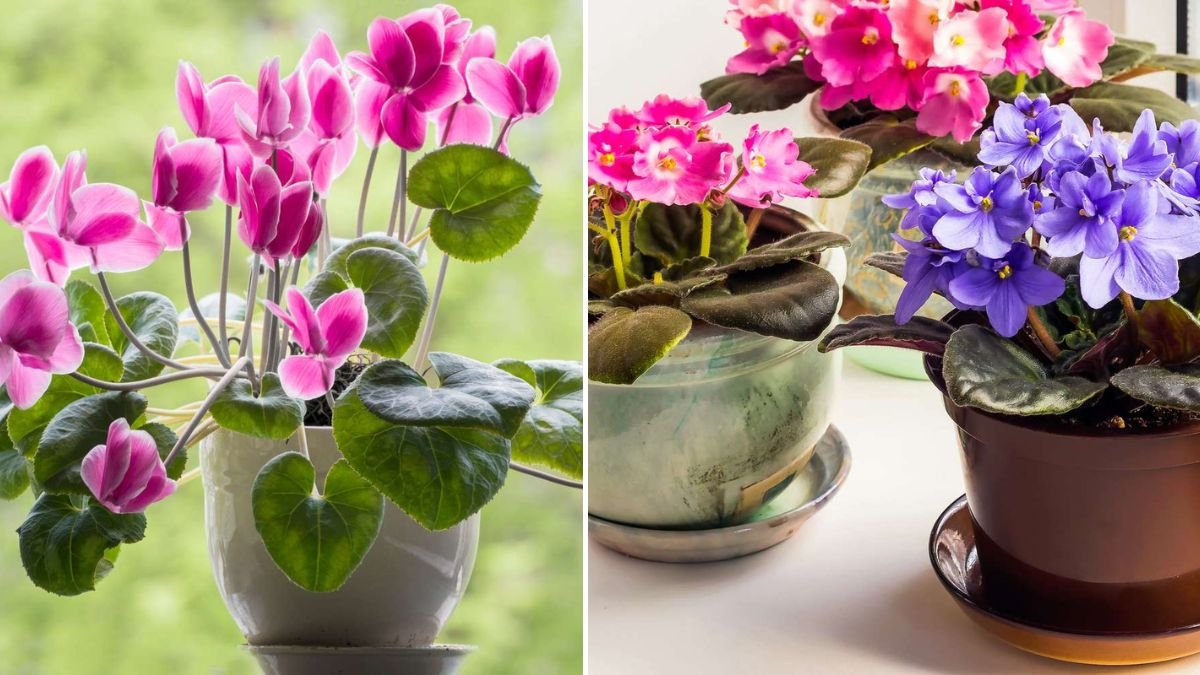
Indoor plants are more than just décor—they bring life, color, and a touch of nature into our homes. While many houseplants offer lush greenery, flowering houseplants take it a step further, providing bursts of color, fragrance, and energy that brighten up any room. From vibrant orchids to cheerful African violets, flowering houseplants can transform a dull corner into a lively, inviting space.
If you want to add colorful blooms indoors without the hassle of high-maintenance gardening, these 18 flowering houseplants are perfect for your home. Each one brings something unique, whether it’s long-lasting flowers, eye-catching foliage, or a delightful fragrance.
1. African Violet (Saintpaulia)
African violets are small but spectacular, producing clusters of velvety flowers in shades of purple, pink, blue, and white.
Care tips:
- Bright, indirect light is best.
- Keep the soil slightly moist, avoiding water on the leaves.
- Fertilize monthly with a balanced houseplant fertilizer.
African violets are perfect for tabletops, shelves, or windowsills, providing continuous blooms with minimal space requirements.
2. Peace Lily (Spathiphyllum)
Peace lilies are prized for their glossy green leaves and elegant white blooms. They thrive in low-light areas, making them perfect for offices or darker rooms.
Care tips:
- Water when the soil feels dry to the touch.
- Avoid direct sunlight to prevent leaf burn.
- Fertilize monthly during the growing season.
Beyond their beauty, peace lilies also improve indoor air quality by filtering toxins.
3. Orchid (Phalaenopsis)
Orchids are classic flowering houseplants with long-lasting blooms in a wide variety of colors and patterns. Phalaenopsis orchids are particularly popular because of their resilience indoors.
Care tips:

- Bright, indirect light near an east- or west-facing window is ideal.
- Water weekly, allowing the potting medium to dry slightly between waterings.
- Fertilize lightly every two weeks during the growing season.
Orchids make striking centerpieces and can bloom for several months, adding elegance and charm to any room.
4. Kalanchoe
Kalanchoe is a succulent with clusters of small, colorful flowers that last for weeks. It’s ideal for bright indoor locations and requires minimal care.
Care tips:
- Provide bright, indirect sunlight.
- Water when the soil dries out.
- Remove spent blooms to encourage continuous flowering.
Kalanchoe’s vibrant reds, pinks, yellows, and oranges make it a cheerful addition to any windowsill or tabletop.
5. Bromeliad
Bromeliads are tropical plants with striking, long-lasting flowers and colorful foliage. Many produce “pups” after flowering, allowing you to multiply your collection easily.
Care tips:
- Bright, indirect light is best.
- Water the central cup and keep the soil lightly moist.
- Avoid direct sunlight that can scorch leaves.
Bromeliads’ exotic appearance adds drama and tropical flair to indoor spaces.
6. Anthurium
Anthuriums feature shiny, dark green leaves and bright red, heart-shaped flowers. They’re long-lasting and ideal for indoor décor.
Care tips:
- Bright, indirect light promotes flowering.
- Keep soil consistently moist but not waterlogged.
- Mist leaves occasionally to increase humidity.
Anthuriums are excellent for modern décor, bringing bold pops of color into living rooms and offices.

7. Cyclamen
Cyclamen produce vibrant flowers in pink, red, and white atop elegant, patterned foliage. They bloom during winter, adding color when many other plants are dormant.
Care tips:
- Provide bright, indirect light and cool temperatures.
- Water from the bottom to prevent tuber rot.
- Keep soil moist but avoid overwatering.
Cyclamen are perfect for winter blooming and make excellent gifts due to their cheerful flowers.
8. Hibiscus
Indoor hibiscus plants produce large, tropical flowers in bold reds, pinks, yellows, and oranges. They require a bit more care but reward you with stunning blooms.
Care tips:
- Bright light is essential; place near a sunny window.
- Keep soil consistently moist during the growing season.
- Fertilize regularly to encourage abundant blooms.
Hibiscus brings an exotic, tropical feel indoors, especially in warm, sunny rooms.
9. Gardenia
Gardenias are known for their fragrant, creamy white flowers and glossy green leaves. They thrive in humid indoor environments.
Care tips:
- Bright, indirect light.
- Keep soil consistently moist but well-drained.
- Provide humidity through misting or a humidity tray.
Gardenias are ideal for bedrooms or living spaces where their fragrance can be appreciated.
10. Begonia
Begonias are versatile indoor plants with vibrant flowers and interesting foliage. They bloom in shades of pink, red, orange, and white.

Care tips:
- Bright, indirect light.
- Keep soil slightly moist.
- Fertilize every 2–4 weeks during blooming season.
Begonias work well in pots or hanging baskets, providing color and texture to any indoor space.
11. Streptocarpus (Cape Primrose)
Streptocarpus is a small flowering houseplant with long-lasting blooms in purple, pink, blue, and white. It’s perfect for bright indoor locations.
Care tips:
- Indirect sunlight is best.
- Keep soil evenly moist.
- Fertilize monthly for continuous flowering.
Their compact size makes them ideal for desks, shelves, or small indoor gardens.
12. Calceolaria (Pocketbook Plant)
Calceolaria produces unusual, pouch-shaped flowers in bright yellows, oranges, and reds. They’re conversation starters in any indoor garden.
Care tips:
- Bright, indirect light.
- Keep soil moist but well-drained.
- Avoid hot, dry conditions.
Calceolaria adds quirky charm and vibrant color to indoor spaces.
13. Lipstick Plant (Aeschynanthus radicans)
The lipstick plant has trailing vines and tubular red flowers that resemble lipstick tubes. It’s excellent for hanging baskets.
Care tips:

- Bright, indirect light promotes flowering.
- Keep soil consistently moist.
- Provide high humidity through misting or pebble trays.
This plant adds dramatic, cascading color to any room.
14. Flaming Katy (Kalanchoe blossfeldiana)
A compact flowering succulent with clusters of bright blooms. Ideal for beginners and low-maintenance indoor gardening.
Care tips:
- Bright, indirect light.
- Water sparingly.
- Remove spent blooms for continuous flowering.
Flaming Katy is perfect for windowsills, adding cheerful color year-round.
15. Clivia
Clivia plants produce striking orange or yellow blooms and thrive in low-light indoor areas.
Care tips:
- Bright, indirect light.
- Allow soil to dry slightly between waterings.
- Fertilize during active growth periods.
Clivia is a durable flowering houseplant that adds a tropical feel to indoor spaces.
16. Amaryllis
Amaryllis bulbs produce large, dramatic flowers indoors, often blooming in winter. They’re perfect for holiday décor or statement plants.
Care tips:
- Place in bright, indirect light.
- Water sparingly until shoots appear, then increase watering.
- Fertilize lightly during flowering.
Amaryllis flowers are bold and long-lasting, making them indoor focal points.

17. Streptocarpella
A trailing plant with colorful blooms, perfect for hanging baskets or pots.
Care tips:
- Bright, indirect sunlight.
- Keep soil moist.
- Fertilize regularly to encourage blooming.
It creates cascading color indoors, ideal for brightening corners and shelves.
18. Lipstick Vine (Aeschynanthus)
Similar to the lipstick plant, this vine has vibrant tubular flowers that cascade beautifully.
Care tips:
- Bright, indirect light.
- Keep soil evenly moist.
- Provide humidity for best growth.
Lipstick vines are ideal for hanging baskets, providing trailing color that adds depth to indoor décor.
Tips for Thriving Flowering Houseplants
- Provide Adequate Light – Most flowering houseplants need bright, indirect sunlight to thrive.
- Water Properly – Avoid overwatering. Let the topsoil dry slightly between waterings for most plants.
- Fertilize Regularly – Use a balanced fertilizer during the growing season to encourage blooms.
- Maintain Humidity – Many flowering houseplants benefit from higher humidity, achieved with misting or pebble trays.
- Remove Spent Flowers – Deadheading encourages new blooms and keeps plants looking fresh.
- Choose the Right Container – Ensure pots have drainage holes to prevent root rot.
Final Thoughts
Flowering houseplants are the ultimate way to bring color, life, and vibrancy into your home. From the delicate petals of African violets to the tropical flair of bromeliads and hibiscus, each of these 18 plants adds its own charm and personality. With proper light, watering, and care, these plants will reward you with continuous blooms and lush foliage, creating indoor spaces that are lively, welcoming, and full of energy.