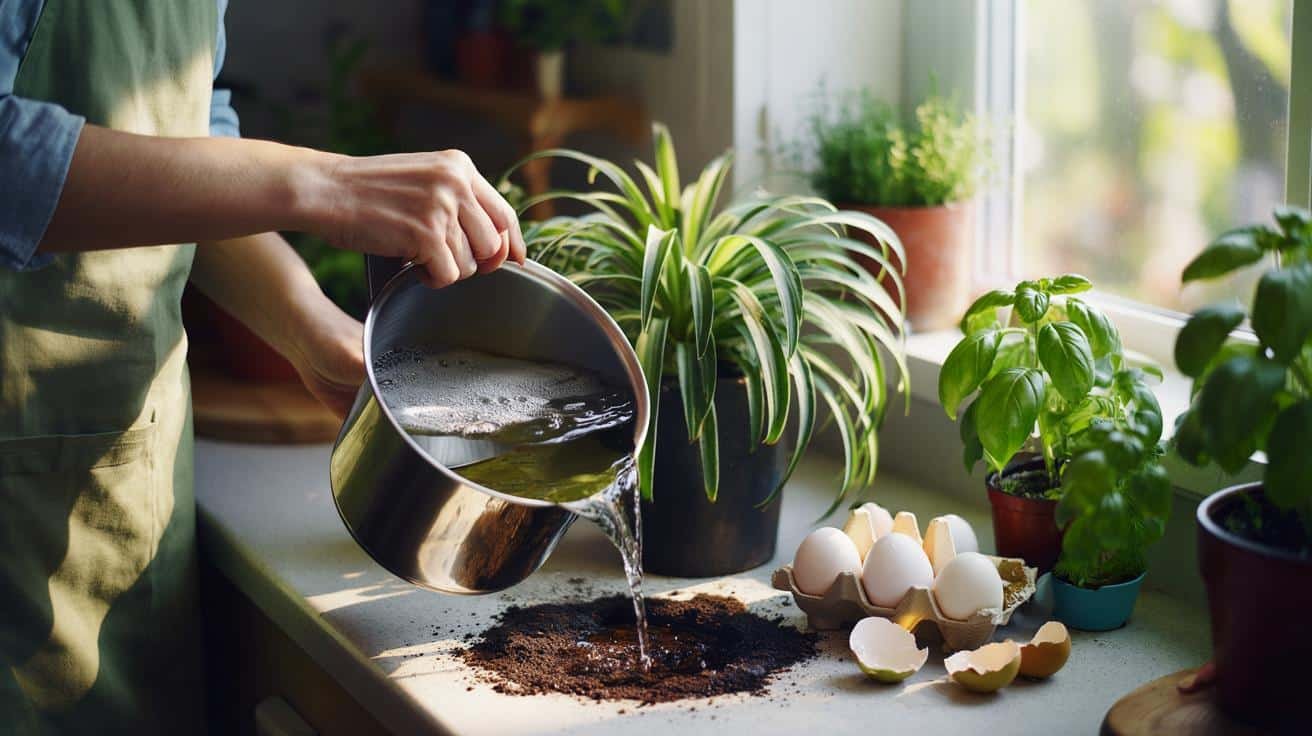
In the world of home gardening, some of the most effective practices are also the simplest. Long before bottled fertilizers and synthetic soil boosters became common, gardeners relied on everyday household byproducts to nourish their plants. One such habit—often overlooked or dismissed as folklore—is reusing the cooled water left over from boiling eggs to water plants.
Far from being a myth, this practice has a solid scientific basis. When used correctly, egg-boiling water can provide a small but useful source of calcium, a nutrient that plays a crucial role in plant structure, root development, and stress resistance.
However, like many gardening tips, its effectiveness depends on understanding why it works, when it helps, and when it doesn’t.
Why Calcium Matters for Plants
Calcium is an essential plant nutrient, but unlike nitrogen or potassium, it does not directly increase leaf size or growth speed. Instead, calcium works behind the scenes, strengthening plants at a cellular level.
Calcium helps plants by:
- Strengthening cell walls
- Supporting root growth and development
- Improving nutrient transport within plant tissues
- Reducing susceptibility to disease and stress
- Preventing physiological disorders such as blossom end rot
Without adequate calcium, plants may grow quickly but remain structurally weak, making them prone to collapse, rot, and nutrient imbalances.
How Egg-Boiling Water Contains Calcium
Eggshells are composed of roughly 90–95% calcium carbonate. When eggs are boiled, a small amount of this calcium dissolves into the water, especially if the shells develop tiny cracks during cooking.
While the concentration is not high, the calcium becomes:

- Water-soluble
- Immediately available to plant roots
- Gentle and non-toxic
This makes cooled egg-boiling water a mild, natural calcium supplement, particularly useful for plants growing in containers or depleted soils.
Why This Method Is Gentle and Safe
One of the biggest advantages of egg-boiling water is that it provides calcium without altering soil chemistry aggressively.
Unlike powdered lime or strong mineral amendments, egg water:
- Raises soil calcium slowly
- Does not significantly affect pH when used sparingly
- Carries minimal risk of overapplication
This makes it ideal for indoor plants, seedlings, and sensitive garden beds where precision matters.
Which Plants Benefit Most
Not all plants respond equally to added calcium. Egg-boiling water is most beneficial for plants that are either heavy calcium users or prone to calcium-related issues.
Plants That Benefit Strongly
- Tomatoes
- Peppers
- Eggplants
- Squash and zucchini
- Beans
- Cabbage family (broccoli, kale, cauliflower)
These plants rely heavily on calcium to support fast cell division and fruit formation.
Houseplants That May Benefit
- Fiddle leaf fig
- Monstera
- Peace lily
- Spider plant
- Pothos
For houseplants, egg water supports stronger stems and healthier root systems rather than visible growth spurts.
What Calcium Actually Fixes—and What It Doesn’t
It’s important to be realistic about what egg-boiling water can achieve.

What It Helps With
- Weak stems
- Blossom end rot (as a preventative, not a cure)
- Root tip damage
- Cell wall weakness
- Stress from rapid growth
What It Won’t Fix
- Nitrogen deficiency
- Poor sunlight
- Overwatering or underwatering
- Compact, oxygen-poor soil
Calcium helps plants use what they already have more effectively, but it cannot replace proper care.
How to Use Egg-Boiling Water Correctly
The method is simple, but a few rules matter.
Step 1: Let the Water Cool Completely
Never water plants with hot or warm egg water. Heat can damage roots and beneficial soil organisms.
Step 2: Ensure No Salt Is Added
Salted water is harmful to plants. Egg water should be plain, without salt, vinegar, or seasoning.
Step 3: Use It as Part of Normal Watering
Egg water should replace one regular watering—not be added on top of existing moisture.
Step 4: Use in Moderation
Once every 2–4 weeks is sufficient. More frequent use does not increase benefits and may disrupt nutrient balance.
Why Calcium From Water Is Especially Useful
Calcium is immobile in plants. Once absorbed, it stays where it is deposited. This means plants need a steady, consistent supply rather than large doses.
Liquid calcium sources like egg water:

- Reach root zones evenly
- Move with soil moisture
- Are absorbed during active growth
This makes small, regular amounts more effective than infrequent heavy applications.
Egg Water vs. Eggshells: Which Is Better?
Many gardeners add crushed eggshells directly to soil. While beneficial long-term, eggshells:
- Decompose very slowly
- Release calcium over months or years
- Are not immediately available to plants
Egg-boiling water, by contrast, provides instant access to dissolved calcium.
The two methods complement each other well: eggshells improve long-term soil health, while egg water supports current growth.
Indoor Plants and Container Gardening
Container plants are especially prone to calcium deficiency because:
- Potting mixes are often calcium-poor
- Nutrients leach out quickly
- Root zones are limited
Using egg-boiling water occasionally helps replenish minerals without the risk of fertilizer buildup.
For indoor plants, it also avoids introducing odors or pests that crushed eggshells sometimes attract.
A Sustainability Bonus
Beyond plant health, reusing egg-boiling water supports a more sustainable household routine.

It helps:
- Reduce water waste
- Recycle kitchen byproducts
- Lower dependence on bottled fertilizers
- Create a closed-loop home system
This aligns with low-impact gardening practices that prioritize resource efficiency over chemical inputs.
Common Mistakes to Avoid
Even gentle practices can cause problems if misused.
Avoid:
- Using salted egg water
- Applying too frequently
- Expecting immediate visible changes
- Using on waterlogged soil
- Using as a substitute for complete nutrition
Calcium supports structure—it does not drive rapid growth.
Signs It’s Helping
Plants benefiting from improved calcium availability may show:
- Stronger, thicker stems
- Reduced leaf edge browning
- Better fruit firmness
- Improved resistance to wilting
- More consistent growth patterns
Changes are subtle but cumulative.
When Not to Use Egg-Boiling Water
Skip this method if:

- Your soil already tests high in calcium
- You grow acid-loving plants like blueberries or azaleas
- You regularly apply lime or calcium fertilizers
- The water contains salt
More calcium is not always better.
Conclusion: A Small Habit With Real Benefits
Watering plants with cooled egg-boiling water won’t replace good soil, sunlight, or balanced nutrition—but it can quietly strengthen plants where it matters most.
By supplying gentle, plant-available calcium, this simple habit supports sturdier growth, healthier roots, and improved resilience—especially in containers and fast-growing crops.