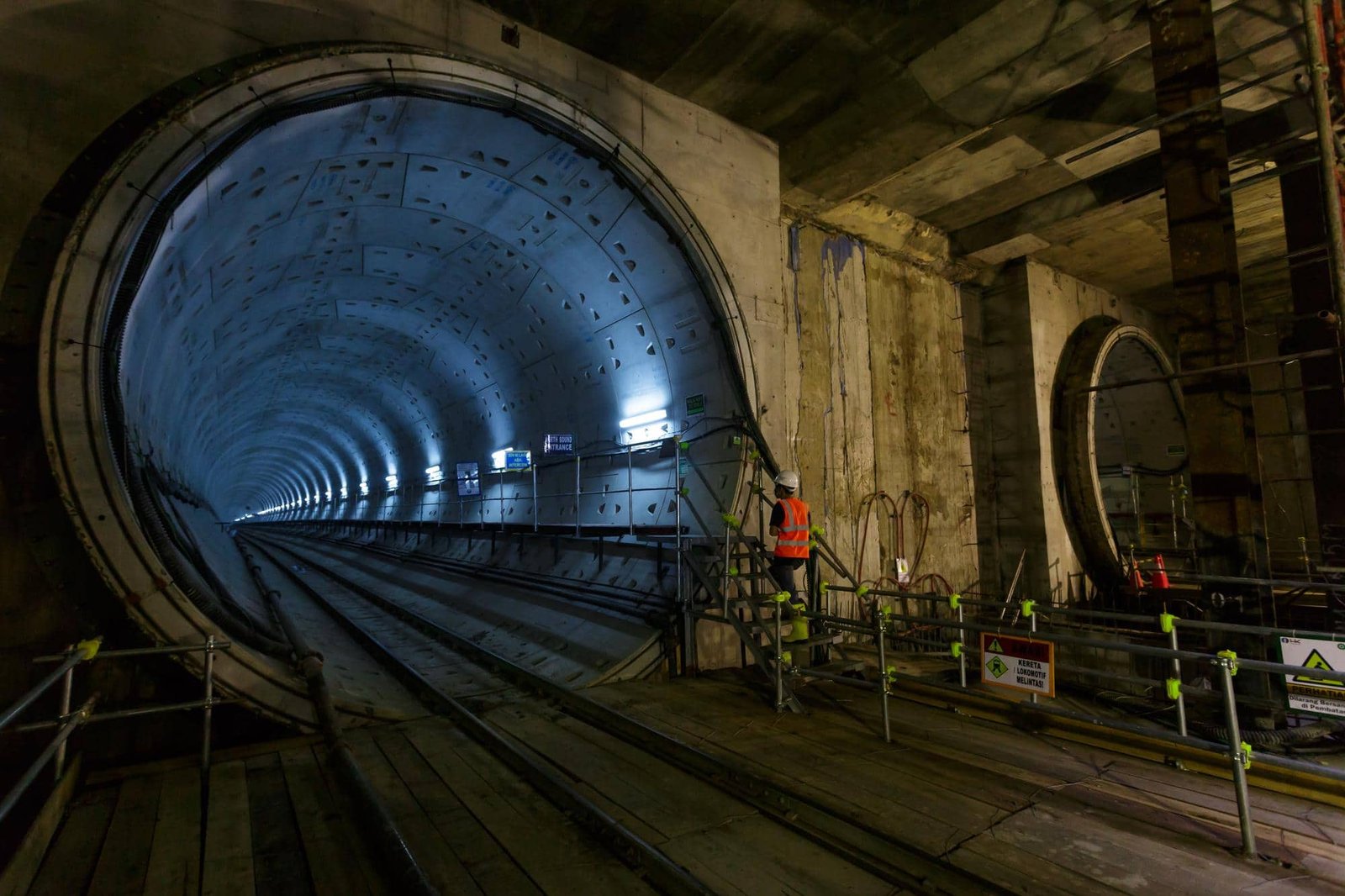
For centuries, the idea of physically linking continents beneath the ocean has lived at the boundary between engineering ambition and science fiction. Today, that boundary is beginning to blur. A mega engineering project designed to create a deep-sea rail connection between continents has officially entered its construction phase, marking a historic moment in global infrastructure development.
While the final tunnel itself remains years—if not decades—away, confirmed early-stage construction, seabed surveys, and enabling works are now underway, signaling that what was once theoretical is being treated as a real, buildable project. If completed, the underwater rail line would rank among the largest and most complex infrastructure projects ever attempted by humanity.
The Vision: Connecting Continents Beneath the Ocean
The project’s core objective is audacious: a continuous rail link running beneath the seabed, allowing trains to travel between continents without ships or aircraft. Unlike existing undersea tunnels such as the Channel Tunnel, which spans just 50 kilometers between England and France, this proposal operates on an entirely different scale.
The planned tunnel would stretch hundreds of kilometers, crossing some of the deepest, coldest, and most geologically complex sections of the ocean floor. High-speed electric trains would carry both passengers and freight, potentially transforming global trade routes and long-distance travel.
Supporters argue that such a link would redefine international connectivity in the same way transcontinental railways reshaped nations in the 19th century.
What “Construction Underway” Actually Means
Despite dramatic headlines, it is important to clarify what construction currently involves.
At this stage, confirmed activities include:

- Deep-sea geological surveys
- Seismic mapping of the ocean floor
- Test drilling and core sampling
- Environmental impact assessments
- Construction of onshore support facilities
- Development of specialized tunnel-boring technology
These steps represent the physical beginning of the project, even though the main tunnel excavation has not yet started. In megaproject terms, this phase is critical—mistakes made here can doom an entire venture.
Why This Project Is Being Taken Seriously Now
Similar concepts have been proposed before, often dismissed as too expensive, too risky, or too technologically demanding. What has changed is a convergence of capabilities.
Advances in Engineering
Modern tunnel-boring machines (TBMs) are larger, stronger, and more precise than ever before. They can now operate under extreme pressure and temperature conditions once thought impossible.
Experience With Deep Infrastructure
Oil and gas industries have spent decades drilling and operating at depths far greater than those required for rail tunnels, providing invaluable data on seabed behavior and material stress.
Climate and Energy Pressures
As aviation faces increasing scrutiny over emissions, electric rail—especially when powered by renewable energy—offers a lower-carbon alternative for long-distance transport.
The Immense Technical Challenges
Building a deep-sea rail tunnel is not simply “a longer Channel Tunnel.” The challenges multiply exponentially with distance and depth.
Pressure and Structural Integrity
At great depths, external water pressure is immense. Tunnel linings must withstand forces far beyond those encountered in land-based construction, with zero margin for failure.

Geological Uncertainty
Unlike land tunnels, seabed geology is less accessible and more variable. Fault lines, sediment layers, and underwater landslide zones must all be mapped and avoided.
Ventilation and Safety
Providing fresh air, emergency exits, and evacuation routes across hundreds of kilometers underwater requires unprecedented safety planning.
Maintenance Access
Once operational, the tunnel must be serviceable without disrupting traffic—a daunting requirement beneath the ocean floor.
Why Rail, Not Road or Hyperloop?
Rail was chosen for practical reasons.
High-speed electric trains:
- Are energy-efficient
- Scale well for freight
- Have proven long-distance reliability
- Require less onboard energy storage
Alternative concepts such as submerged highways or vacuum tubes face far greater safety and evacuation challenges at this scale.
Rail also allows for gradual speed increases, reducing stress on passengers and infrastructure.

Economic Implications on a Global Scale
The project’s estimated cost runs into the hundreds of billions of dollars, placing it among the most expensive infrastructure projects ever proposed.
However, proponents argue that cost alone does not determine value.
Potential economic impacts include:
- Faster intercontinental freight movement
- Reduced dependence on congested shipping lanes
- New trade corridors independent of weather or geopolitics
- Long-term employment across engineering, manufacturing, and operations
Much like the Suez Canal or transcontinental railroads, the tunnel would not simply serve transportation—it would reshape economic geography.
Environmental Considerations and Controversy
No megaproject of this scale escapes environmental scrutiny.
Supporters emphasize:
- Reduced aviation emissions over time
- Minimal surface disruption compared to new ports or airports
- Long-term efficiency gains
Critics raise concerns about:

- Seabed disturbance during construction
- Impacts on deep-sea ecosystems
- Unknown cumulative effects of vibration and heat
This is why environmental studies form a major part of the current construction phase. Approval for full excavation depends heavily on their findings.
Geopolitics Beneath the Waves
An underwater continental rail link is not just an engineering project—it is a geopolitical one.
Questions remain over:
- Jurisdiction beneath international waters
- Security and border controls
- Emergency response coordination
- Ownership and operation
The project requires unprecedented cooperation between governments, regulators, and international bodies. Its success depends as much on diplomacy as on engineering.
A Timeline Measured in Decades
Even with construction officially underway, completion is not imminent.
Experts suggest:
- 5–10 years for surveys, testing, and approvals
- 15–20 years for full tunnel excavation and outfitting
- Several additional years for testing and commissioning
This places the earliest possible opening well into the mid-21st century.

Why Start Now?
Critics ask why societies should commit to such a distant goal amid immediate challenges. Supporters respond with a familiar argument: projects of civilizational scale must begin long before their benefits are needed.
Every major infrastructure leap—from canals to railways to power grids—required generations to realize. Waiting until demand becomes urgent often means arriving too late.
Conclusion: A Project That Redefines Possibility
The confirmation of construction activity on a deep-sea continental rail tunnel marks a turning point. While the final structure remains years away, the decision to move from concept to physical groundwork signals a belief that this project is no longer impossible—only difficult.
If completed, it would stand as one of humanity’s greatest engineering achievements, quietly carrying trains beneath the ocean where continents once seemed forever divided.