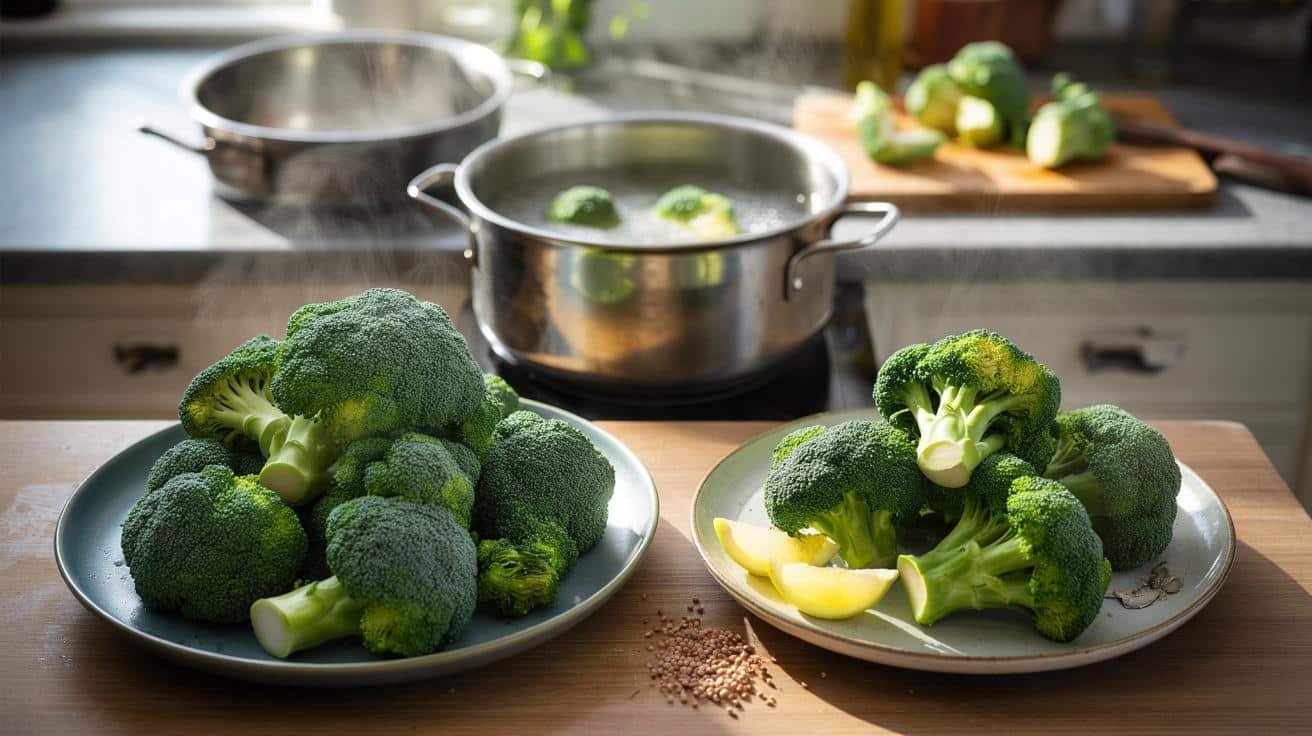
Broccoli has long been praised as one of the healthiest vegetables on the planet. Packed with vitamin C, vitamin K, folate, fiber, and powerful antioxidant compounds like sulforaphane, it regularly tops lists of “superfoods.” Yet how you prepare broccoli can dramatically change how many of these nutrients actually make it onto your plate.
Contrary to popular belief, raw broccoli isn’t always best—and boiling it can be one of the worst options. Research increasingly shows that a specific cooking method, neither raw nor boiled, preserves the highest levels of broccoli’s antioxidant vitamins while improving digestibility and flavor.
Understanding why requires a closer look at how heat, water, and enzymes interact inside this deceptively simple green vegetable.
Why Broccoli Is So Nutrient-Dense
Broccoli belongs to the cruciferous vegetable family, which also includes kale, cauliflower, Brussels sprouts, and cabbage. What makes broccoli special is its combination of vitamins and bioactive compounds:
- Vitamin C, a water-soluble antioxidant
- Vitamin K, essential for blood clotting and bone health
- Folate, critical for cell division
- Carotenoids, including beta-carotene and lutein
- Glucosinolates, which break down into sulforaphane
Sulforaphane, in particular, has been linked to anti-inflammatory effects, improved detoxification, and potential cancer-protective properties.
However, sulforaphane does not exist in broccoli in its active form. It must be created.
The Enzyme That Makes Broccoli Powerful
Broccoli contains a compound called glucoraphanin, which is converted into sulforaphane by an enzyme known as myrosinase. This conversion occurs when broccoli is chopped, chewed, or lightly heated.

Here’s the catch:
- Too much heat destroys myrosinase
- Too much water washes nutrients away
This is why preparation matters so much.
Why Boiling Broccoli Is the Worst Option
Boiling broccoli is common—but nutritionally destructive.
When broccoli is submerged in boiling water:
- Vitamin C leaches into the water
- B vitamins are lost
- Glucosinolates dissolve and are discarded with the cooking water
- Myrosinase is rapidly inactivated
Studies have shown that boiling can reduce broccoli’s antioxidant content by 40–70%, depending on cooking time.
Even if the broccoli remains bright green and tender, much of its nutritional value is gone unless the cooking water is consumed—which most people discard.
Is Raw Broccoli Better?
Raw broccoli does retain myrosinase activity, which helps generate sulforaphane. However, raw broccoli presents its own issues:

- Tough cell walls reduce nutrient absorption
- Some antioxidants remain locked inside fibers
- Digestive discomfort and bloating are common
- Certain nutrients are less bioavailable
While raw broccoli contains nutrients, the body does not always absorb them efficiently.
So if boiling is too destructive and raw is inefficient, what’s the ideal middle ground?
The Best Way to Cook Broccoli: Light Steaming
The method that consistently preserves the highest levels of antioxidant vitamins while maintaining enzyme activity is light steaming.
Why Steaming Works
Steaming broccoli for a short time—typically 3 to 5 minutes—achieves several things at once:
- Softens cell walls, increasing nutrient availability
- Minimizes contact with water, preventing nutrient loss
- Preserves vitamin C better than boiling
- Partially retains myrosinase activity
- Enhances flavor without overcooking
Research shows that light steaming retains up to 90% of vitamin C and allows for significant sulforaphane formation.
The Crucial Timing Factor
Steaming time matters more than temperature.
- Under 3 minutes: broccoli remains too rigid
- 3–5 minutes: optimal balance of enzyme preservation and absorption
- Over 5–7 minutes: rapid nutrient degradation begins
The broccoli should be bright green, tender-crisp, and aromatic—not dull, mushy, or olive-colored.

A Smart Trick: Chop and Rest
One simple trick dramatically increases sulforaphane production:
Chop broccoli and let it rest for 30–40 minutes before cooking.
This resting period allows myrosinase to convert glucoraphanin into sulforaphane before heat can deactivate the enzyme.
After resting, even gentle cooking preserves more sulforaphane than immediate cooking.
This small step can double or triple sulforaphane levels.
What About Microwaving?
Microwaving often gets a bad reputation, but when used correctly, it can be surprisingly effective.
Short microwave cooking with minimal water:

- Preserves vitamin C
- Limits nutrient leaching
- Softens cell walls efficiently
The key is low power and short duration. High-power microwaving for long periods can destroy enzymes and antioxidants similarly to boiling.
Steaming remains more consistent, but gentle microwaving can be a close second.
Sautéing and Roasting: Flavor vs. Nutrition
Sautéing and roasting improve flavor through caramelization but involve higher temperatures.
At high heat:
- Myrosinase is destroyed
- Some antioxidants degrade
- Fat-soluble nutrients may increase in absorption
If you enjoy roasted broccoli, combining it with a source of myrosinase—such as raw mustard, radish, or arugula—can help restore sulforaphane production.
This culinary pairing compensates for enzyme loss.
The Role of Fat in Nutrient Absorption
Adding a small amount of healthy fat—such as olive oil—can improve absorption of fat-soluble compounds like beta-carotene and vitamin K.

Light steaming followed by a drizzle of oil provides both antioxidant preservation and improved nutrient uptake.
Common Mistakes That Reduce Broccoli’s Benefits
Even with good intentions, many people undermine broccoli’s value:
- Oversteaming “until soft”
- Boiling and draining without using the water
- Cooking immediately after chopping
- Reheating multiple times
Each step chips away at antioxidant content.
How to Tell You’ve Cooked It Right
Perfectly cooked broccoli should:
- Be vivid green
- Yield slightly when pierced
- Smell fresh, not sulfurous
- Retain a gentle crunch
If broccoli smells strongly cabbage-like, it has likely been overcooked.
Conclusion: Gentle Heat, Maximum Power
Neither boiled nor raw, lightly steamed broccoli offers the best balance of antioxidant preservation, enzyme activity, and nutrient absorption.