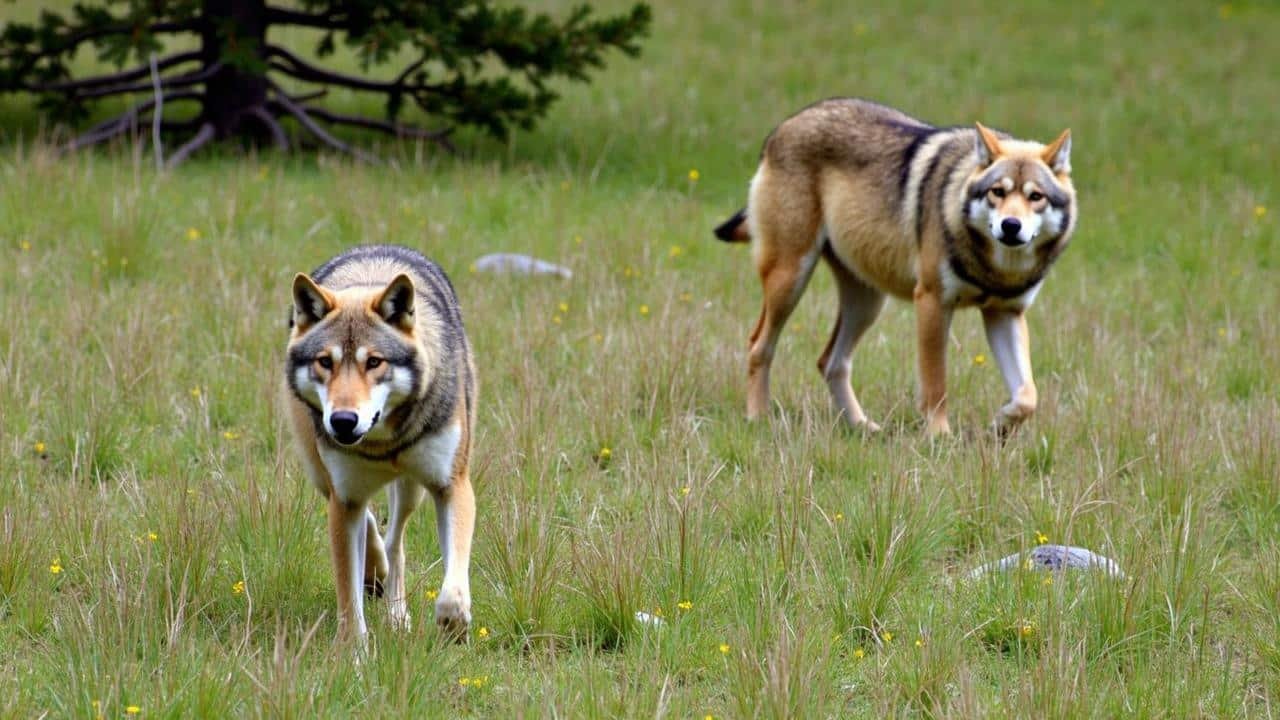
In the early 20th century, wolves were systematically eradicated from Yellowstone National Park. Viewed as dangerous predators and competitors for game, they were hunted to local extinction by the 1920s. At the time, few could have predicted that removing a single species would trigger ecological changes that rippled through rivers, forests, and entire wildlife populations for decades.
Since their reintroduction—an effort that gained full momentum in the late 1990s and showed widespread, measurable effects in the years following—wolves have transformed Yellowstone in ways that continue to reshape scientific understanding of ecosystems. By 2008 and beyond, researchers began documenting dramatic landscape-level changes, revealing one of the world’s most powerful examples of a trophic cascade in action.
Yellowstone Before Wolves: An Imbalanced Ecosystem
Without wolves, Yellowstone’s ecosystem lost its top predator. Elk populations expanded rapidly, especially in valleys and along riverbanks where food was abundant and predators were scarce. Over time, this led to intense overgrazing.
Young willows, aspens, and cottonwoods were heavily browsed, preventing forests from regenerating. Riverbanks became bare and unstable. Beavers—dependent on willow for food and dam construction—declined sharply. Songbirds lost nesting habitat. What appeared to be a thriving elk population was actually a sign of ecological imbalance.
The land itself was changing, but in ways that went largely unnoticed until wolves returned.
The Return of the Wolf
Wolves were officially reintroduced to Yellowstone in 1995 and 1996, when several packs were released from Canada. Initially controversial, the program faced opposition from ranchers and hunters concerned about livestock losses and reduced game populations.
However, by the late 2000s, scientists began to observe striking ecological changes. Wolves did not simply reduce elk numbers; they fundamentally altered elk behavior. This behavioral shift proved to be just as important as population control.

How Wolves Changed Elk Behavior
Elk are highly adaptable animals, but they are also sensitive to predation risk. With wolves back in the landscape, elk avoided open valleys, riverbanks, and narrow corridors where escape was difficult.
As a result:
- Grazing pressure decreased in sensitive areas
- Elk moved more frequently instead of lingering
- Overbrowsed vegetation had a chance to recover
This phenomenon, known as the ecology of fear, demonstrated that predators influence ecosystems not only by killing prey, but by shaping how prey use the landscape.
Forests Reborn Along Riverbanks
One of the most visible changes occurred along Yellowstone’s rivers and streams. Willows and cottonwoods, once suppressed by constant browsing, began to grow taller and denser.
As vegetation recovered:
- Riverbanks became more stable
- Shade increased, cooling water temperatures
- Erosion slowed significantly
These changes improved habitat for fish and aquatic insects, demonstrating how a predator’s presence can indirectly influence river systems—something once thought impossible.
The Return of Beavers: Nature’s Engineers
As willow stands recovered, beavers returned in greater numbers. Beavers are keystone species in their own right, capable of reshaping entire landscapes through dam construction.

Beaver dams:
- Create wetlands
- Slow water flow
- Increase groundwater recharge
- Provide habitat for amphibians, birds, and fish
By 2008 and in the years that followed, increased beaver activity further amplified the changes initiated by wolves, reinforcing a cycle of ecosystem recovery.
Effects on Other Wildlife Populations
The return of wolves triggered a cascade of effects throughout Yellowstone’s food web.
Reduced Coyote Numbers
Wolves compete with and sometimes kill coyotes. As wolf populations stabilized, coyote numbers declined, allowing smaller prey species to rebound.
This led to increases in:
- Rabbits
- Mice and voles
- Ground-nesting birds
In turn, these animals supported higher numbers of hawks, foxes, and badgers.
Benefits for Scavengers
Wolves leave behind carcasses that provide food for a wide range of scavengers, especially in winter.

Species benefiting included:
- Ravens and eagles
- Bears emerging from hibernation
- Wolverines and foxes
This reliable food source increased survival rates during harsh seasons.
Changes to Soil and Plant Diversity
With reduced overgrazing, soils began to recover. Plant roots stabilized the ground, increased organic matter, and improved water retention.
Greater plant diversity followed, supporting:
- Pollinators
- Fungi and soil microbes
- A broader range of herbivores
The ecosystem became more resilient to drought, fire, and climate variability.
Rivers That Literally Changed Course
Perhaps the most striking claim—often met with skepticism—is that wolves changed Yellowstone’s rivers. While wolves did not physically move water, their indirect effects did alter river dynamics.
Healthier vegetation reduced erosion, narrowed river channels, and stabilized banks. Over time, some rivers became less braided and more sinuous, with deeper pools and more defined channels.

This demonstrated that top predators can influence not just living systems, but physical geography as well.
Addressing the Controversies
The Yellowstone wolf reintroduction has not been without debate. Some scientists argue that climate, hunting, and other factors also contributed to observed changes. Others caution against oversimplifying the narrative.
However, most ecologists agree on one point: wolves played a critical role in restoring balance. They were not the only factor, but they were a key catalyst that allowed natural processes to reassert themselves.
Lessons for Conservation Worldwide
Yellowstone’s experience offers valuable lessons for ecosystems around the globe:
- Top predators matter
- Behavior can be as important as population size
- Ecosystems are deeply interconnected
- Removing or restoring a single species can reshape entire landscapes
From lions in Africa to sharks in marine systems, predator loss often leads to ecological collapse—and predator recovery can drive renewal.
A Living Example of Ecological Resilience
Since 2008, the reintroduction of wolves into Yellowstone has continued to reshape riverbanks, forests, and wildlife populations. What began as a controversial experiment has become one of the most powerful demonstrations of how ecosystems function when allowed to recover.
Yellowstone is not frozen in time. It is a dynamic, evolving system, and wolves are now an essential part of that story.

Conclusion: When Predators Return, Balance Follows
The return of wolves to Yellowstone reminds us that nature is not a collection of isolated parts, but a web of relationships. By restoring a single missing thread, the entire tapestry began to mend.