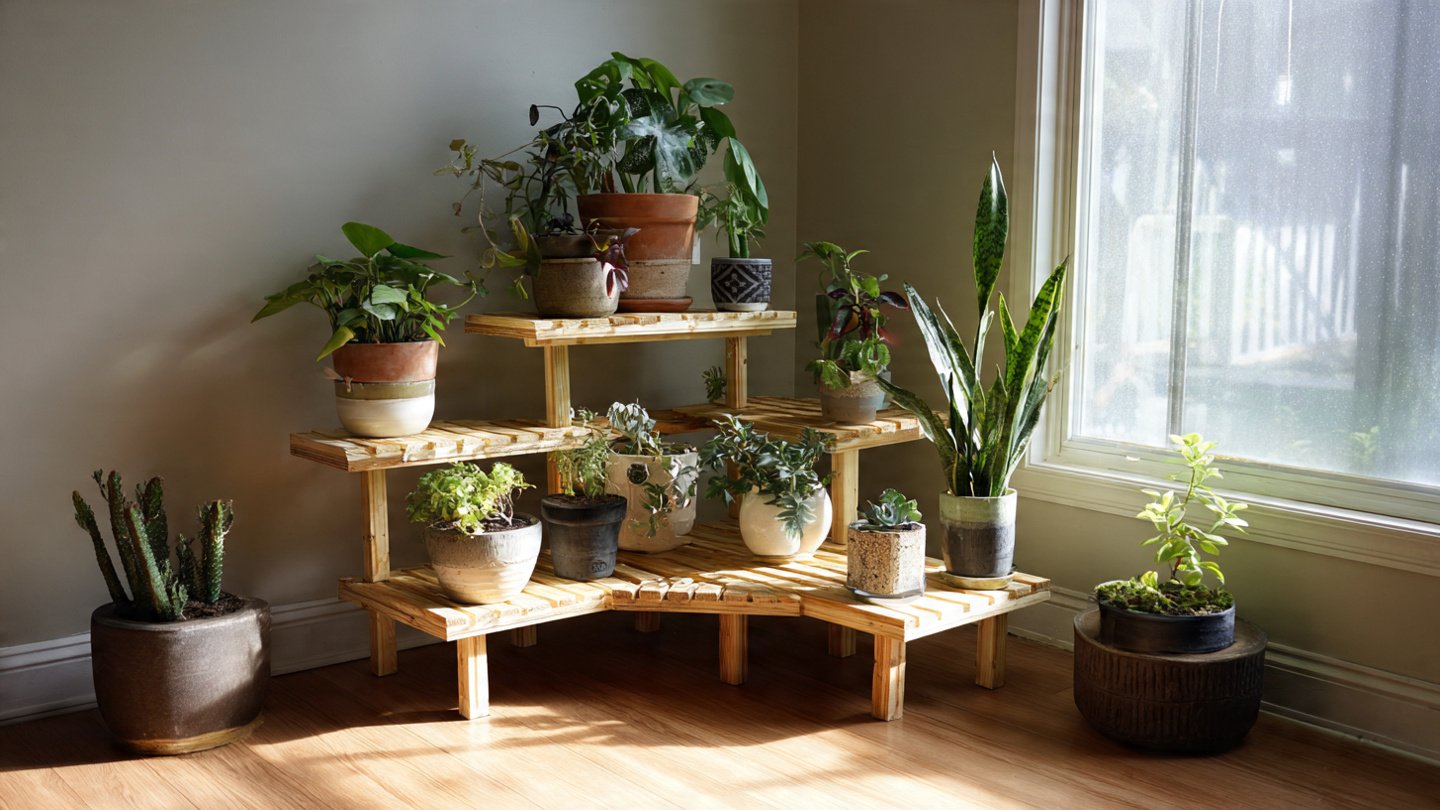
Building a multi-level plant stand from scratch is a fulfilling project that not only enhances your space but also provides a practical solution for displaying your favorite plants. With some basic materials and tools, you can create a beautiful, customized stand that suits your style and fits your home. This guide will lead you through the steps to design and construct your plant stand.
Materials and Tools Needed
Before beginning your project, gather the necessary materials and tools:
- Materials:
- Wood (e.g., pine, cedar, or plywood)
- Screws or nails
- Wood glue
- Sandpaper
- Wood stain or paint (optional)
- Tools:
- Measuring tape
- Saw (hand saw or power saw)
- Drill
- Screwdriver
- Level
- Paintbrush (if staining or painting)

Step 1: Designing Your Plant Stand
Before cutting any wood, sketch a design of your plant stand. Consider the following elements in your design:
- Size: Decide how many levels you want and the dimensions of each shelf. A common height for a multi-level stand is around 5 to 6 feet, with shelves spaced about 12 inches apart.
- Shape: Choose whether you want a rectangular or tiered design. A tiered design adds visual interest and can be more space-efficient.
- Stability: Ensure that your design includes support for each shelf to prevent sagging.
Step 2: Measuring and Cutting the Wood
Once your design is complete, measure and cut the wood accordingly:

- Measure the wooden planks according to your design specifications. Use a measuring tape for accuracy.
- Cut the vertical supports (legs) to your desired height.
- Cut the shelves to the desired width and length.
Remember to wear safety goggles and other protective gear while cutting wood.
Step 3: Assembling the Frame
With your pieces cut, begin assembling the frame:
- Start by attaching the vertical supports to the base. Use wood screws or nails for a strong hold.
- Make sure your frame is level; use the level tool for accuracy.
- Attach cross supports for added stability if required.
Allow the frame to dry and ensure it is sturdy before continuing.

Step 4: Attaching the Shelves
Once the frame is secure, you can add the shelves:
- Mark where each shelf will be located along the vertical supports.
- Attach the shelves using wood glue, screws, or nails, depending on your design.
- Ensure each shelf is level before securing it completely.
Step 5: Sanding and Finishing
To give your plant stand a polished look:
- Use sandpaper to smooth the edges and surfaces of the wood. Start with a coarser grit, then finish with a finer grit for a smooth finish.
- Apply paint or wood stain if desired. Consider using a waterproof sealant for added durability.
Step 6: Final Assembly and Placement
Once the finish has dried, complete the assembly:

- Recheck all screws and connections for tightness.
- Move your plant stand to its designated location. Ensure it is stable and does not wobble.
Conclusion
Creating a multi-level plant stand from scratch can be a rewarding experience. Not only do you gain a beautiful addition to your home, but you also develop valuable DIY skills. Customize your stand to fit the aesthetics of your space and the needs of your plants. With some creativity and a bit of hard work, you can create a functional piece that showcases your greenery beautifully.
FAQs
1. What type of wood is best for a plant stand?
Pine, cedar, and plywood are great options due to their durability and ease of work. Cedar is particularly resistant to rot, making it good for indoor and outdoor use.
2. How do I ensure my plant stand is stable?
Ensure that all legs are of equal length and that each shelf has proper support. Use a level during assembly to guarantee stability.
3. Can I use recycled materials?
Absolutely! Reclaimed wood or old furniture can be repurposed into a charming plant stand, adding character to your design.
4. How can I make my plant stand weather-resistant?
If you plan to use the stand outdoors, applying a weather-resistant sealant or choosing naturally rot-resistant wood like cedar will help protect your stand.
5. How many plants can I fit on the stand?
The number of plants will depend on the size of your shelves and the pots. Plan your layout based on the dimensions of your pots to maximize space.