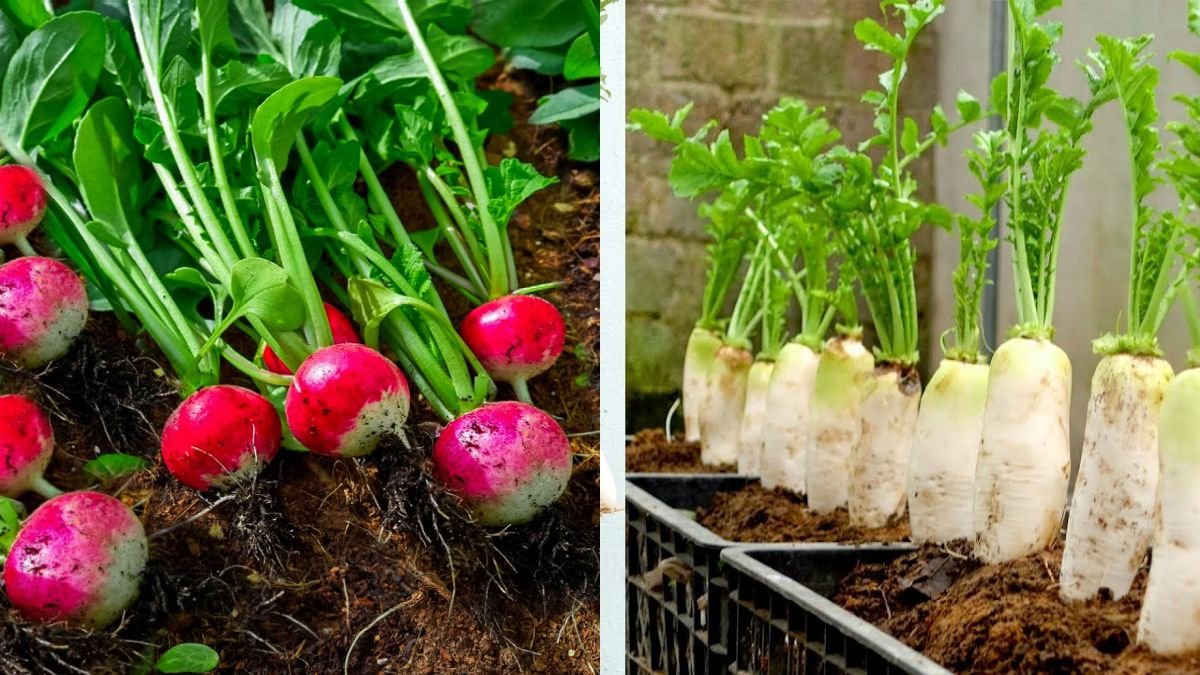
You don’t need a backyard or expensive gardening tools to grow your own vegetables. Radishes are among the easiest crops to cultivate right at home. Whether you have a balcony, terrace, windowsill, or small patio, radishes can thrive in containers and pots, producing crunchy, flavorful tubers perfect for salads, sandwiches, and other dishes.
In recent years, home gardening has gained tremendous popularity as people seek fresh, sustainable, and cost-effective ways to grow food. Radishes are particularly appealing because they grow quickly, mature in a few weeks, and can be cultivated year-round in the right conditions. They are beginner-friendly, low-maintenance, and highly adaptable to small-space gardening. (growcycle.com)
Whether you are a beginner or an experienced gardener, learning how to grow radishes at home ensures a steady supply of nutritious, homegrown vegetables without the need for a traditional garden.

Why Radishes Are Perfect for Home Growing
Radishes are ideal for home cultivation for several reasons:
- Fast Growth: Most varieties mature in 25–40 days, allowing multiple successive harvests. (newsbytesapp.com)
- Space Efficiency: Radishes grow well in containers, pots, and raised beds. They do not require deep soil for smaller varieties. (plantura.garden)
- Low Maintenance: Radishes need minimal care and grow quickly with consistent watering and sunlight. (growcycle.com)
- Edible Leaves: Radish greens are nutritious and can be used in salads, soups, or sautéed dishes. (thebetterindia.com)
Because radishes are quick-growing, you can plant multiple rounds during the year, ensuring a continuous supply of fresh vegetables. Their adaptability makes them perfect for small-space urban gardening. (growcycle.com)
Choosing the Right Radish Variety
Selecting the right variety is crucial if your goal is large, juicy tubers. Popular varieties for home cultivation include:

- Daikon (Mooli): A long, white radish that grows large and crunchy, commonly used in Asian cuisine. (extension.umn.edu)
- Black Spanish Round: A winter radish with bold flavor and large, round roots, ideal for cooler climates. (theguardian.com)
- Cherry Belle & French Breakfast: Quick-growing, small to medium radishes perfect for containers and fast harvest cycles. (newsbytesapp.com)
Small varieties like Cherry Belle allow for multiple harvests in tight spaces, while long types like daikon need deeper containers to allow full root development. (extension.umn.edu)
Container and Soil Setup
One of the best advantages of radish gardening is that you don’t need a traditional garden bed. Radishes flourish in containers and pots with proper soil and care.
Container Selection
- Depth: Choose containers at least 6–12 inches deep to accommodate the roots of larger radish varieties. (newsbytesapp.com)
- Drainage: Ensure containers have adequate holes to prevent waterlogging. (plantura.garden)
- Width: Wider containers allow roots to expand freely and encourage bigger tuber growth. (plantura.garden)
Container gardening also allows flexibility — you can move plants to follow sunlight or protect them from extreme weather, which is an advantage for urban or balcony growers. (plantura.garden)

Soil Requirements
- Use loose, well-draining soil with a slightly acidic to neutral pH (6.0–7.0). (gardenerspath.com)
- Mix in compost or well-decomposed organic matter to provide nutrients and improve soil structure. (growcycle.com)
- Avoid compacted or heavy clay soils, as they restrict root expansion and reduce tuber size. (growcycle.com)
Loose soil ensures the roots can penetrate easily, which is critical for producing large, firm tubers. (growcycle.com)
Planting Radishes Step by Step
1. Sowing Seeds
- Plant seeds about 1 cm deep with 3–4 cm spacing between each seed. (plantura.garden)
- For long radishes like daikon, give additional depth and spacing to prevent crowding. (extension.umn.edu)
2. Light and Water
- Ensure radishes receive 6–8 hours of sunlight daily. (growcycle.com)
- Keep soil consistently moist but not waterlogged. Overwatering can split roots; under-watering results in small or woody radishes. (growcycle.com)
3. Thinning Seedlings
Once seedlings emerge, thin them to ensure each plant has adequate space for root expansion. Crowding reduces tuber size and can lead to poor quality. (plantura.garden)
Caring for Your Radishes
- Watering: Maintain evenly moist soil to prevent cracking and splitting. (growcycle.com)
- Sunlight: Radishes prefer cool, sunny conditions. High temperatures can cause fast bolting and reduce flavor. (growcycle.com)
- Fertilization: Avoid high nitrogen fertilizers, which promote leaf growth over tuber development. Organic compost is sufficient. (growcycle.com)
- Pest Control: Watch for flea beetles or root maggots. Container gardening reduces many pest issues, but maintain healthy soil and remove weeds. (extension.umn.edu)
Harvesting Radishes
One of the best features of radishes is their rapid growth. Many varieties are ready to harvest in 3–5 weeks.

- Harvest when roots are firm and slightly protruding from the soil surface. (plantura.garden)
- Pull gently to avoid damaging tubers.
- Do not delay harvesting — overgrown radishes can become woody, bitter, or pithy. (growinginthegarden.com)
Harvesting at the right time ensures maximum flavor, crunchiness, and size.
Using Homegrown Radishes
Fresh radishes are crisp, peppery, and perfect for raw salads. The greens are also nutritious and can be added to soups, stir-fries, or smoothies. By planting successively, you can maintain a constant supply of fresh radishes at home. (thebetterindia.com)
Final Tips for Success
- Choose appropriate container depth and loose soil for large tubers. (plantura.garden)
- Sow seeds successively every few weeks to maintain continuous harvests. (growcycle.com)
- Avoid overwatering to prevent root splitting. (growcycle.com)
- Maintain cool growing conditions for optimal flavor and size. (growcycle.com)
Radish gardening at home is simple, fast, and rewarding — a perfect project for beginners, small-space gardeners, and anyone who loves fresh, homegrown produce.
