Imagine waking up to vibrant foliage, fragrant blossoms, and ripe fruit without stepping foot into a traditional garden. Thanks to modern gardening techniques, compact plant varieties, and container-based cultivation, this is now possible. Homeowners, apartment dwellers, and urban gardeners can create fruitful, beautiful plants on balconies, terraces, rooftops, and indoor spaces.
This approach allows you to enjoy fresh, nutritious fruit while simultaneously enhancing your home’s aesthetic appeal. With minimal space, simple care routines, and smart plant choices, your home can become a mini-orchard full of ornamental and productive fruit plants. In this article, we’ll explore how to achieve maximum beauty and fruit yield at home with [FOCUS KEYWORD].
Why Grow Fruit Without a Garden?
Traditionally, fruit trees were linked to large outdoor gardens or farmland. However, trends in urban and container gardening have made fruit cultivation accessible to everyone. Some key reasons for this shift include:
- Compact and adaptable plant varieties: New cultivars thrive in pots, grow bags, or small spaces.
- Indoor fruit trees: Species like Meyer lemon, kumquat, and calamondin can fruit indoors if they receive adequate sunlight. (Times of India)
- Urban gardening techniques: Terrace gardens, balcony containers, vertical walls, and grow bags allow efficient use of limited space. (Navbharat Times)
These advances mean that you can cultivate beautiful, productive fruit plants without the need for a traditional garden, making urban fruit gardening both practical and rewarding.
Stunning Indoor Fruit Trees
Indoor fruit trees are ideal for spaces without gardens. They provide visual appeal, fragrant blooms, and seasonal fruit.
Meyer Lemon
Meyer lemons are small, manageable trees that produce fragrant blossoms and sweet, mildly acidic fruit. They thrive in bright indoor areas with consistent watering and moderate humidity.

Kumquat
Kumquats are compact, ornamental, and productive. Their small, bright orange fruits and glossy leaves make them perfect for sunny windowsills, balconies, or indoor patios. (Livingetc)
Calamondin or Mandarin
These citrus trees produce fragrant white flowers and small, tangy fruits. Compact and decorative, they flourish in containers and add both beauty and food to your indoor garden. (Martha Stewart)
Indoor fruit trees allow you to enjoy the dual benefits of home décor and harvestable fruit, creating a lively and productive space even without outdoor garden land.
Compact Fruit Plants for Small Spaces
For spaces like balconies, terraces, or small patios, several fruit plants perform exceptionally well in containers:
Strawberries
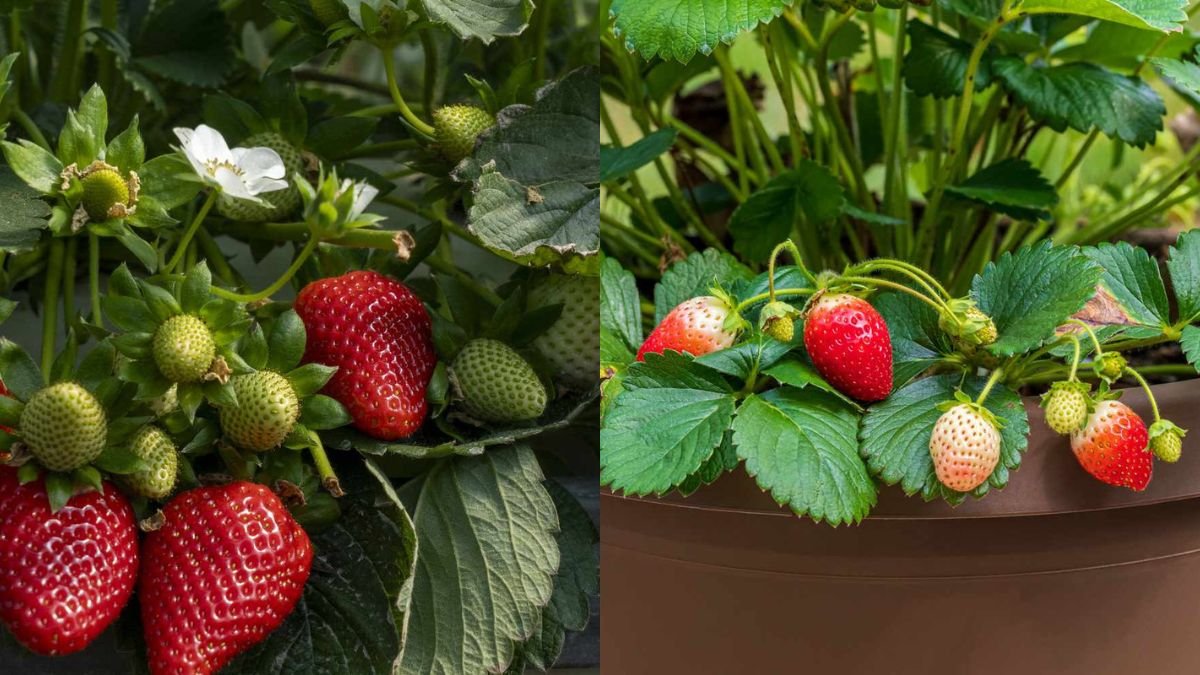
Strawberries are perfect for hanging baskets or pots. Their lush green leaves and red berries provide aesthetic value and delicious fruit. (Thompson & Morgan)
Raspberries and Blueberries
Berry plants are ideal for small containers. They are easy to maintain, produce richly colored fruit, and bring both visual appeal and flavor to your home garden. (Complete Gardening)

Fig (Anjeer)
Figs thrive in pots with minimal maintenance and consistently produce sweet, healthy fruit. Their lush foliage adds an ornamental element to your indoor or balcony garden. (Navbharat Times)
Loquat (Japanese Medlar)
Loquats are evergreen shrubs with bright green leaves and sweet orange fruits. They can be grown in pots or containers and add beauty as well as a reliable harvest. (Wikipedia)
These plants are perfect for small-space fruit gardening, offering both aesthetic and edible rewards.
Aesthetic Benefits of Fruit Plants
Fruit plants are not just about food; they also enhance home beauty and environment:
- Visual appeal: Glossy leaves, colorful fruits, and delicate blossoms elevate indoor spaces.
- Fragrance: Many fruit plants emit pleasant scents, such as citrus blossoms.
- Year-round greenery: Evergreen and semi-evergreen plants provide continuous greenery.
- Air purification and wellness: Plants improve air quality and promote mental well-being.
By combining decorative containers with fruit plants, your home garden can be both productive and attractive.
Best Practices for Home Fruit Gardening
Even without a garden, proper care ensures healthy growth and abundant harvests.

1. Adequate Sunlight
Most fruit plants require 6–8 hours of sunlight daily. Indoors, place them near south-facing windows or use grow lights if sunlight is limited.
2. Quality Containers
Use pots with good drainage and sufficient depth to support healthy roots. Avoid containers that retain excess water.
3. Soil and Nutrition
Choose well-draining, nutrient-rich soil and enrich it with compost or organic fertilizer. Feed plants regularly during the growing season for strong foliage and fruiting.
4. Watering
Water plants consistently but avoid waterlogging. Mulching helps retain moisture and prevent soil drying.
5. Pollination
Some indoor or balcony fruit plants may need hand pollination. Use a small brush to transfer pollen from male to female flowers for better fruit set.
Trends in No-Garden Fruit Gardening
Modern urban gardening has introduced techniques that allow high-yield fruit production without soil gardens:

- Vertical gardens: Grow fruits and vegetables on wall-mounted containers.
- Terrace and balcony orchards: Maximize small outdoor spaces with pots, sacks, and raised beds.
- Hydroponic fruit systems: Soil-free systems allow fruit cultivation indoors efficiently. (YouTube Tutorials)
These trends highlight that home-grown fruit is not only achievable but also stylish, sustainable, and space-efficient.
Benefits of Growing Fruit at Home
Home fruit gardening offers multiple advantages:
- Freshness and nutrition: Homegrown fruits are free from chemicals and harvested at peak ripeness.
- Cost savings: Reduce grocery bills by growing your own fruit.
- Mental and physical health: Gardening promotes exercise, reduces stress, and connects you to nature.
- Sustainability: Local fruit cultivation reduces reliance on transport and packaged produce.
With minimal investment, homeowners gain visual beauty, fresh fruit, and improved well-being.
Authoritative Resources
For more guidance, these sources provide detailed insights into small-space and indoor fruit gardening:
- Indoor Fruit Trees: Tips on citrus and ornamental trees for small spaces. (Facebook)
- Container Fruit Plants: Practical guide to berries, figs, and small fruit trees. (Thompson & Morgan)
- Loquat Cultivation: Information on growing loquats in containers. (Wikipedia)
- Berry Gardening Basics: Advice for strawberries, raspberries, and blueberries in pots. (Complete Gardening)
These resources help beginners and experienced gardeners maximize fruit yield and visual appeal without a traditional garden.
Conclusion
You don’t need a garden to enjoy beautiful, productive fruit plants at home. By selecting compact indoor trees, berries, and ornamental fruit plants, using containers, and providing proper care, you can transform your home into a fruit-filled haven.

From fragrant Meyer lemons to colorful berries and lush fig plants, home fruit gardening combines beauty, productivity, and sustainability. Embrace [FOCUS KEYWORD] to experience fresh fruit, decorative greenery, and the joy of growing your own produce — all without leaving your home.