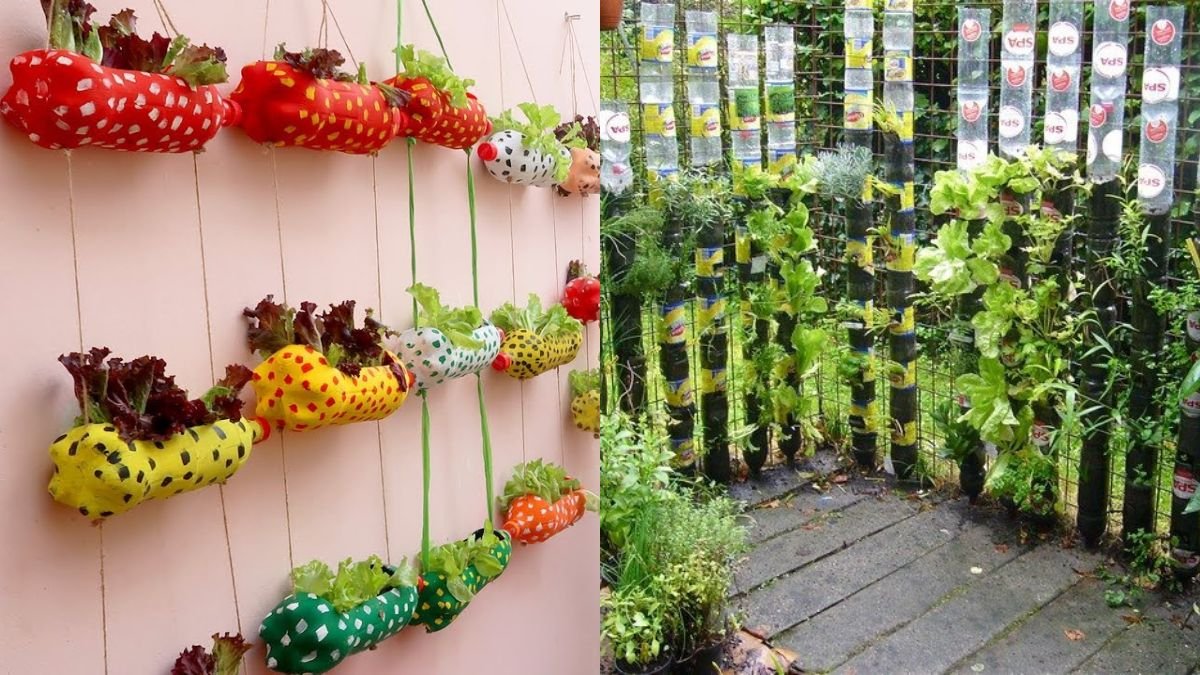
Why Plastic Bottle Vertical Gardens Are Popular
Plastic bottle vertical gardens have become a preferred choice for home gardeners due to multiple advantages:
- Sustainable reuse: Recycles plastic bottles that might otherwise end up in landfills. (hindi.asianetnews.com)
- Space-saving design: Vertical stacking makes it possible to grow many plants in limited areas like balconies or small walls. (thebetterindia.com)
- Low cost and easy DIY: Uses materials commonly found at home, with simple construction steps. (thebetterindia.com)
- Functional and decorative: Produces fresh vegetables while enhancing the aesthetic of living spaces. (thebetterindia.com)
These gardens work well for growing herbs like coriander, mint, basil, as well as vegetables like chilies, tomatoes, and leafy greens. They are perfect for beginners or anyone wanting a low-maintenance, budget-friendly gardening solution. (thebetterindia.com)
Materials Needed for a Vertical Bottle Garden
To start your garden, gather:

- Clean 1- or 2-liter plastic bottles
- Scissors or craft knife for cutting
- Drill or nail for making drainage holes
- Strong ropes, wires, or hooks for hanging
- Good-quality potting soil
- Organic compost or fertilizer
- Seeds or seedlings of vegetables and herbs
All these materials are easily obtainable and inexpensive, making the project accessible to anyone. (thebetterindia.com)
Step‑by-Step DIY Vertical Vegetable Garden
Follow these steps to create your vertical garden at home:
1. Prepare the Bottles
- Keep the cap on the bottle and cut the bottom to create a planting cavity.
- Drill 3–4 small holes in the bottle cap for drainage to prevent waterlogging.
- Optionally, paint or decorate bottles for a more aesthetic garden display. (thebetterindia.com)
2. Create Different Planter Styles
Several creative designs can be implemented:

- Cut-the-bottom planters: Hang multiple bottles vertically in a line using ropes.
- Double planters: Cut a bottle in half and use both parts as separate planters.
- Railing planters: Adapt bottles to hang securely on balcony or terrace railings.
- Horizontal planters: Cut bottles in the middle and hang sideways for wider plant space.
Each style maximizes vertical space while providing enough soil for vegetable growth. (thebetterindia.com)
3. Add Soil and Plants
- Fill bottles with a high-quality potting mix.
- Choose plants based on sunlight availability and personal preference.
- Ideal options include leafy greens (spinach, lettuce), herbs (mint, coriander), tomatoes, chilies, and garlic. (timesofindia.indiatimes.com)
4. Hang and Arrange the Bottles
- Use ropes, strings, or hooks to hang bottles on walls, fences, or balcony railings.
- Arrange them at different heights to create a visually appealing, lush vertical garden. (thebetterindia.com)
5. Water and Maintain
- Water plants regularly but avoid overwatering.
- Fertilize occasionally using organic compost or liquid fertilizer.
- Monitor for pests and prune when necessary. Regular care ensures healthy growth and high yields. (thebetterindia.com)
What You Can Grow in a Plastic Bottle Vertical Garden
Some of the most successful plants for bottle planters include:
- Leafy greens: Lettuce, spinach, fenugreek
- Herbs: Coriander, mint, basil, parsley
- Vegetables: Chilies, small tomatoes, eggplant
- Other options: Garlic green shoots, dwarf peppers
These plants thrive in small soil volumes and can be harvested repeatedly, making them perfect for vertical systems. (timesofindia.indiatimes.com)

Eco-Friendly Benefits
Creating a vertical vegetable garden with plastic bottles offers environmental advantages:
- Reduces plastic waste: Repurposes bottles that would otherwise pollute the environment. (hindi.asianetnews.com)
- Conserves water: Vertical drip-down designs use water efficiently. (heyfriendfoundation.org)
- Improves air quality: More greenery helps freshen the home environment.
- Promotes sustainable living: Encourages creative reuse and small-scale food production. (thebetterindia.com)
Tips for Success
- Maximize sunlight: Most vegetables need at least 5–6 hours of sunlight daily.
- Use quality soil: Fertile soil ensures stronger, healthier plants.
- Ensure drainage: Prevent waterlogging by drilling adequate holes in bottle caps.
- Water wisely: Deep, less frequent watering promotes strong roots.
- Rotate plants seasonally: Refresh soil and change crops according to seasons. (thebetterindia.com)
Authoritative Sources for Reference
- The Better India — Vertical Gardens Using Plastic Bottles: Detailed instructions and design ideas. (thebetterindia.com)
- Asianet News Hindi — Reusing Plastic Bottles: Creative DIY gardening and reuse ideas. (hindi.asianetnews.com)
- Times of India — Growing Garlic in Plastic Bottles: Example of successful vertical gardening with small vegetables. (timesofindia.indiatimes.com)
These resources provide practical guidance for beginners and DIY gardeners seeking low-cost, space-efficient vertical vegetable gardens.
Conclusion
Creating a vertical vegetable garden from plastic bottles is a simple, sustainable, and cost-effective way to grow fresh produce at home. By repurposing plastic bottles, you save space, reduce waste, and cultivate a green, productive wall of vegetables and herbs.

This DIY approach works perfectly for urban apartments, terraces, or small backyards. With proper preparation, sunlight, and minimal maintenance, your plastic bottle vertical garden can yield fresh vegetables, enhance your living space, and promote eco-friendly gardening habits. (thebetterindia.com)
Whether growing leafy greens, herbs, or small vegetables, this vertical garden design makes it easy for anyone to enjoy homegrown food — proving that sustainable, productive gardening is possible even in the smallest spaces.
