Introduction
Nothing says summer like a ripe, juicy cantaloupe — sweet, aromatic, and bursting with flavor. Yet, many gardeners struggle to produce melons that are both plump and sweet, often ending up with small, bland fruits despite careful attention. The good news? Recent gardening insights reveal that with strategic watering, pollination, vine management, and proper harvest timing, you can achieve high-yield, ultra-sweet cantaloupes at home.
This article uncovers the secret to cantaloupe high yield and super sweet fruits, providing practical steps, expert tips, and authoritative sources to help gardeners maximize production and flavor.
Why Cantaloupe Needs Special Care
Cantaloupes, also called muskmelons, are part of the cucurbit family, like cucumbers and squash. While they are easy to grow, producing large, sweet melons requires attention to a few key elements:
- Healthy vines and adequate spacing
- Proper watering, especially during fruit development
- Effective pollination
- Good sunlight and airflow
- Correct harvest timing for peak sweetness (Colaba Market)
Neglecting any of these areas can result in low yields or fruit with underwhelming sweetness.

The Main Tip: Strategic Watering for Sweetness
The single most impactful secret for sweet cantaloupes is not a rare fertilizer or exotic technique — it’s strategic watering. Unlike other crops that benefit from constant moisture, cantaloupes produce sweeter fruits when water is gradually reduced as the fruit matures.
Watering schedule for optimal sweetness:
- Seedling stage: Water daily or every other day to support early growth.
- Vine growth stage: Water every 2–3 days, encouraging strong vine and leaf development.
- Flowering and fruiting stage: Reduce watering to every 5–7 days.
- Final ripening (last 7–10 days): Drastically reduce water to concentrate sugars in the fruit.
This method encourages the plant to direct energy toward fruit sweetness rather than vegetative growth, producing melons with richer flavor and higher sugar content. (Colaba Market)
Planting and Spacing
Proper plant spacing and vine management are critical for high yields:

- Give each plant room to spread: Cantaloupe vines can extend 2–3 meters. Space plants 90–120 cm apart to prevent competition for sunlight and nutrients.
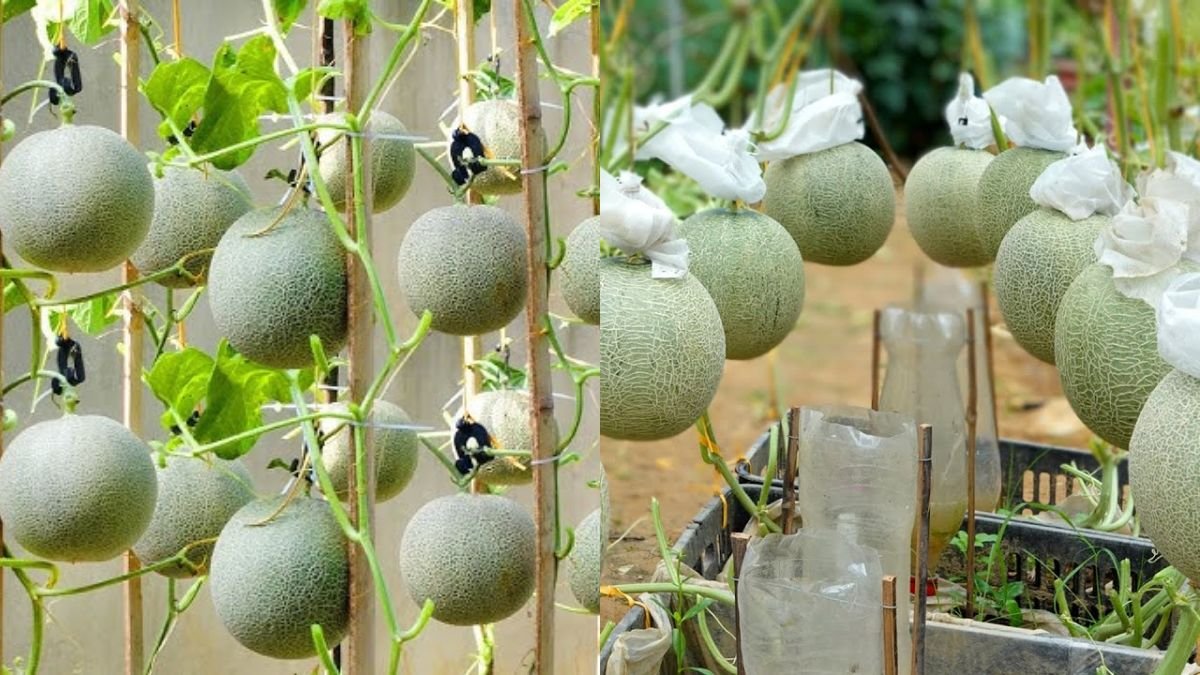
- Train vines: Direct vines over open soil or trellises to improve sun exposure and airflow.
- Prune excess foliage: Removing yellowing or excessive leaves allows more energy to focus on fruit development and reduces disease risk (The Beginners Garden).
Good spacing and vine management also make pollination easier and reduce stress on the plant, further improving fruit size and sweetness.
Pollination: The Key To Bigger Fruits
Cantaloupes rely on pollination for fruit set and size. Proper pollination ensures fruits are fully developed and sweet:
- Plant flowers nearby that attract pollinators, such as marigolds, sunflowers, or basil.
- Hand-pollinate flowers during low bee activity using a small brush to transfer pollen from male to female flowers.
Without sufficient pollination, melons may be small, misshapen, or underdeveloped, reducing both yield and sweetness (Colaba Market).
Soil and Fertility
Healthy cantaloupe plants start with well-prepared soil:

- Add organic matter: Compost or well-rotted manure improves nutrient availability.
- Balanced nutrients: Nitrogen encourages vine growth early, but excessive nitrogen late in fruiting can reduce sweetness.
- Mulching: Helps retain moisture and regulate soil temperature, supporting consistent fruit development (Colaba Market).
Harvest Timing: Sweetness Peaks Only At Maturity
Cantaloupes do not continue to sweeten after harvesting, so picking at the right moment is critical:
- Look for a color change beneath the netting from green to creamy yellow or tan.
- The fruit should detach easily from the vine with light pressure — called the “slip stage.”
- Avoid early harvesting, as under-ripe fruits are often less sweet and less aromatic (Grow Organic).
Correct harvest timing ensures maximum flavor, sweetness, and texture.
Choosing Sweet Varieties
Some cantaloupe varieties are naturally sweeter and more prolific:
| Variety | Typical Brix (Sweetness) | Notes |
|---|---|---|
| Ambrosia | 13–16% | Rich, sweet flavor |
| Honey Rock | ~13.1% | Sweet, aromatic, reliable |
| Sugar Cube | 11–14% | Consistently sweet, smaller size |
Choosing the right variety ensures you maximize both sweetness and yield.

Common Mistakes That Reduce Sweetness
Even with proper techniques, several mistakes can lower fruit quality:
- Overwatering near fruit maturity dilutes sugars (Growing in the Garden).
- Planting in shade reduces photosynthesis, limiting sugar production (Colaba Market).
- Crowded vines restrict airflow and light, reducing fruit size and sweetness (The Beginners Garden).
Avoiding these errors is key to achieving top-quality cantaloupes.
Putting It All Together: The Secret Method
Here’s a concise summary of the proven steps for high yield, super sweet cantaloupes:
- Plant cantaloupes with adequate spacing (90–120 cm apart).
- Follow a strategic watering schedule, reducing water as fruits mature.
- Ensure effective pollination using bees or hand pollination.
- Train vines and prune excess leaves to improve sunlight exposure.
- Choose sweet, high-Brix varieties suitable for your climate.
- Harvest fruits at peak ripeness, when they easily slip from the vine.
Implementing all these steps creates an environment where cantaloupes produce larger, sweeter fruits with minimal extra effort (Colaba Market).

Authoritative Sources
For further guidance and expert techniques:
- 🌱 The Beginners Garden – Cantaloupe Growth Tips (thebeginnersgarden.net)
- 🍈 Colaba Market – Secret Cantaloupe Method Explained (colabamarket.com)
- 🌾 Bountiful Gardener – Sweetest Cantaloupe Varieties (bountifulgardener.com)
- 🌿 Grow Organic – Cantaloupe Harvest Timing & Flavor Tips (groworganic.com)
Conclusion
Growing high-yield, super sweet cantaloupes is achievable with the right combination of watering, pollination, vine care, variety selection, and harvest timing. By implementing these practices, you can turn a simple cantaloupe patch into a prolific source of flavorful, sweet melons that rival market produce.
Start today with proper spacing, strategic watering, and careful harvest planning — and enjoy a garden full of juicy, sweet, perfectly ripened cantaloupes all season long.