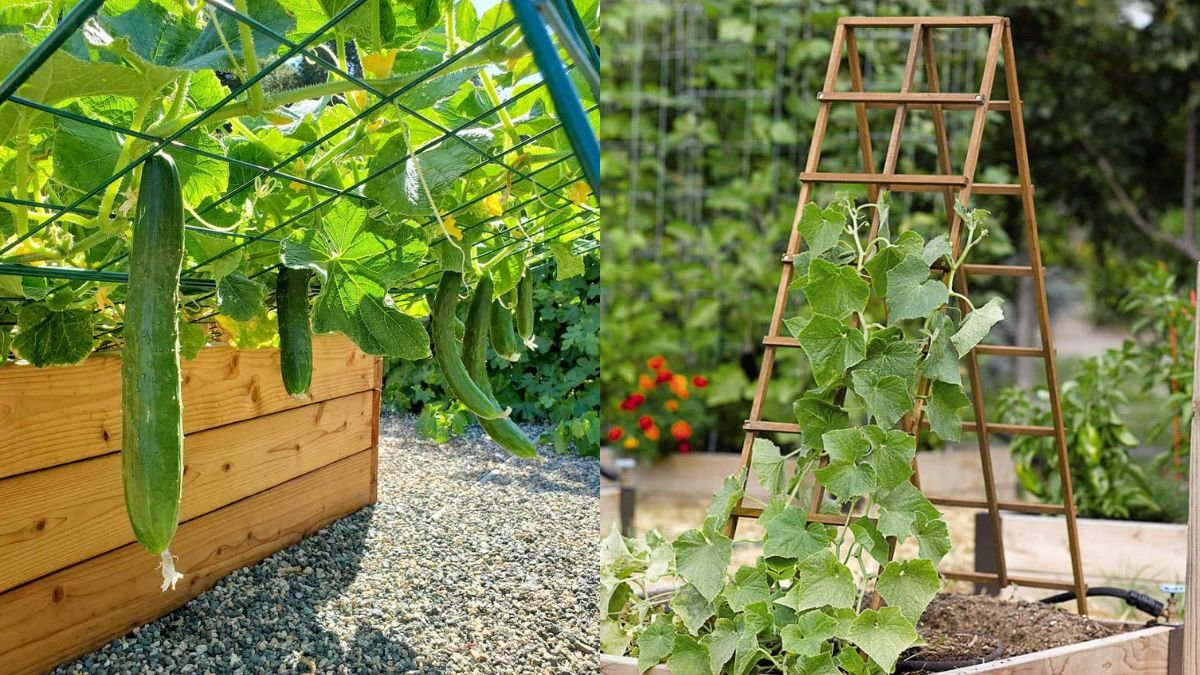
Why Use a Trellis for Cucumbers?
Cucumbers are naturally vining plants. They use tendrils to grab onto supports as they grow. Without a trellis, vines tend to sprawl across the ground, leading to several issues:
- Fruits touching the soil can rot or be damaged by pests.
- Dense foliage can reduce airflow, increasing the risk of fungal diseases.
- Harvesting becomes more difficult because cucumbers are hidden in the leaves.
- Vines take up a lot of garden space.
Using a trellis resolves these issues and brings multiple benefits:
- Better fruit production: Vertical growth encourages more flowers and fruits.
- Healthier plants: Improved airflow reduces disease pressure.
- Space efficiency: Trellises allow you to grow more cucumbers in limited space.
- Ease of harvest: Fruits hang at eye level, making them easier to pick.
Even simple trellis designs can make a big difference in cucumber yields and plant health. (livetoplant.com)
Simple DIY Trellis Ideas for Cucumbers
You don’t need fancy materials or tools to build a trellis. Here are some easy and effective designs:
1. String and Stake Trellis
- Place two strong stakes about 5–6 feet tall into the soil.
- Tie garden string, twine, or jute vertically from top to bottom.
- Train cucumber vines to climb the strings as they grow.
This method is budget-friendly, flexible, and suitable for small gardens or container planting. (mrplanter.com)

2. A-Frame Trellis
- Construct two wooden frames leaning together like an inverted “V.”
- Connect them with string or netting to create climbing space.
A-frame trellises are sturdy, provide support on both sides, and can be folded or moved when needed. (gardeneros.com)
3. Wire Mesh or Panel Trellis
- Use wire mesh, cattle panels, or old fence sections.
- Anchor securely with stakes to hold heavy vines and fruits.
The grid provides multiple points for tendrils to grab, supporting vigorous growth. (craftydiyers.com)
4. Teepee-Style Bamboo Trellis
- Tie several bamboo poles together at the top and spread at the base.
- Optional horizontal supports can help vines climb evenly.
This creates 360° climbing space, is visually appealing, and allows multiple plants to share one structure. (gardeneros.com)
5. Lean-To or Wall-Mounted Trellis
- Lean a simple wooden frame against a fence or wall.
- Attach netting or string for climbing support.
Perfect for balconies or narrow garden plots, this design saves space while keeping vines vertical and productive. (1millionideas.com)
Training Your Cucumber Vines
Once your trellis is in place, training the vines is essential to maximize fruit production:

Start Early
Introduce the trellis as soon as seedlings emerge, ideally before vines get too long. Early training reduces stress and ensures healthy growth. (reddit.com)
Guide Vines Gently
When vines reach 6–8 inches, guide them toward the trellis and loosely tie with soft ties or cloth strips. Avoid tying too tightly, which can damage the plant. (livetoplant.com)
Encourage Tendrils to Grasp
Cucumber tendrils naturally wrap around supports, but you may need to help them wrap initially. Gently twist tendrils around strings, mesh, or bamboo for proper support. (positivebloom.com)
Prune for Airflow
Remove excessive foliage and side shoots that crowd the trellis. Good airflow reduces disease risk and channels the plant’s energy into producing fruits. (twigandthistle.com)
Caring for Trellised Cucumbers
Watering
Cucumbers have shallow roots that dry quickly. Deep, consistent watering 1–2 times per week keeps vines healthy. Avoid wetting leaves to prevent fungal issues. (livetoplant.com)

Sunlight
Ensure cucumbers get 6–8 hours of sunlight daily. Sunlight fuels flower and fruit production, helping vines climb and thrive. (twigandthistle.com)
Soil Quality
Use well-draining, nutrient-rich soil. Incorporate compost or aged manure to retain moisture and support vigorous growth. (livetoplant.com)
Mulching
Apply straw, shredded leaves, or organic mulch to conserve moisture, suppress weeds, and regulate soil temperature. (livetoplant.com)
Spacing Tips
Proper spacing ensures maximum growth and yield:
- Plant seedlings 12–18 inches apart at the base of the trellis.
- Maintain 2–4 feet between rows to make maintenance and harvesting easier.
Good spacing reduces competition for light and nutrients and allows vines to climb without crowding. (bhg.com)

Benefits of Vertical Cucumber Gardening
Trellising cucumbers offers multiple advantages:
✔ Fruits stay clean and off the soil, reducing rot and pest issues.
✔ Better sunlight exposure boosts fruit production.
✔ Space-saving design allows more plants in smaller gardens.
✔ Easier maintenance and harvesting. (aol.com)
Gardens with trellised cucumbers consistently see higher yields than sprawling ground vines because the plant invests more energy into flowering and fruiting. (mrplanter.com)
Recommended Resources
For further guidance, these authoritative sources provide detailed tips and inspiration:
- Growing Cucumbers on a Trellis – Live to Plant: Training, pruning, and watering tips. (livetoplant.com)
- Trellised Cucumber Growing Tips: How to maximize vertical growth and fruit production. (livetoplant.com)
- DIY Cucumber Trellis Ideas – Gardeneros: Creative trellis designs and materials. (gardeneros.com)
- Cucumber Trellis Ideas – AOL: Step-by-step guidance for simple, effective trellises. (aol.com)
Final Thoughts
Creating a climbing trellis for cucumbers is a simple way to improve plant health, save space, and increase fruit production. With basic DIY materials and proper vine training, you can enjoy more cucumbers than expected from even a small garden plot.

By combining trellis design, early training, consistent care, and proper spacing, your cucumbers will thrive vertically, producing an abundant harvest while keeping your garden neat and manageable. Start building your trellis today and experience the benefits of vertical cucumber gardening!