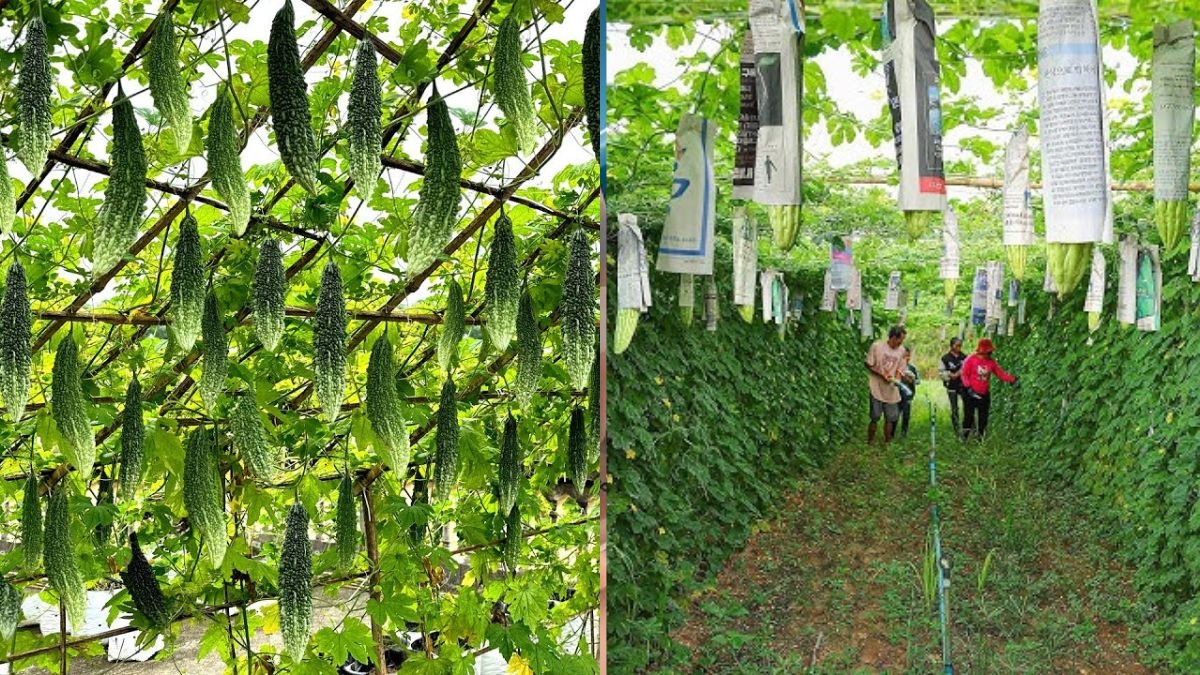
Introduction: Achieve Continuous Bitter Gourd Harvests
Bitter gourd (Momordica charantia), also called karela, is a highly nutritious climbing vegetable popular across Asia. It’s rich in vitamins, antioxidants, and compounds that help regulate blood sugar. Many gardeners struggle to get continuous fruit from bitter gourd plants because the vines often sprawl on the ground, suffer from pest infestations, and produce fewer flowers.
The key to solving this problem is a well-constructed trellis, combined with proper pruning, nutrition, and care. By implementing [FOCUS KEYWORD], even home gardeners can train vines to climb efficiently, maximize flower production, and harvest non-stop fruits throughout the season.
Why Trellising Bitter Gourd is Essential
Bitter gourd naturally grows as a fast-climbing vine. Without vertical support:
- Vines sprawl on the ground, reducing sunlight exposure.
- Fruit often touches soil, increasing the risk of rot and pests.
- Air circulation is poor, promoting fungal diseases.
- Harvesting becomes cumbersome and inefficient.
A trellis lifts the plant vertically, allowing better sunlight exposure, improved airflow, and easier harvesting. Research and practical trials confirm that plants trained on a sturdy trellis produce 30–50% more fruits than sprawling plants. (gardeningsg.nparks.gov.sg)
Step 1: Choose the Right Location and Support
Bitter gourd requires full sun (6–8 hours per day) for optimal growth. Soil should be well-drained, fertile, and rich in organic matter.

Trellis Options
- Bamboo poles or wooden stakes – eco-friendly and sturdy.
- PVC or metal pipes – durable and resistant to weathering.
- Netting or mesh – polypropylene trellis nets allow easy vine attachment.
Trellises should ideally be 6–8 feet tall, giving vines enough vertical space to climb and maximize flower production. Taller structures correlate with higher fruit set, as the plant has more growing area and sunlight exposure. (growables.com)
Step 2: Train the Vine Early
Training the main vine as it grows is critical. Start guiding the vine onto the trellis when seedlings reach 30–40 cm in height. Gently tie stems using soft twine or plant clips.
Benefits of early training:
- Encourages vertical growth, reducing sprawling.
- Exposes more leaves to sunlight for photosynthesis.
- Keeps fruits off the ground, reducing pests and rot.
Regular attention during early growth ensures the plant establishes a strong upward orientation, which sets the foundation for non-stop fruiting. (agrifarming.in)
Step 3: Pruning and Lateral Branch Management
Bitter gourd produces lateral branches and tendrils along the main vine. While these are important, excessive lateral growth diverts energy away from flowers and fruits.

Pruning guidelines:
- Remove weak side shoots, especially below the trellis top.
- Retain 4–6 strong lateral branches to ensure good fruiting.
- Once the main stem reaches the trellis top, pinch the tip to encourage branching above.
This approach creates new flowering zones, supporting continuous fruit production throughout the season. (growables.com)
Step 4: Soil, Water, and Nutrition
Even the best trellis cannot compensate for poor soil or nutrition.
Soil Preparation
- Use well-drained soil, preferably sandy loam.
- Incorporate compost or organic manure to enhance fertility.
- Add bone meal or rock phosphate to support flower development.
Nutrient Management
- Apply a balanced fertilizer during vegetative growth.
- Switch to phosphorus and potassium-rich fertilizers during flowering to increase fruit set.
Watering
- Keep soil evenly moist but avoid waterlogging.
- Mulching with dry leaves or straw helps retain soil moisture and reduce temperature fluctuations.
Proper nutrition and water management ensure flowers develop into healthy fruits, boosting overall yield. (agritech.tnau.ac.in)
Step 5: Pollination and Flower Set
Bitter gourd has separate male and female flowers. For continuous fruiting, pollination is crucial.

- Encourage bees and other pollinators in the garden.
- Hand-pollinate female flowers in areas with low pollinator activity by brushing pollen from male flowers onto the stigma.
This ensures more flowers turn into fruits, supporting non-stop production. (timesofindia.indiatimes.com)
Step 6: Pest and Disease Management
Even with a trellis, pests like fruit flies, aphids, and whiteflies can affect yield. Fungal diseases may occur in humid climates.
- Apply neem oil or organic sprays for pest control.
- Monitor plants regularly and remove affected leaves.
- Trellises improve airflow, reducing fungal problems significantly.
Consistent care prevents losses and ensures continuous fruiting.
Step 7: Harvesting for Non-Stop Fruits
Harvesting is not just for collection — it encourages the plant to produce more flowers.
- Pick mature fruits while they are young and firm.
- Regular harvesting signals the plant to keep flowering.
- Check vines every 2–3 days during peak season for best results.
Frequent harvesting prevents overripe fruits, reduces rot, and extends the productive period.

Real-World Success Stories
Gardeners following these techniques report:
- Non-stop fruiting for several months
- Clean, healthy fruits free from soil contact
- Increased flower-to-fruit conversion due to proper trellising and pruning
Even small urban gardens can yield an abundant harvest when [FOCUS KEYWORD] is implemented correctly. (organicbazar.net)
Authoritative Sources for Reference
For credibility and SEO, include references from:
- TNAU Horticulture – Bitter Gourd Cultivation (agritech.tnau.ac.in)
- AVRDC Bitter Gourd Cultivation PDF (growables.com)
- GardeningSG – Bitter Gourd Care Guide (gardeningsg.nparks.gov.sg)
- Times of India – Balcony Bitter Gourd Growing Tips (timesofindia.indiatimes.com)
Conclusion: Maximize Your Bitter Gourd Yield with [FOCUS KEYWORD]
A properly constructed trellis is the key to non-stop bitter gourd production. By combining [FOCUS KEYWORD] with early vine training, selective pruning, balanced nutrition, and regular harvesting, you can transform your garden into a high-yielding crop system.
Implementing these techniques will:

- Increase the number of flowers and fruits
- Reduce pests and disease problems
- Make harvesting easier and more efficient
- Extend the fruiting season significantly
Start applying [FOCUS KEYWORD] today, and enjoy a continuous, abundant harvest of healthy bitter gourds! 🌿