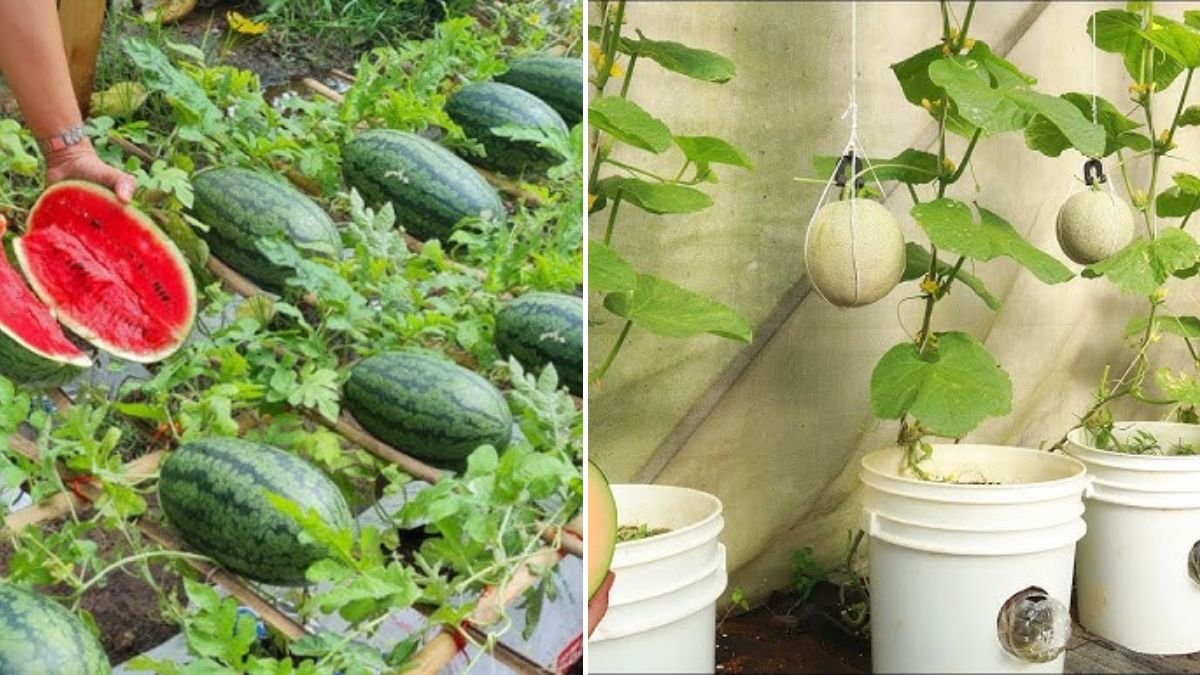
🌱 Why Grow Melons at Home?
Melons are not only delicious and nutritious, but growing them at home also comes with several benefits:
- Health Benefits: Rich in vitamins, minerals, and antioxidants like beta-carotene and vitamin C.
- Cost Savings: Homegrown melons reduce grocery bills while providing fresher, tastier fruits.
- Eco-Friendly: Growing your own fruit reduces transportation and packaging waste.
- High Yield Potential: With proper care, small patches can produce dozens of large, sweet fruits per season. (umass.edu)
The secret lies in understanding how to channel the plant’s energy effectively, a core principle behind [FOCUS KEYWORD].
🌿 Background: What Makes Melons Sweet, Large, and Productive?
Melons, including watermelons, cantaloupes, and muskmelons, are vine crops that thrive in warm, sunny conditions with nutrient-rich soil. Their sweetness, size, and yield are influenced by:
- Sunlight Exposure: More sunlight results in higher photosynthesis, which produces more sugar in the fruit.
- Nutrient Availability: Adequate nitrogen, phosphorus, and potassium are essential during vine growth and fruit development.
- Pollination: Successful pollination ensures full fruit formation. (harvesttotable.com)
Small adjustments in care can significantly improve the fruit quality, turning ordinary melons into sweet, oversized, and highly productive harvests.
🍈 Step-by-Step Guide: The “Twice as Sweet, Three Times as Big” Method
The following steps outline [FOCUS KEYWORD] and are designed for beginners and advanced gardeners alike.

1. Prepare the Soil Properly
Healthy soil is the foundation of a productive melon crop. Melons prefer well-drained, sandy loam soil enriched with organic matter.
- Loosen the soil to a depth of at least 12 inches.
- Mix in well-rotted compost or manure to provide essential nutrients.
- Adjust the soil pH to between 6.2 and 6.8 for optimal nutrient absorption. (umass.edu)
Soil preparation ensures strong root systems and healthy vines, which are critical for larger and sweeter fruits.
2. Train and Support the Vines
Proper vine training enhances productivity:
- Use trellises or netting to support the growing melons.
- For heavier fruits, use cloth slings to prevent vines from breaking.
- Vertical growth improves air circulation, reduces disease risk, and allows sunlight to reach all parts of the plant. (rhs.org.uk)
Strong, well-supported vines allow the plant to direct energy efficiently into fruit development.
3. Focus on Effective Pollination
Melons produce separate male and female flowers, so pollination is essential for fruit development.

- In areas with few pollinators, use a small brush to transfer pollen from male to female flowers.
- Better pollination increases the number of fully developed fruits. (harvesttotable.com)
Ensuring effective pollination is a simple way to increase both yield and fruit quality.
4. Prune Strategically for Bigger Fruits
Overcrowding can reduce fruit size and sweetness:
- Limit fruits per vine to 2–3 for large varieties.
- Remove excess fruits early to focus the plant’s energy on fewer, high-quality melons.
- Prune non-productive lateral shoots to promote stronger main vines. (groworganic.com)
Strategic pruning is key to producing larger, sweeter, and more abundant melons.
5. Watering Techniques for Sweetness
Watering affects both size and sugar content:
- Water deeply but less frequently to encourage strong roots.
- Maintain consistent moisture during fruit development.
- Reduce watering 7–10 days before harvest to allow sugars to concentrate in the fruit. (harvesttotable.com)
Proper watering prevents cracking, improves flavor, and ensures the best possible fruit.

6. Fertilization and Nutrient Management
Melons are heavy feeders:
- Use a balanced fertilizer rich in potassium and phosphorus during fruit set.
- Apply organic fertilizers like compost tea or seaweed extracts every 2–3 weeks. (bowenpallyvegetablemarket.com)
Consistent feeding supports fruit growth and enhances sweetness.
7. Mulching and Pest Management
- Mulch around the base of vines to retain moisture, suppress weeds, and maintain soil temperature.
- Monitor for pests like aphids or fungal diseases, and address them early.
- Maintain good airflow to prevent fungal infections and rot. (umass.edu)
Healthy plants yield sweeter, bigger, and more productive fruits.
8. Harvesting at the Right Time
Melons reach peak sweetness and size when harvested correctly:
- Look for the dry tendril nearest the fruit as a sign of ripeness.
- Check the underside of the melon — it should turn a creamy yellow color.
- Handle fruits gently to avoid bruising.
Proper harvesting ensures you enjoy melons at their sweetest and largest.

🌿 Additional Tips for Maximizing Productivity
- Use vertical gardening for small spaces — containers and trellises are perfect for urban gardens.
- Plant melons in full sun for at least 6–8 hours a day.
- Combine pruning, feeding, and watering strategies consistently throughout the growing season.
By integrating these steps into your routine, you can achieve record-breaking melon yields with minimal extra effort.
📚 Recommended Authoritative Sources
- RHS Melon Growing Guide — tips for soil, pruning, watering, and support (rhs.org.uk)
- Grow Organic Pruning Guide — increase melon size and sweetness through strategic pruning (groworganic.com)
- UMass Extension: Melon Tips — soil preparation, pest management, and harvesting guidance (umass.edu)
- Container and Drip Irrigation Techniques (bowenpallyvegetablemarket.com)
🍉 Conclusion: Transform Your Melon Harvest
By following [FOCUS KEYWORD], you can transform your melon patch into a high-yield, super-productive garden. With the right soil, sunlight, pollination, pruning, watering, and fertilization, ordinary melon plants can produce twice as sweet and three times as large fruits.
Whether you are growing in a backyard garden, containers, or small urban spaces, these methods give you maximum productivity with minimum effort. Start applying these steps today and enjoy melons that are not only bigger and sweeter but also more abundant than ever before.
