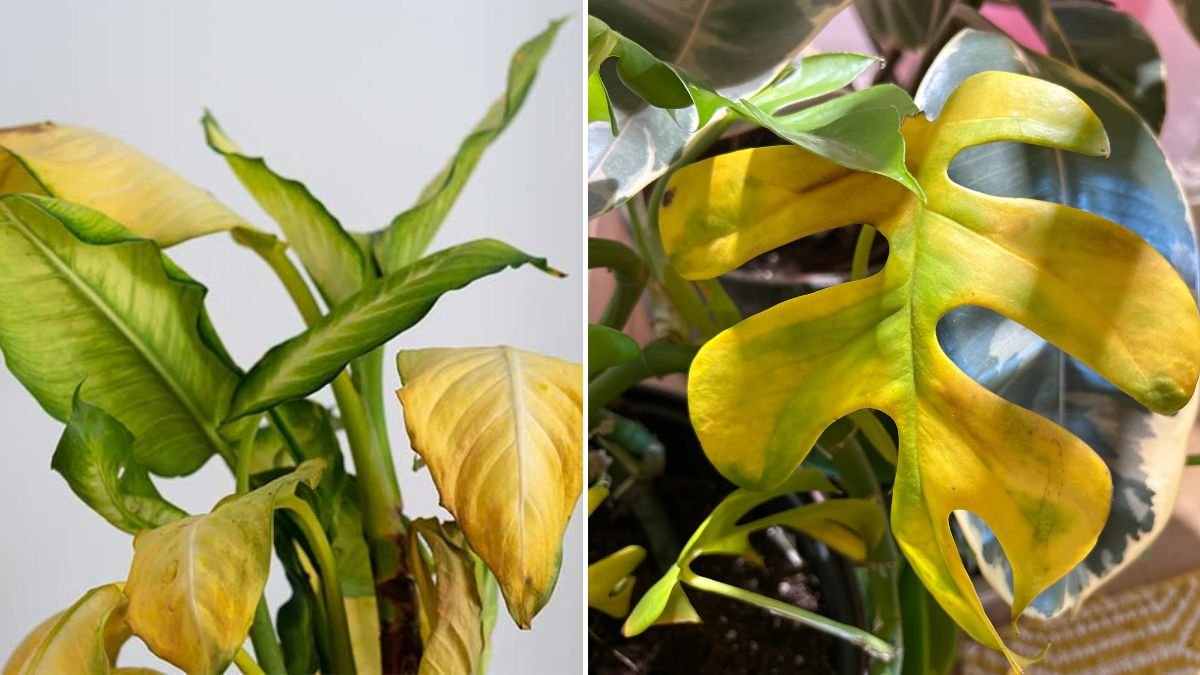
🌱 Background: Understanding Yellow Leaves
Yellow leaves are a common warning sign in houseplants. While it can be alarming, yellowing doesn’t always mean the plant is dying. Leaves turn yellow for a variety of reasons, ranging from environmental stress and watering mistakes to nutrient deficiencies and pests. Observing where and how the yellowing appears — bottom leaves vs. top leaves, entire leaf vs. veins, or patches — provides important clues to the underlying issue.
Modern indoor gardening emphasizes diagnosing problems early. By addressing yellow leaves promptly, you can prevent further damage and maintain a lush, healthy indoor garden. (gardeningknowhow.com)
💧 1. Improper Watering
🪴 Overwatering
Overwatering is one of the most common causes of yellow leaves. Excess water saturates the soil, depriving roots of oxygen and leading to root rot, which blocks nutrient uptake. Symptoms often include soft, limp leaves that may drop suddenly. (gardeningknowhow.com)
Solution:
- Water only when the top 1–2 inches of soil feel dry.
- Ensure pots have drainage holes to prevent waterlogging.
- If root rot is present, remove the plant, trim damaged roots, and repot in fresh, well-draining soil.
💦 Underwatering
Conversely, underwatering can cause leaves to yellow, especially if they are dry, crispy, or browning at the edges. Soil that pulls away from the pot edges often indicates drought stress. (indoorplantspro.com)

Solution:
- Water thoroughly until it drains from the bottom of the pot.
- Adjust your watering schedule to match the plant’s specific needs.
☀️ 2. Light Issues
Light is crucial for photosynthesis, and improper exposure can cause yellowing.
☀️ Too Much Direct Sun
Some houseplants, like ferns and calatheas, can burn in direct sunlight, causing yellow or bleached leaves.
Solution: Move the plant to a bright but indirect light location or use sheer curtains to filter sunlight.
🌤️ Too Little Light
Low light can cause chlorophyll breakdown, resulting in pale or yellowing leaves. Plants may also become leggy as they stretch toward light.

Solution: Place the plant in a brighter area or supplement with LED grow lights to maintain healthy photosynthesis. (gardeningknowhow.com)
🧪 3. Nutrient Deficiencies
Yellow leaves can indicate a lack of essential nutrients. Common deficiencies include:
- Nitrogen: Older leaves turn yellow first.
- Iron: Young leaves yellow between veins.
- Magnesium: Yellowing with green veins on older leaves.
- Potassium: Leaf edges turn yellow or brown. (almanac.com)
Solution: Use a balanced houseplant fertilizer or amend soil with compost. Avoid over-fertilizing, which can burn roots and worsen yellowing. Refreshing potting soil every 1–2 years also replenishes nutrients.
🌡️ 4. Temperature and Humidity Stress
Sudden changes in temperature or exposure to drafts can shock houseplants. Most tropical plants thrive in 60–75°F (16–24°C).
Low indoor humidity, common in winter with heating systems, can also stress plants, causing leaves to yellow and curl.

Solution:
- Keep plants away from heat vents, radiators, and drafty windows.
- Increase humidity by grouping plants, using a pebble tray, or a humidifier. (gardeningknowhow.com)
🐛 5. Pests and Diseases
Yellowing accompanied by spots or uneven patches may indicate pests such as spider mites, aphids, or mealybugs. Fungal infections can cause blotches or wilting that mimic nutrient deficiencies. (wekivafoliage.com)
Solution:
- Inspect the undersides of leaves and stems.
- Wash leaves with mild soap or insecticidal soap.
- Isolate affected plants to prevent spreading.
- Improve airflow and treat fungal problems with fungicide if necessary.
🪴 6. Root and Soil Issues
🪱 Root Damage
Roots that are compacted, damaged, or decaying can’t transport water or nutrients effectively, leading to yellowing.
Solution: Repot in loose, well-draining soil and trim any damaged roots. (goodhomegarden.com)

🧪 Soil pH Imbalance
If soil is too acidic or alkaline, nutrient uptake can be blocked, even if fertilization is regular. Most houseplants prefer slightly acidic to neutral soil (pH 6–7).
Solution: Test soil pH and amend with lime or sulfur as needed, or repot using fresh potting mix. (aol.com)
🍂 7. Natural Aging
Not all yellow leaves indicate stress. Older leaves naturally age, turn yellow, and drop as new growth emerges.
Solution: Simply trim old leaves to encourage new growth and maintain plant appearance. (almanac.com)
🌟 Quick Troubleshooting Checklist
✔ Check soil moisture: Over- or under-watering is the most common cause.
✔ Evaluate light levels: Ensure plants receive appropriate sunlight.
✔ Feed appropriately: Balanced fertilizer can correct nutrient deficiencies.
✔ Inspect roots: Repot if roots are damaged or compacted.
✔ Look for pests: Treat infestations promptly.
✔ Stabilize environment: Maintain consistent temperature and humidity.

Following this checklist helps quickly identify and resolve yellow leaf issues before they spread.
📚 Recommended Sources
- Gardening Know How – Why Leaves Turn Yellow: Expert tips on watering, light, and nutrients. (gardeningknowhow.com)
- Almanac.com – Yellowing Indoor Plants: Covers natural aging, watering, and light issues. (almanac.com)
- IndoorPlantsPro – Causes & Solutions: Pest and care strategies. (indoorplantspro.com)
- Leaf Culture UK – Soil & Nutrient Fixes: Adjusting pH and nutrients for healthy growth. (leafculture.co.uk)
🌿 Final Thoughts
Yellow leaves are a signal, not a sentence. By carefully observing the plant, identifying the type of yellowing, and taking corrective action, most houseplants can recover and thrive. Regular attention to watering, light, nutrients, pest management, and environment is key to maintaining vibrant indoor foliage.
Think of yellow leaves as feedback — your plant is communicating its needs. With patience and care, you can restore your houseplants to lush, green health and enjoy a thriving indoor garden year-round. 🍃