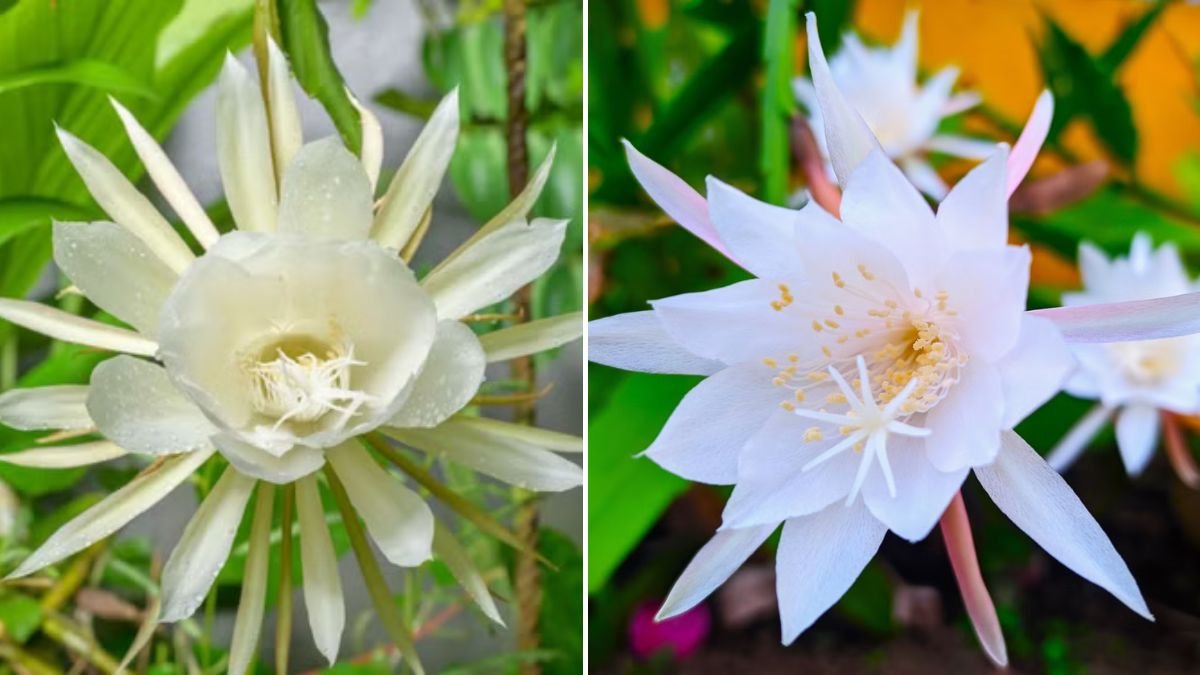
The Queen of the Night flower (Epiphyllum oxypetalum) is one of the most fascinating plants for indoor and patio gardeners. Known for its dramatic blooms that only open once a year at night, this cactus species captivates plant lovers with its fragrant, ephemeral flowers. Despite its exotic appearance, the Queen of the Night is surprisingly easy to care for if you understand its unique needs.
This guide covers how to care for your Queen of the Night flower, including planting, watering, light requirements, flowering tips, and troubleshooting, so you can enjoy this spectacular annual display.
Why the Queen of the Night Is Special
The Queen of the Night is a type of epiphytic cactus, native to Central America. Unlike typical desert cacti, it grows on trees in rainforests, clinging to branches while absorbing moisture and nutrients from the air. Its flowers are:
- Large and fragrant, often 8–12 inches across
- White or cream-colored, glowing beautifully in moonlight
- Short-lived, typically blooming for only a single night each year
Because the flower blooms after dark and lasts only a few hours, proper care is essential to ensure your plant produces blooms year after year.
1. Choosing the Right Location
Light is critical for the health of your Queen of the Night:

- Bright, indirect sunlight is ideal. Too much direct sun can scorch the stems, while too little light will hinder flowering.
- East- or west-facing windows are perfect indoors. Outdoors, place it where it gets filtered sunlight, such as under a tree canopy.
- During summer, avoid intense afternoon sun; a sheer curtain indoors or light shade outdoors works well.
Proper lighting encourages strong growth and robust flowering, giving you the best chance of seeing those annual blooms.
2. Soil and Potting Requirements
Being an epiphytic cactus, the Queen of the Night prefers well-draining soil that mimics its natural environment:
- Use a mix of cactus soil, orchid bark, and perlite for aeration and drainage.
- Avoid dense garden soil that retains too much moisture, which can cause root rot.
- Choose a shallow but wide pot, as the roots spread horizontally rather than deep into the soil.
Repotting every 2–3 years keeps the plant healthy and allows room for new growth. Late spring is the best time for repotting, after the risk of frost has passed.
3. Watering Guidelines
Watering correctly is crucial for Queen of the Night:
- During growing season (spring and summer): Water thoroughly when the top 2 inches of soil are dry.
- During dormant period (fall and winter): Reduce watering significantly. The plant requires less moisture when not actively growing.
- Avoid overwatering, which can lead to root rot. Ensure excess water drains freely.
Humidity is beneficial, as the plant is native to tropical environments, but avoid overly wet conditions. Light misting or placing near a humidity tray can replicate its natural habitat.

4. Temperature and Humidity
The Queen of the Night thrives in warm temperatures and moderate humidity:
- Ideal daytime temperatures: 65–85°F (18–29°C)
- Nighttime temperatures: 55–65°F (13–18°C)
- Protect from frost; temperatures below 50°F (10°C) can damage the stems
If grown indoors in cooler climates, place it in a warm room away from drafts. Outdoors, bring potted plants inside during winter months.
5. Fertilizing for Bloom Success
Proper fertilization encourages larger blooms and healthier stems:
- Use a balanced, water-soluble fertilizer with equal parts nitrogen, phosphorus, and potassium.
- Feed every 2–4 weeks during the growing season.
- Reduce or stop feeding during winter dormancy to avoid stimulating growth when the plant is resting.
- Some gardeners use high-phosphorus fertilizer in late summer to enhance flower production.
Regular feeding ensures the plant has sufficient energy for its spectacular nighttime display.
6. Supporting Growth
The Queen of the Night has long, trailing stems that benefit from support:

- Use a trellis, stake, or hanging basket to provide structure.
- Allow stems to drape naturally for a cascading effect, which is visually striking indoors or on a balcony.
- Avoid overcrowding; proper air circulation prevents disease and encourages strong flowering.
Supporting the plant also makes it easier to observe and enjoy blooms when they appear.
7. Pruning and Maintenance
Pruning is essential for plant health and flower production:
- Remove dead or damaged stems at any time to prevent disease.
- Thin crowded areas to improve light penetration.
- After flowering, prune spent flower stems to encourage new growth.
Regular maintenance ensures your Queen of the Night remains vigorous and aesthetically pleasing.
8. Flowering Tips
Getting a Queen of the Night to bloom can be challenging, but with the right conditions, it is achievable:
- Age matters: Most plants need to be 3–5 years old before flowering reliably.
- Adequate light: Bright, indirect sunlight during the day is crucial for bud formation.
- Seasonal cues: Flowering typically occurs in summer months, often between June and August.
- Consistent care: Proper watering, fertilization, and pruning during the growing season are essential.
- Patience: The flowers last only one night, so monitor the plant closely and enjoy the bloom when it happens.
The reward is a fragrant, ethereal display that few plants can match.

9. Common Problems and How to Solve Them
Even hardy, low-maintenance plants like the Queen of the Night can face challenges:
- No blooms: Often caused by insufficient light, immature age, or lack of nutrients.
- Yellowing stems: Usually a sign of overwatering or poor drainage.
- Stem rot: Remove affected areas immediately and reduce watering.
- Pests: Mealybugs and spider mites can appear; treat with insecticidal soap or neem oil.
Regular monitoring and prompt care prevent minor issues from becoming major problems.
10. Propagation Techniques
Queen of the Night can be propagated easily from stem cuttings:
- Take a healthy stem cutting, 6–12 inches long.
- Allow the cutting to callus for a few days in a dry, shaded area.
- Plant in a well-draining mix or place in water until roots form.
- Once rooted, transfer to a pot with appropriate soil.
Propagation allows you to expand your collection or share this unique plant with friends.
Conclusion
The Queen of the Night is truly a remarkable plant—its annual nocturnal bloom is a highlight for any garden or indoor space. With proper care, including bright, indirect light, well-draining soil, moderate watering, and seasonal fertilization, you can enjoy this rare bloom year after year.

Supporting growth, pruning for health, and patiently awaiting the ephemeral flower ensures that your Queen of the Night remains vibrant, healthy, and ready to dazzle when it finally blooms. Whether grown indoors, on a balcony, or in a greenhouse, this plant offers a magical spectacle that rewards careful, consistent care.
Owning a Queen of the Night is more than gardening—it’s creating a moment of wonder each summer night, as its fragrant, luminous flower opens in the dark, leaving a lasting impression that few other plants can match.