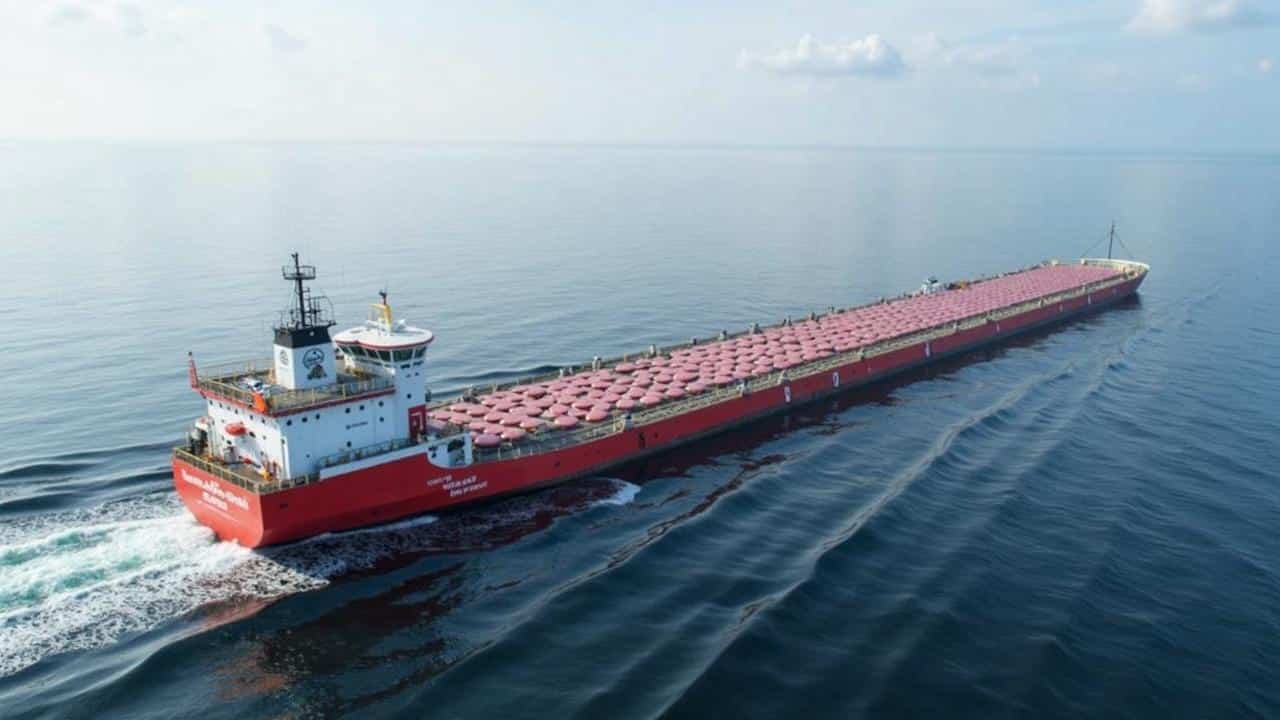
From a distance, it looks like a massive industrial vessel cruising the open sea. At 385 metres long—longer than most aircraft carriers—the structure’s sheer scale is unmistakable. But this is no ship, no oil platform, and no floating factory. It is Havfarm, the world’s largest offshore salmon farm, and it represents a radical rethink of how food might be produced in the oceans.
As global demand for seafood continues to rise and coastal ecosystems face increasing pressure, Havfarm stands as an ambitious attempt to move aquaculture farther offshore, into deeper, rougher waters. Its size, engineering, and purpose challenge traditional ideas of fish farming—and raise important questions about the future of sustainable protein production at sea.
Why Aquaculture Had to Move Offshore
Traditional salmon farming has long been concentrated in sheltered coastal fjords and bays. While this approach made early aquaculture feasible, it also created serious environmental challenges.
Nearshore salmon farms have been linked to:
- Nutrient pollution and oxygen depletion
- Spread of parasites such as sea lice
- Disease transmission between farmed and wild fish
- Local seabed degradation
As farms expanded, conflicts with wild fisheries, tourism, and coastal communities intensified. Regulators and industry leaders began searching for alternatives that could reduce environmental impacts while still meeting demand.
The solution many turned to was the open ocean.
Havfarm: An Engineering Giant in the North Sea
Developed by Norwegian company Nordlaks, Havfarm was designed not as a modified ship, but as a purpose-built offshore aquaculture structure. Measuring 385 metres in length and roughly 59 metres in width, it is one of the largest floating structures ever built for food production.

Unlike conventional circular fish cages, Havfarm features:
- A long, rectangular steel hull
- Multiple enclosed net pens integrated into the structure
- Reinforced materials capable of withstanding harsh offshore conditions
Its scale allows it to house millions of salmon while remaining stable in waves, currents, and strong winds far beyond sheltered coastal waters.
Not Floating Away: How Havfarm Stays in Place
Although Havfarm resembles a ship, it is not designed to travel freely. It is anchored to the seabed using a sophisticated mooring system engineered to keep the structure stable while allowing limited movement.
This mooring system:
- Absorbs wave energy
- Maintains orientation against currents
- Prevents excessive stress on the structure
By operating offshore, Havfarm benefits from stronger currents that naturally flush waste away, reducing the buildup of organic material beneath the farm.
Why Size Matters in Offshore Fish Farming
Havfarm’s enormous size is not just about spectacle—it is central to its function.
Large offshore structures offer several advantages:

- Greater stability in rough seas
- Lower stocking density per cubic metre of water
- Reduced disease pressure due to improved water exchange
- Fewer units producing the same amount of fish
Instead of many small coastal farms concentrated in sensitive areas, a single large offshore facility can spread its environmental footprint over a much wider area.
A New Approach to Fish Welfare
Fish welfare is a growing concern in aquaculture, and offshore farming changes the conditions salmon experience.
In deeper, open waters:
- Oxygen levels are more stable
- Water temperatures fluctuate less
- Stronger currents encourage natural swimming behavior
The rectangular design of Havfarm allows salmon to swim long, continuous paths rather than circling endlessly, a behavior that some researchers believe may reduce stress and improve muscle quality.
Environmental Trade-Offs and Open Questions
While offshore farming addresses many coastal issues, it is not without challenges.
Key concerns include:
- Monitoring fish health in remote locations
- Managing escapes in open-ocean conditions
- Ensuring waste dispersal does not affect deep-sea ecosystems
- Higher energy use for operations and maintenance
Critics caution that moving farms offshore does not eliminate environmental impact—it redistributes it. Long-term data will be critical to determine whether these systems truly represent a net environmental gain.

Technology at the Heart of Havfarm
Operating a structure of this size requires advanced automation and monitoring systems.
Havfarm relies on:
- Remote sensors tracking oxygen, temperature, and currents
- Automated feeding systems optimized to reduce waste
- Underwater cameras monitoring fish behavior and health
- Real-time data analysis for decision-making
Because offshore access can be limited by weather, much of the farm’s operation is designed to function with minimal human presence.
The Economics of Offshore Aquaculture
Building and maintaining Havfarm required a massive upfront investment. Offshore farms cost significantly more than traditional coastal cages.
However, proponents argue that:
- Larger production volumes improve efficiency
- Reduced disease losses offset higher capital costs
- Regulatory access to new farming sites increases long-term viability
As coastal permits become harder to obtain, offshore systems may offer one of the few paths for aquaculture expansion.
Why Norway Is Leading the Offshore Push
Norway is uniquely positioned to pioneer offshore salmon farming. With long coastlines, deep waters, and extensive offshore engineering expertise from the oil and gas industry, the country has both the technical knowledge and regulatory framework to attempt such ambitious projects.

Havfarm reflects a broader strategy to:
- Maintain Norway’s position as a global salmon leader
- Reduce pressure on coastal ecosystems
- Export offshore aquaculture technology worldwide
Other nations are closely watching its performance.
What Havfarm Signals for the Future of Food
By mid-century, global seafood demand is expected to rise sharply as wild fisheries plateau or decline. Aquaculture will need to fill that gap—but how it does so matters.
Havfarm represents one possible future:
- Industrial-scale food production at sea
- Reduced reliance on land and freshwater resources
- Integration of engineering, biology, and data science
Whether this model becomes widespread will depend on environmental outcomes, economic viability, and public acceptance.
Not a Ship, but a Statement
Havfarm is more than a structure—it is a statement about how humanity may choose to use the oceans in the coming decades. It challenges the assumption that aquaculture must remain coastal and small-scale, and it raises difficult questions about industrialization versus sustainability.
Is moving offshore a solution—or simply the next frontier of exploitation? The answer will depend on careful regulation, transparency, and long-term ecological monitoring.

Conclusion: A Floating Vision of What’s Next
What you see is not a ship. At 385 metres long, Havfarm is a floating experiment in feeding the world from the open ocean. It embodies both the promise and the uncertainty of offshore aquaculture.
If successful, it could redefine how seafood is produced—less pressure on coasts, more space for growth, and new ways of integrating technology with marine ecosystems. If not, it will serve as a cautionary tale about the limits of scale.