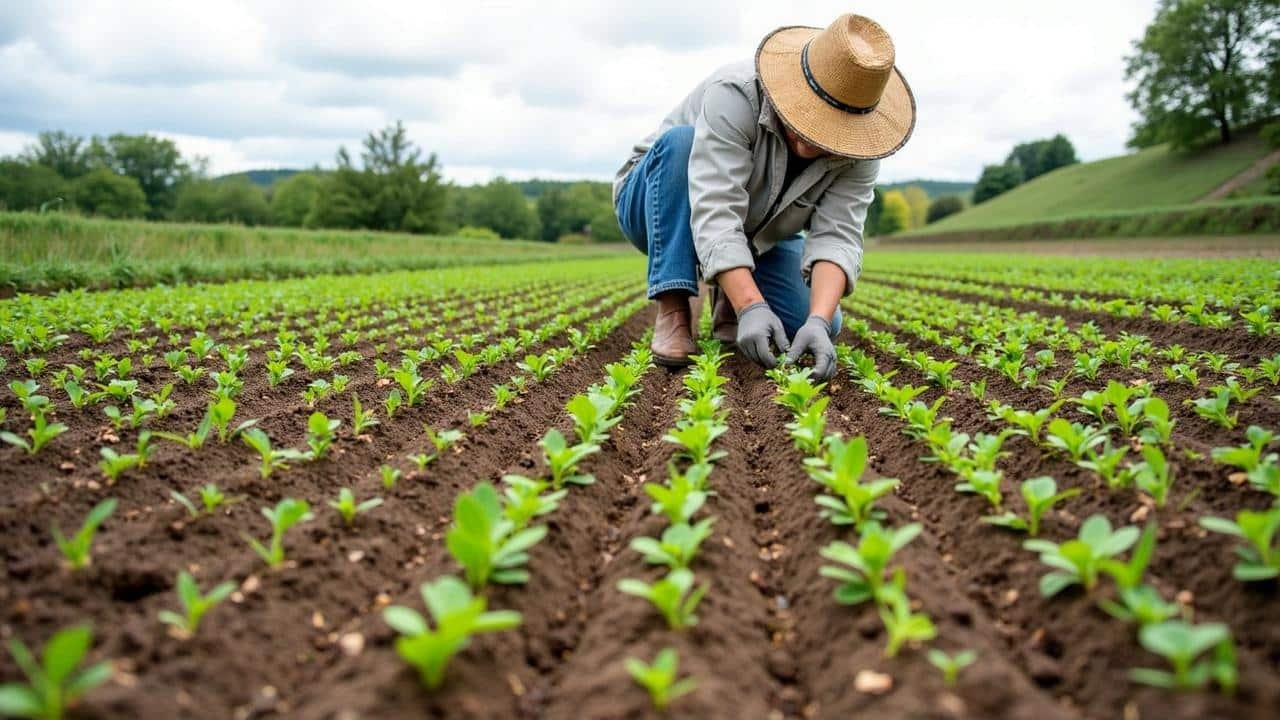
For much of the last century, agricultural success was measured by yield alone. If crops grew tall and harvests increased, the system was deemed successful—even if the soil beneath those fields was slowly dying. Decades of intensive tillage, monocropping, and heavy chemical inputs stripped many farmlands of organic matter, microbial life, and structure. By the early 2000s, vast areas of agricultural soil were labeled “exhausted,” considered productive only through constant external inputs.
Yet in less than a generation, a quiet transformation has taken place. Across continents and climates, regenerative farming practices have rebuilt soils once thought beyond repair. Fields that were compacted, eroded, and biologically inactive now support thriving crops, resilient ecosystems, and profitable farms. This rapid recovery challenges long-held assumptions about soil degradation and offers hope for the future of food and climate stability.
The Crisis of Depleted Soils
Soil degradation did not happen overnight. Years of deep plowing broke apart soil structure. Synthetic fertilizers replaced natural nutrient cycles. Pesticides reduced not only pests but also beneficial organisms. Crop residues were removed instead of returned to the land.
As a result:
- Organic matter levels plummeted
- Water infiltration declined
- Erosion increased
- Soil life collapsed
Many farmers found themselves trapped in a cycle of declining soil health and rising input costs. Without continuous fertilization and irrigation, yields fell sharply. The prevailing belief was that once soil reached this state, recovery would take generations—if it was possible at all.
A Shift in Perspective: Soil as a Living System
Regenerative farming is built on a simple but revolutionary idea: soil is not dirt—it is a living ecosystem. Healthy soil contains billions of microorganisms, fungal networks, insects, and plant roots working together to cycle nutrients, store carbon, and regulate water.
Rather than forcing productivity through external inputs, regenerative practices aim to restore these natural processes.

Key principles include:
- Minimal soil disturbance
- Continuous ground cover
- Diverse crop rotations
- Integration of livestock
- Reduced reliance on synthetic chemicals
These methods do not attempt to “fix” soil quickly. Instead, they create conditions where soil can heal itself.
Rapid Results Where Change Was Once Thought Impossible
One of the most surprising outcomes of regenerative farming is the speed at which soil health can rebound. In many documented cases, measurable improvements occurred within 5 to 15 years—less than a generation.
Farmers transitioning from conventional systems reported:
- Increases in soil organic matter
- Improved crumb structure and porosity
- Greater earthworm and microbial activity
- Reduced erosion even during heavy rains
Fields previously described as “dead” began to show signs of life within just a few seasons.
The Power of Reduced Tillage
Tillage is one of the most disruptive forces in agriculture. It breaks fungal networks, exposes carbon to oxidation, and leaves soil vulnerable to erosion.
By reducing or eliminating tillage, regenerative farmers allowed soil structure to rebuild naturally. Plant roots and soil organisms created stable aggregates that resisted compaction and erosion.

Benefits included:
- Improved water infiltration
- Greater drought resilience
- Reduced fuel and labor costs
In some regions, no-till regenerative fields absorbed rainfall at rates several times higher than conventionally tilled soils.
Cover Crops: Rebuilding from the Ground Up
Cover crops play a central role in regenerative systems. Rather than leaving soil bare between cash crops, farmers plant diverse species that feed the soil year-round.
Cover crops:
- Protect soil from wind and water erosion
- Add organic matter through roots and residues
- Feed microbes with root exudates
- Fix nitrogen and scavenge nutrients
As cover crop use expanded, once-exhausted soils began accumulating carbon again—often at rates that surprised both farmers and researchers.
Diversity Drives Soil Recovery
Monocultures simplify ecosystems and leave soils vulnerable. Regenerative farming emphasizes diversity both above and below ground.
Rotating crops with different root depths and growth patterns:

- Improves nutrient cycling
- Breaks pest and disease cycles
- Encourages diverse microbial communities
Some farms incorporated intercropping and agroforestry, adding trees and perennials to landscapes previously dominated by annual crops. These systems further accelerated soil recovery by stabilizing carbon and improving microclimates.
Livestock as a Regenerative Tool
In regenerative systems, livestock are not seen as a problem—but as a solution when managed correctly. Rotational grazing mimics the movement of wild herbivores, concentrating grazing briefly and allowing long recovery periods.
Properly managed grazing:
- Stimulates plant root growth
- Tramples organic matter into the soil
- Enhances nutrient distribution through manure
- Improves soil carbon storage
Grasslands once degraded by overgrazing have been restored to productive, resilient ecosystems through regenerative grazing practices.
Economic Resilience Alongside Soil Recovery
One of the most compelling aspects of regenerative farming is that environmental recovery often coincides with improved farm economics.
As soil health improved, farmers reported:
- Reduced fertilizer and pesticide costs
- Lower irrigation needs
- More stable yields during extreme weather
- Increased long-term profitability
While transition periods can be challenging, many farmers found that regenerative systems reduced risk and dependence on volatile input markets.

Climate Benefits of Rebuilt Soils
Healthy soils are powerful carbon sinks. As regenerative practices rebuild organic matter, carbon is drawn from the atmosphere and stored underground.
This has far-reaching implications:
- Mitigating climate change
- Improving water retention during droughts
- Reducing flood risks during heavy rainfall
Soils once considered exhausted are now part of the climate solution rather than contributors to the problem.
Overcoming Skepticism and Barriers
Despite proven successes, regenerative farming still faces skepticism. Critics argue that results vary by region and that large-scale adoption is difficult.
However, the growing body of evidence suggests that while practices must be adapted locally, the principles are universal. Supportive policies, education, and farmer-to-farmer knowledge sharing have been key to accelerating adoption.
A New Understanding of What’s Possible
Perhaps the most profound lesson of regenerative farming is psychological. It challenges the belief that degradation is permanent and that productivity requires extraction.
In less than a generation, farmers have shown that soils once written off as exhausted can be revived—often beyond expectations. What was lost through decades of misuse can be rebuilt through thoughtful stewardship.

Conclusion: Healing the Ground Beneath Our Feet
In less than a generation, regenerative farming rebuilt soils once considered exhausted—not through miracle inputs or quick fixes, but by restoring nature’s own processes.