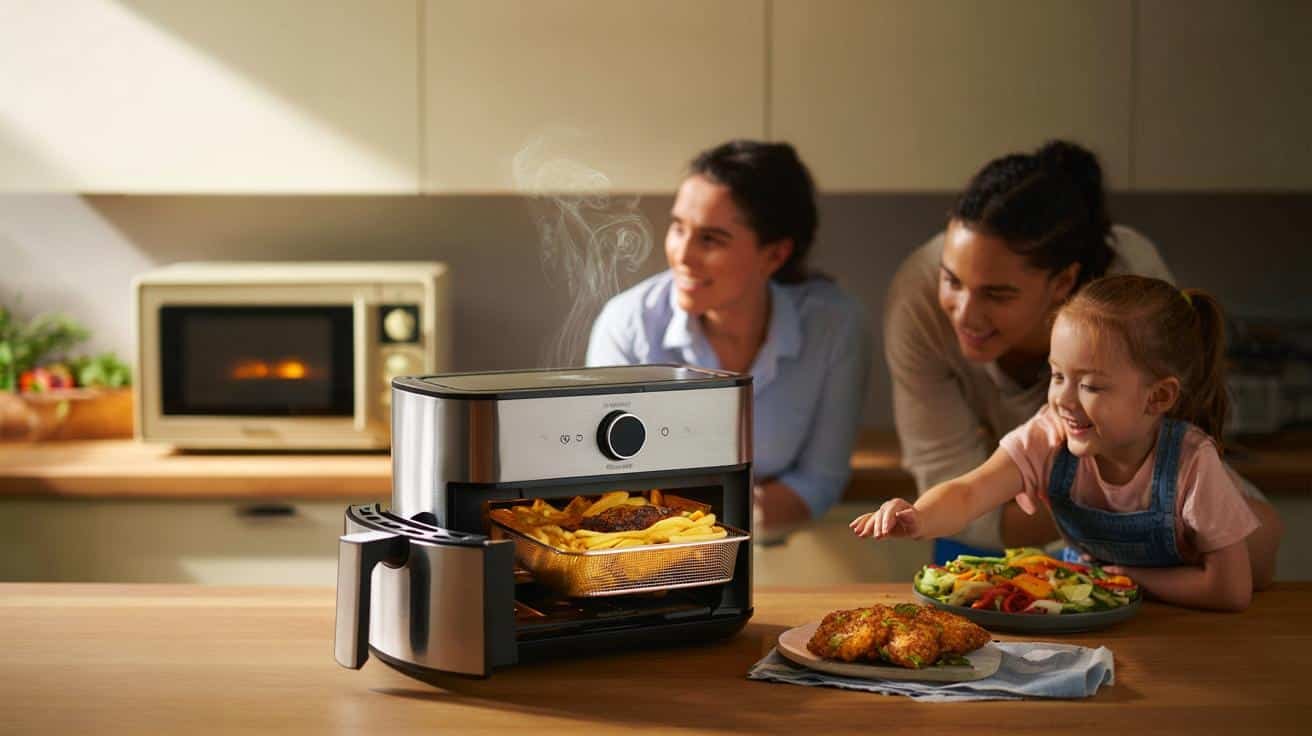
For decades, the microwave oven has been the unquestioned king of convenience cooking. From reheating leftovers to defrosting frozen meals, it earned its place on nearly every kitchen counter. But quietly—and rapidly—that dominance is fading. Across households worldwide, microwaves are being pushed aside in favor of a device many now consider faster, cleaner, and far more versatile.
That device is the air fryer.
Once dismissed as a novelty gadget, the air fryer has evolved into a central kitchen appliance that is fundamentally changing how people cook, reheat, and even plan meals. Its rise signals more than a passing trend—it reflects shifting priorities around health, energy efficiency, and everyday convenience.
Why the Microwave Is Losing Ground
The microwave’s core strength—speed—has also become its weakness.
While it heats food quickly, it does so unevenly, often leaving meals:
- Hot on the outside, cold in the center
- Rubbery or soggy in texture
- Dehydrated or flavorless
Microwaves also struggle with versatility. They excel at reheating liquids and soft foods but perform poorly with anything that benefits from browning, crisping, or controlled cooking.
As cooking habits shift toward fresher foods and better textures, many households are realizing that speed alone is no longer enough.
The Rise of the Air Fryer
Air fryers work by circulating hot air at high speed around food, creating a convection effect similar to a powerful oven—but on a much smaller scale.

This design allows them to:
- Heat faster than conventional ovens
- Cook food evenly
- Produce crisp textures without deep frying
- Use little to no added oil
What began as a tool for “healthier fries” has expanded into an all-purpose appliance capable of roasting vegetables, reheating leftovers, baking, grilling, and even cooking entire meals.
Faster Than the Microwave? Surprisingly, Yes
It may sound counterintuitive, but in many everyday scenarios, air fryers are now as fast—or faster—than microwaves.
Consider the full process:
- Microwaves heat instantly but often require stirring, flipping, or standing time
- Air fryers heat slightly longer upfront but cook evenly without intervention
Reheating pizza, roasted vegetables, fried foods, or leftovers in an air fryer often takes 3–6 minutes, with vastly superior results compared to a microwave’s soggy output.
The difference is not just speed—it’s quality.
Cleaner Cooking, Less Mess
One of the most cited reasons households abandon microwaves is cleanliness.
Microwaves are notorious for:

- Explosive splatters
- Stubborn odors
- Stains that require frequent scrubbing
Air fryers, by contrast:
- Confine grease and moisture
- Use removable, dishwasher-safe baskets
- Reduce food explosions and spills
Because air fryers crisp rather than steam, they generate less condensation, keeping kitchens cleaner and fresher.
Transforming Leftovers Instead of Ruining Them
Leftovers are where air fryers truly shine.
Foods that become limp or unappetizing in a microwave—such as fries, fried chicken, roasted vegetables, pastries, and bread—are revived in minutes.
Instead of reheating, air fryers re-cook lightly, restoring texture while warming the interior. This has led many households to rethink meal prep entirely, knowing leftovers will actually taste good the next day.
Healthier Cooking Without Extra Effort
Health concerns also play a major role in the shift.
Air fryers require little or no oil to achieve browning, reducing overall fat intake without sacrificing flavor. For many users, this translates to:
- Fewer fried foods
- Less reliance on processed microwave meals
- More whole ingredients cooked at home
Unlike microwaves, which are often associated with ultra-processed convenience foods, air fryers encourage active cooking—even if it’s quick and simple.

Energy Efficiency and Cost Savings
Microwaves are efficient, but air fryers compete surprisingly well.
Because air fryers:
- Heat a much smaller space than an oven
- Reach cooking temperature quickly
- Require shorter cooking times
they often use less total energy than conventional ovens for small meals. For households cooking for one or two people, air fryers can significantly reduce energy use.
This efficiency has become more appealing as electricity costs rise globally.
Why Air Fryers Feel More “Modern”
Beyond performance, air fryers align with modern kitchen values:
- Compact design
- Digital controls
- Multi-function capability
- Minimal setup
Many newer models combine multiple appliances into one—air fryer, toaster oven, dehydrator, rotisserie—making the microwave feel increasingly redundant.
As counter space becomes more valuable, single-purpose devices struggle to justify their footprint.
The Psychological Shift: Cooking vs. Heating
Perhaps the most important change is psychological.

Microwaves are associated with heating food, while air fryers feel like cooking food—even when the effort difference is minimal.
This distinction matters. Cooking engages people with their meals, ingredients, and timing. It encourages better food choices and reduces reliance on prepackaged options.
Households using air fryers often report cooking more frequently, experimenting with recipes, and eating fewer takeout meals.
Are Microwaves Disappearing Completely?
Despite the shift, microwaves are not vanishing overnight.
They still excel at:
- Heating liquids
- Melting butter or chocolate
- Defrosting safely
- Cooking simple grains
However, in many homes, the microwave is no longer the default appliance—it’s a backup.
Some newer kitchens are even being designed without built-in microwaves, reflecting changing habits and priorities.
Common Concerns and Limitations
Air fryers are not perfect.

They can be:
- Loud
- Limited in capacity for large families
- Less effective for soups and liquids
But for everyday meals and reheating, many users find these drawbacks minor compared to the benefits.
As designs improve and sizes diversify, even these limitations are shrinking.
What This Shift Says About Modern Living
The move away from microwaves reflects a broader cultural change:
- Less tolerance for mediocre food
- More focus on texture and freshness
- Desire for speed without compromise
- Preference for tools that do more with less
In essence, households are choosing better outcomes, not just faster ones.
Conclusion: Not Just a Gadget, but a Habit Change
Saying goodbye to the microwave isn’t about rejecting convenience—it’s about upgrading it.
The air fryer has proven that fast cooking doesn’t have to mean soggy, bland, or overprocessed. By delivering speed, cleanliness, and quality in onecompact device, it has transformed how households approach everyday meals.