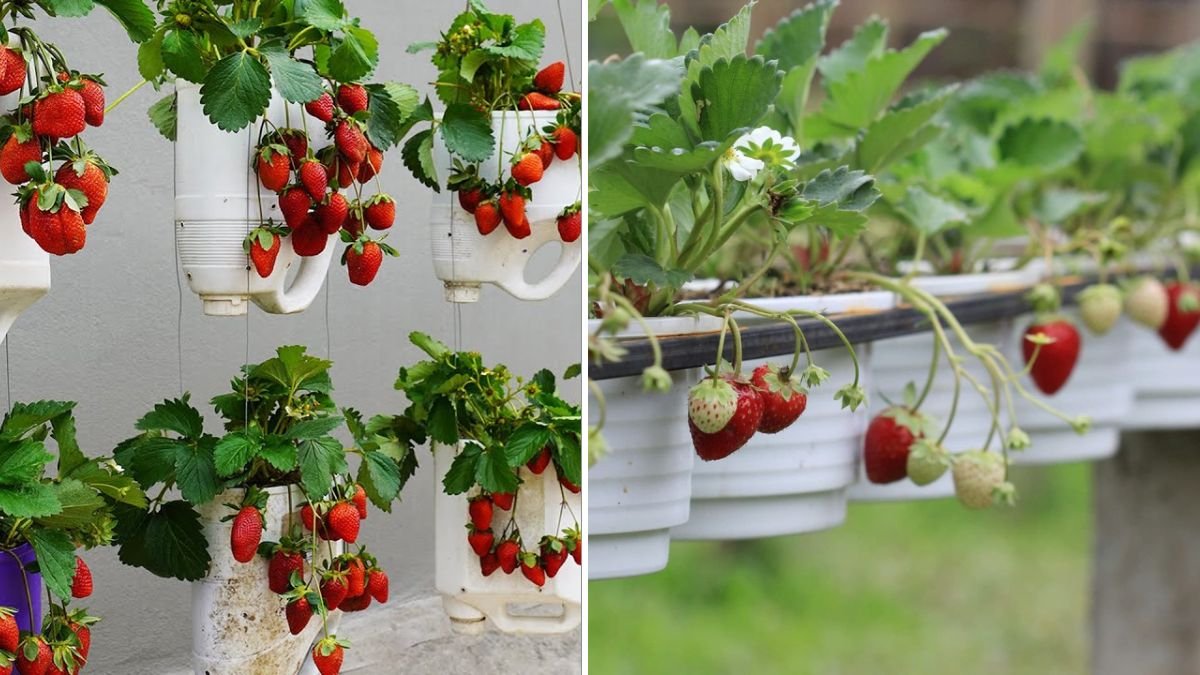
Strawberries are one of the most rewarding fruits to grow at home. They thrive in containers, making them perfect for balconies, terraces, and small patios. Plastic containers are ideal because they retain moisture and are lightweight. Container gardening allows you to control soil quality, water, and sunlight. Strawberries grown in containers are cleaner and healthier than soil-grown ones. They also reduce weed competition and pest exposure. With the right care, they can produce fruit almost year-round. Even beginners can successfully grow strawberries using this method. Container-grown strawberries are visually appealing and productive. This guide covers everything from planting to harvest.
Benefits of Plastic Container Strawberry Gardening
Plastic containers are affordable, lightweight, and easy to manage. They allow efficient root growth while preventing waterlogging. Containers can be moved to catch sunlight or protect from harsh weather. Drainage holes prevent root rot and fungal diseases. The soil environment can be controlled precisely. Plastic containers reduce weed growth and pests. Urban gardeners can save space using vertical arrangements. Container strawberries are easier to monitor and harvest. Recycling old containers adds an eco-friendly aspect. This method ensures consistent fruit production in limited spaces.
Choosing the Best Strawberry Varieties
Not all strawberry varieties perform well in containers. Ever-bearing and day-neutral types are ideal. They produce fruits continuously and adapt well to limited soil space. Alpine strawberries are compact and perfect for small containers. Choose disease-resistant varieties for better results. Local varieties suited to your climate grow reliably. Early-maturing varieties give quicker harvests. Quality seeds or runner plants affect fruit size and taste. Avoid large sprawling types that need ground space. Proper variety selection maximizes yield and fruit quality. The right choice sets the foundation for successful container gardening.

Selecting the Right Plastic Containers
Choose containers at least 8–12 inches deep. Wider containers allow more plants and root growth. Ensure sufficient drainage holes at the bottom. Use food-grade plastic to avoid chemical contamination. Recycled containers are fine if cleaned thoroughly. Light-colored containers prevent overheating of roots. Vertical stacking or hanging containers can save space. Elevate containers slightly to improve drainage. Proper container size prevents root crowding. Well-prepared containers ensure long-term productivity.
Preparing the Soil Mix
Strawberries need light, fertile, and well-drained soil. Mix garden soil, compost, and cocopeat equally. Add vermicompost to improve fertility. A small amount of sand improves drainage. Avoid clay-heavy or compact soil. Soil should hold moisture without becoming soggy. Healthy soil promotes strong root systems and flowering. Good soil enhances fruit taste and size. Nutrient-rich soil supports continuous production. Soil preparation is critical for container-grown strawberries.
Planting Strawberry Seedlings
Plant strawberries with roots spread evenly. Keep the crown above soil level. Water immediately after planting. Space plants adequately to allow airflow. Avoid planting during extreme heat. Partial shade may help seedlings acclimate initially. Gradually move plants to full sun. Proper planting reduces transplant shock. Healthy starts improve growth and flowering. Correct planting ensures early and abundant harvests.

Sunlight Requirements
Strawberries need six to eight hours of sunlight daily. Morning sunlight is ideal. Lack of sunlight reduces flowering and fruiting. Place containers in bright, open areas. Rotate containers for uniform light exposure. Avoid shaded walls or corners. Adequate sunlight improves fruit color and sweetness. Sun strengthens leaves and stems. Consistent exposure ensures regular harvests. Proper light management maximizes yield.
Watering Techniques
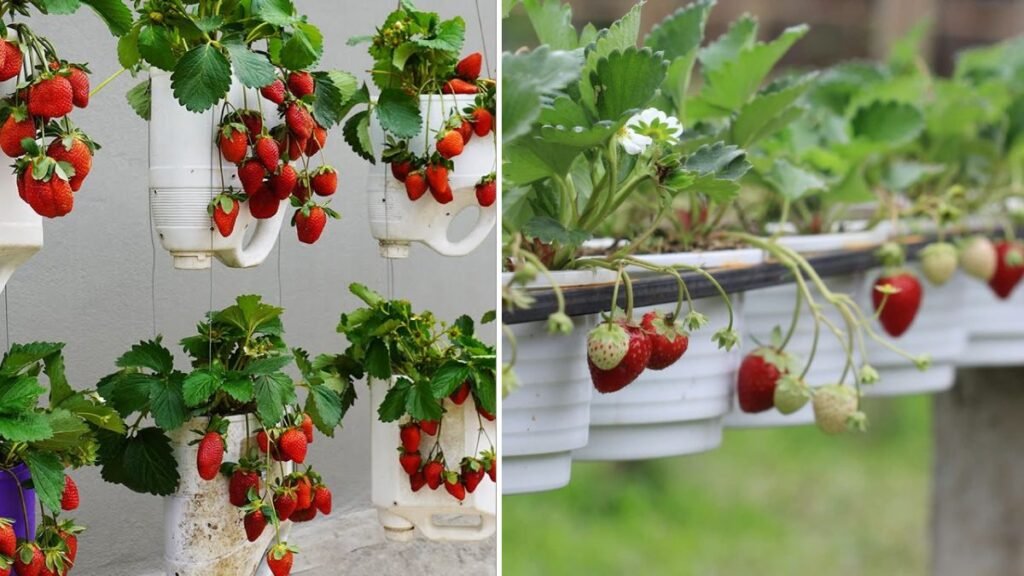
Strawberries require consistent moisture. Water deeply but avoid waterlogging. Morning watering is best. Containers dry faster than garden soil. Mulch helps retain moisture and reduces evaporation. Avoid wetting leaves to prevent fungal diseases. Reduce watering slightly before harvest to concentrate sugars. Regular and balanced watering ensures firm, juicy fruits. Proper hydration increases both yield and quality. Consistent care is key to productive container strawberries.
Fertilization for High Yield
Strawberries are moderate feeders. Apply liquid compost or vermicompost tea every two weeks. Banana peel water supplies potassium. Avoid excessive nitrogen, which promotes leaves over fruits. Balanced fertilization supports flowering and fruiting. Organic fertilizers enhance soil health. Regular feeding encourages continuous fruit production. Proper nutrient management improves fruit size, taste, and quality. Balanced fertilization ensures sustainable yields. Feeding strategies directly influence harvest quantity.

Mulching for Healthy Growth
Mulching retains moisture and reduces weed growth. Straw, hay, or dried leaves are ideal. Mulch keeps fruits clean and prevents direct soil contact. It also maintains consistent soil temperature. Organic mulch improves soil structure over time. Apply a 1–2 inch layer around plants. Replace or refresh mulch as needed. Mulching reduces evaporation during hot weather. It also protects roots in cooler seasons. Proper mulching supports healthy plants and consistent harvest.
Supporting Strawberry Plants
Some strawberry varieties may need support for runners. Use small stakes or horizontal trellises. Vertical support keeps fruits clean and prevents damage. Proper support improves airflow, reducing fungal risk. Supported plants are easier to harvest. It also helps maintain plant shape. Prevent overcrowding by trimming excessive runners. Support ensures even fruit development. Strong plants produce more flowers and berries. Well-supported plants last longer and are more productive.
Pest and Disease Management
Common pests include aphids, spider mites, and slugs. Neem oil or organic insecticidal sprays help control pests. Remove damaged or infected leaves promptly. Good airflow reduces fungal diseases such as powdery mildew. Avoid overwatering to prevent root rot. Regular inspection is essential for healthy growth. Clean containers and soil reduce pest risks. Organic gardening ensures edible, chemical-free strawberries. Prevention is easier than treatment. Effective pest management ensures consistent fruiting.

Pollination Tips
Strawberries are partially self-pollinating but benefit from pollinators. Bees and insects help improve fruit set. In container gardens, hand pollination can boost yields. Use a small soft brush to transfer pollen between flowers. Morning hours are best. Proper pollination ensures larger, more uniform fruits. Regular pollination encourages continuous flowering. Hand-assisted pollination is simple and effective. This technique is particularly useful in indoor or balcony setups. Successful pollination increases total harvest.
Harvesting Strawberries
Harvest when berries are fully red and firm. Pick in the morning for optimal freshness. Use scissors or pinch stems to avoid damaging plants. Frequent harvesting encourages more flowering. Avoid overripe fruits on plants. Timely harvest enhances sweetness and taste. Store harvested strawberries in cool places. Regular harvesting extends the productive season. Fresh strawberries can be eaten immediately or preserved. Correct harvesting ensures maximum yield and quality.
Table: Container Strawberry Gardening Guide
| Factor | Best Practice |
|---|---|
| Container depth | 8–12 inches |
| Soil | Garden soil + compost + cocopeat |
| Sunlight | 6–8 hours daily |
| Watering | Consistent, moderate |
| Fertilization | Every 2 weeks, organic |
Why This Method is Effective
Container strawberries allow control over soil, water, and sunlight. Containers reduce pests and weeds. Plastic containers are lightweight and portable. Nutrients stay concentrated near roots. Plants are easier to monitor and harvest. Runners can be managed efficiently. Space is optimized for urban living. Even beginners can succeed. Continuous flowering ensures extended harvests. Container gardening delivers clean, high-quality fruits reliably.
