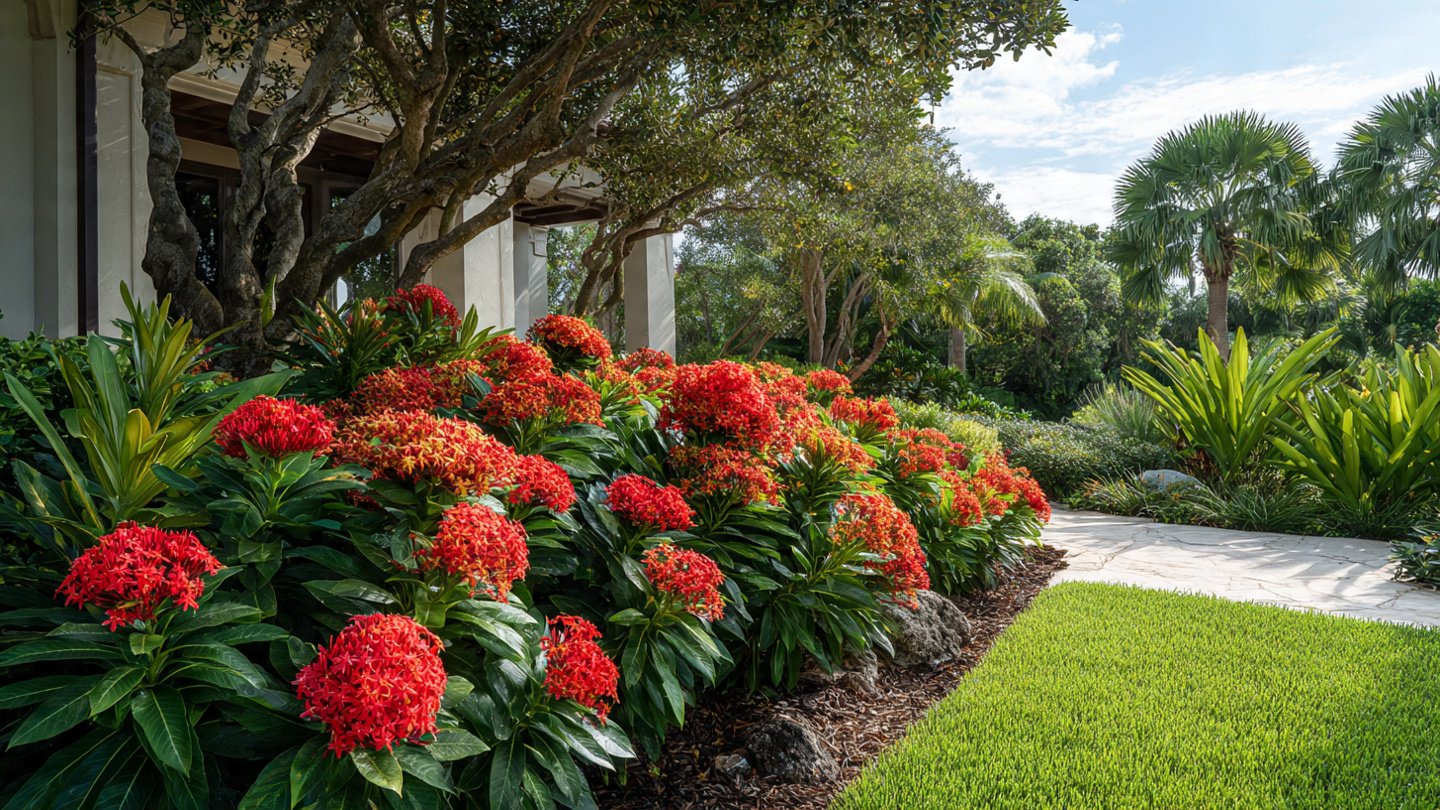
Ixora, known for its dazzling clusters of tiny flowers and dense foliage, is a beloved choice for landscaping in warm climates. With the right care, Ixora can be the perfect foundation for vibrant outdoor spaces. This article will guide you through the essentials of growing Ixora borders in full sun, ensuring your garden flourishes with color, texture, and charm.
Understanding Ixora
1. Botanical Basics
Ixora is a genus of flowering plants in the Rubiaceae family, which includes over 400 species. Commonly found in tropical and subtropical regions, its flowers can be red, orange, yellow, or pink, making them a vibrant addition to any garden. The plants typically grow as shrubs, reaching heights of 2 to 6 feet, depending on the variety.
2. Ideal Conditions
Ixora thrives in full sun, requiring at least six hours of direct sunlight each day. This exposure helps the plants produce more flowers and vibrant foliage. It is essential to select the right variety based on your garden conditions, soil type, and climate.
Choosing the Right Variety
When selecting Ixora for your borders, consider the following popular varieties:
- Ixora coccinea: Known for its bright red flowers, this species is often used in informal hedges.
- Ixora chinensis: Features a range of flower colors and compact growth, making it ideal for smaller spaces.
- Ixora spp.: Other species may offer different colors and growth habits, so research local options to find the best match for your landscape.

Soil Preparation
1. Soil Type
Ixora prefers well-draining, slightly acidic to neutral soil (pH 6.0 to 7.0). Heavy clay soils can lead to root rot, so adding organic matter is crucial.
2. Improving Soil Drainage
To improve drainage, consider the following:
- Amend the Soil: Mix in compost or well-rotted manure to enhance aeration and fertility.
- Raised Beds: If your garden is prone to flooding, creating raised beds can help facilitate drainage.
3. Testing Soil pH
You can use a soil test kit to check the pH level. If your soil is too alkaline, adding sulfur can help lower the pH.
Planting Ixora Borders
1. Timing
The best time to plant Ixora is during the warm months, ideally in spring or early summer. This allows the plants to establish roots before the cooler months set in.

2. Planting Technique
Follow these steps for successful planting:
- Spacing: Space plants 2 to 3 feet apart to allow for their mature size and air circulation.
- Planting Hole: Dig a hole that is twice as wide and as deep as the root ball.
- Placement: Remove the plant from its container, gently loosening any tightly bound roots. Place the plant in the hole, ensuring the top of the root ball is level with the soil surface.
- Backfilling: Fill in the hole with the amended soil, gently tapping down to eliminate air pockets.
3. Watering After Planting
After planting, water the Ixora thoroughly. Ensure the soil remains consistently moist for the first few weeks to promote root establishment.
Care and Maintenance
1. Watering
Ixora plants require regular watering, particularly during dry spells. Here are some tips:
- Frequency: Water deeply once a week, allowing the soil to dry slightly between waterings.
- Mulching: Apply a 2 to 3-inch layer of mulch around the base to retain moisture and suppress weeds.

2. Fertilizing
Ixora benefits from regular fertilization. Use a balanced, slow-release fertilizer, following these guidelines:
- When to Fertilize: Apply every 6 to 8 weeks during the growing season (spring and summer).
- Application Rate: Follow the manufacturer’s instructions, typically applying about 1 pound per 100 square feet.
3. Pruning
Regular pruning is vital for maintaining the health and appearance of your Ixora plants:
- Timing: Prune after the flowering season to encourage new growth and development.
- Technique: Remove any dead, damaged, or crossing branches, and shape the plant to encourage bushy growth.
4. Pest Control
Ixora is relatively resistant to pests but can occasionally be affected by:
- Aphids: Small, soft-bodied insects that can cause leaf curl. Use insecticidal soap if infestations occur.
- Spider Mites: Tiny pests that thrive in dry conditions. Increase humidity around the plants or use horticultural oils for control.

Designing Ixora Borders
1. Creating Visual Interest
Planting Ixora in borders can create striking visual interest in your garden. Consider these design tips:
- Layering: Use taller Ixora plants at the back of the border and shorter varieties at the front to create depth.
- Mixing with Other Plants: Combine Ixora with complementary plants like ornamental grasses or colorful foliage plants to enhance vibrancy.
- Seasonal Blooms: Pair Ixora with plants that bloom at different times to ensure year-round interest.
2. Edging and Pathways
Using Ixora as edging along walkways or pathways can make spaces feel more inviting. Their compact size and dense foliage provide a lush border while guiding visitors through your outdoor areas.
Environmental Considerations
1. Local Climate
Understanding your local climate is crucial for successful Ixora growth. Look for varieties best suited to your area’s temperature and humidity levels. Ixora is relatively heat-tolerant and can thrive in a variety of conditions.

2. Wildlife Support
Ixora attracts butterflies and hummingbirds, making it an excellent choice for pollinator-friendly gardens. Consider incorporating other nectar-rich plants to further support local wildlife.
Troubleshooting Common Issues
1. Yellowing Leaves
If you notice yellowing leaves, it may indicate:
- Nutrient Deficiency: Ensure you’re fertilizing regularly.
- Overwatering: Check for proper drainage and adjust your watering schedule.
2. Reduced Flowering
If your Ixora plants aren’t flowering, they may not be receiving enough sunlight. Ensure they are planted in a location that receives full sun for at least six hours a day.
Conclusion
Growing Ixora borders in full sun is a rewarding endeavor that will enhance the vibrancy and beauty of your outdoor spaces. With the right selection, soil preparation, planting techniques, and ongoing care, you can create a colorful landscape that thrives in sunny conditions. Whether you’re looking to attract pollinators or simply add beauty to your garden, Ixora offers endless possibilities. Embrace the joy of gardening and let your Ixora borders flourish, creating a stunning visual tapestry that can be enjoyed by all.