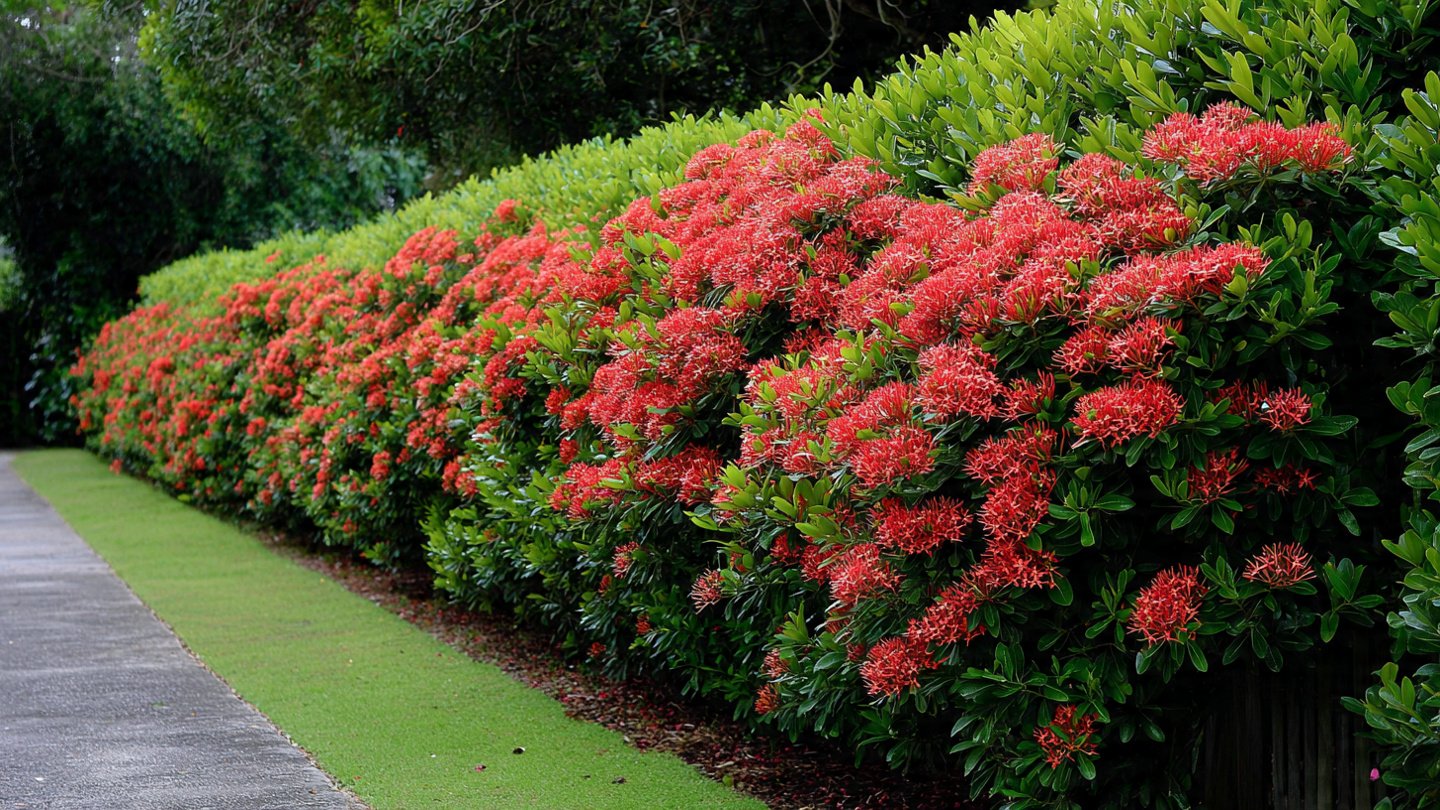
Ixora, with its vibrant clusters of small flowers, is a popular choice for those looking to create eye-catching flower hedges. This evergreen shrub belongs to the Rubiaceae family and is native to tropical and subtropical regions. Its ability to thrive in a variety of conditions makes it an excellent option for many gardeners. In this comprehensive guide, we will walk you through the steps to successfully grow Ixora as a flower hedge, covering aspects such as selection, planting, care, and maintenance.
What is Ixora?
Ixora is known for its aromatic flowers, which can be found in shades of red, pink, yellow, and orange. The foliage is typically dark green and glossy, providing a beautiful backdrop for the colorful blooms. Ixora plants can vary in size but generally reach heights of about 3 to 6 feet when trimmed properly for hedging. The flowers attract butterflies and birds, adding to the ecological value of using Ixora as a hedge.
Choosing the Right Ixora Variety
Before planting, it’s crucial to choose the right variety of Ixora for your garden. Some popular types include:
-
Ixora coccinea: This variety has vibrant red flowers and is one of the most commonly used for hedging.
-
Ixora chinensis: Known for its yellowish blooms, this variety also presents pink and red options, making it versatile for landscape design.
-
Ixora ‘Dwarf Pink’: A smaller version of traditional Ixora, this variety is ideal for compact spaces and can be managed easily.
When selecting a variety, consider your climate, the space available, and the desired height of the hedge. The variety you choose can influence how quickly it grows and how well it adapts to your garden conditions.

Site Selection
Sunlight Requirements
Ixora thrives in full sun to partial shade. Ideally, the plant needs at least 6 hours of direct sunlight daily to produce the best blooms. When selecting a site for planting, observe how much sun the area receives throughout the day.
Soil Conditions
Ixora prefers well-draining, acidic soil with a pH between 5.5 and 6.5. You can improve your existing soil by mixing in organic matter like compost or peat moss. Check the drainage capability of the site by digging a hole about 12 inches deep and filling it with water. If the water hasn’t drained within a few hours, the location might be too soggy for Ixora.
Spacing Considerations
To achieve a solid flower hedge, plant Ixora shrubs about 2 to 3 feet apart. This spacing allows for airflow, sunlight penetration, and prevents overcrowding as the plants grow.
Planting Ixora
Preparing the Planting Area
Begin by clearing the planting area of weeds and debris. Once cleaned, dig holes that are approximately twice the width and the same depth as the root ball of the Ixora plant. Mix the removed soil with organic compost to improve fertility and drainage.
How to Plant
-
Remove the Plant: Carefully take the Ixora plant out of its container, being cautious not to damage its roots.
-
Place and Fill: Position the plant in the center of the hole. The top of the root ball should be level with the ground surface. Fill in with the prepared soil, firming it gently around the roots.
-
Water Thoroughly: After planting, give your new Ixora hedge a deep watering to ensure the soil settles around the roots.
Mulching
Apply a layer of organic mulch, such as pine bark or wood chips, around the base of the plants. This will help retain moisture, suppress weeds, and maintain consistent soil temperatures.
Watering for Optimal Growth
Ixora requires consistent moisture, especially during the first few months after planting. Here are some tips for watering:
-
Initial Watering: In the beginning, water deeply and frequently to establish strong roots, ensuring the soil remains moist but not soggy.
-
Regular Watering: Once established, reduce watering frequency. Water once a week unless there is little rainfall, in which case additional watering may be necessary.
-
Approach to Seasonal Variations: During dry spells, monitor soil moisture and adjust your watering schedule accordingly. Ensure that rainy seasons do not saturate the soil excessively.
Fertilization
To promote healthy growth and abundant flowering, fertilize your Ixora hedge regularly. Here are some guidelines:
-
Initial Fertilization: When planting, mix slow-release fertilizer into the soil. A balanced fertilizer with an N-P-K ratio of 10-10-10 or 14-14-14 is ideal.
-
Continuous Fertilization: After the initial planting, apply a balanced fertilizer every 2-3 months during the growing season (spring and summer).
-
Specialized Fertilizers: Consider applying a fertilizer specifically designed for flowering plants to enhance blooming in the growing months.
Pruning and Shaping Your Hedge
Pruning is vital in maintaining a healthy, aesthetically pleasing Ixora hedge. Follow these guidelines for effective pruning:
-
Timing: Prune primarily after the blooming season, typically in late spring or early summer. This timing allows for new growth to be produced before the next flowering cycle.
-
Techniques: Use clean, sharp pruning shears to remove dead or damaged branches. To shape the hedge, trim the sides and top while ensuring that the plants have a uniform appearance.
-
Encouraging Dense Growth: For thicker foliage, pinch back the tips of younger plants to encourage branching, which creates a bushier look.
Pest and Disease Management
Ixora is relatively pest-resistant, but it can fall victim to certain pests and diseases. Here’s how to manage them:
Common Pests
-
Aphids: If you notice yellowing leaves or sticky residue, inspect for aphids. Use insecticidal soap to eliminate these pests.
-
Spider Mites: Signs include fine webbing and stippling on leaves. Increase humidity around the plants and treat with miticides if necessary.
Diseases
-
Root Rot: Caused by overwatering, root rot can be diagnosed if the plant shows wilting or yellowing leaves. Ensure proper drainage and reduce watering frequency.
-
Powdery Mildew: This fungal infection can appear on stressed plants. Improve air circulation and treat with fungicides if required.
Seasonal Care
Summer Care

During the hot summer months, ensure consistent watering and monitor for pests. Regularly deadhead spent flowers to encourage more blooms.
Winter Care
Ixora can tolerate mild frost, but a protective layer of mulch can help insulate roots during colder months. In cooler regions, consider transient protection to ensure their survival.
Creating a Beautiful Hedge
To maximize the aesthetic appeal of your Ixora hedge:
-
Creative Planting: Consider adding contrasting plants, such as variegated foliage or taller plants, to create a diverse landscape.
-
Color Harmony: Plan for a mix of different flower colors and blooming seasons to keep your hedge vibrant all year long.
-
Seasonal Contrast: Employ plants with differing flowering times or foliage colors to keep visual interest throughout the seasons.
Conclusion
Growing Ixora as a flower hedge is not only rewarding but also enriching for any garden. With its stunning, colorful flowers and lush green foliage, it can significantly enhance your landscape. By following the guidelines laid out in this article—from selecting the right variety and prepping the site to regular care and maintenance—you can achieve an impressive and enduring Ixora hedge that you and your neighbors will admire for years to come. Happy gardening!