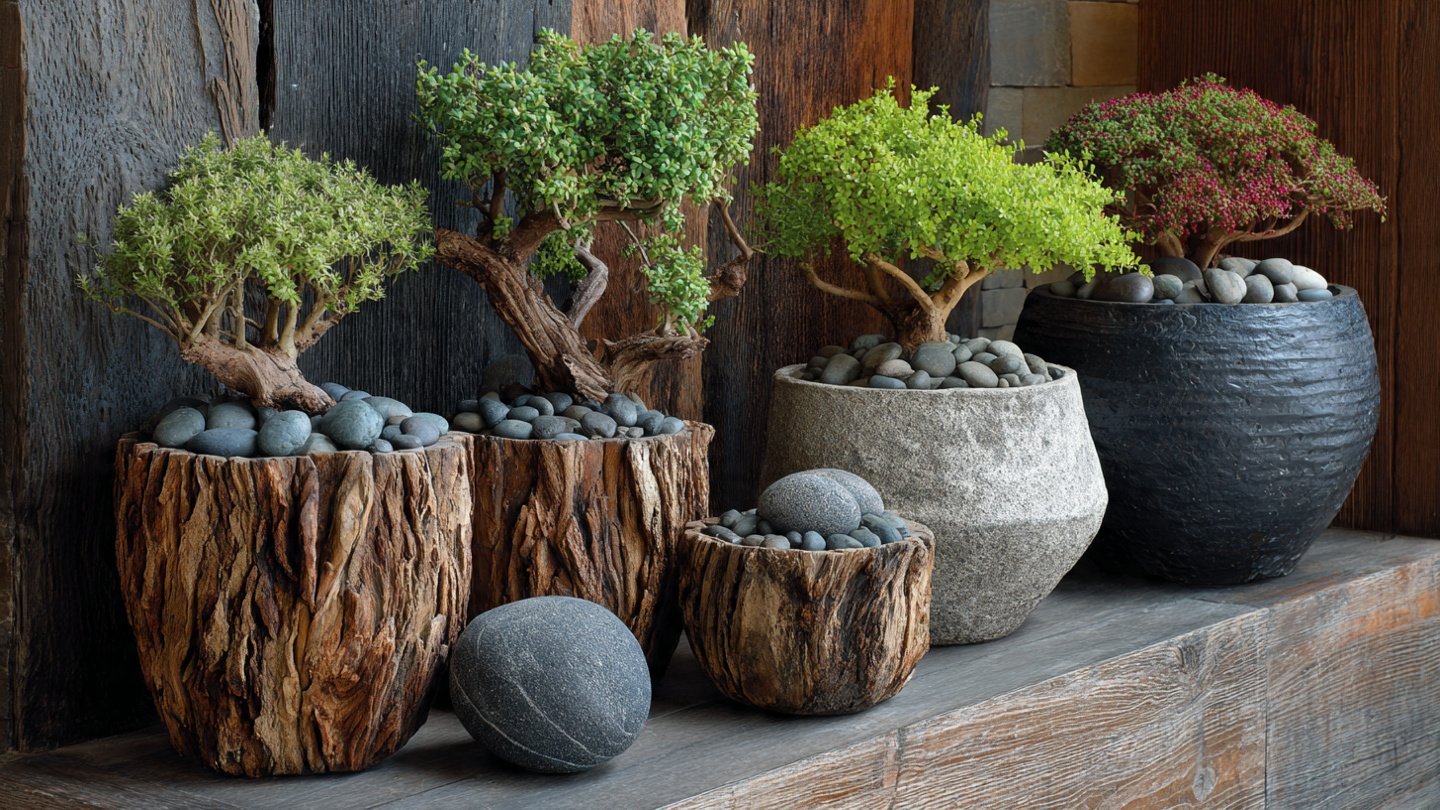
Natural elements like bark and stone can add unique textures and materials to your pots, enhancing both their aesthetic appeal and functional benefits. Whether you’re an experienced gardener or a novice plant parent, incorporating these elements can create a more organic and visually stunning environment for your plants. Here’s how you can effectively integrate bark and stone into your pots.
Benefits of Using Natural Elements
Before we delve into the methods of incorporating bark and stone into your pots, it’s essential to understand their benefits:
- Aesthetic Appeal: Natural materials offer a rustic elegance that synthetic materials often lack.
- Moisture Retention: Bark can help retain moisture in soil, benefiting plant health.
- Drainage: Stones can promote better drainage in pots, preventing root rot.
- Insulation: Natural elements can provide insulation for roots against temperature fluctuations.
Incorporating Bark into Your Pots
Choosing the Right Type of Bark

When selecting bark for your pots, consider different types suited for your plants:
- Pine Bark: Lightweight and porous, ideal for orchids and other epiphytes.
- Cedar Bark: Naturally resistant to decay, making it suitable for outdoor pots.
- Hardwood Bark: Offers a more textured appearance, great for decorative purposes.
How to Use Bark in Your Pots
Integrating bark into your pots can be done in several ways:
- Mulch Layer: Add a layer of bark mulch on the surface of your potted plants. This not only enhances the look but also helps retain moisture and suppress weeds.
- Soil Amendment: Mix shredded bark into your potting mix to improve aeration and drainage.
- Decorative Element: Use larger pieces of bark as a decorative element, placing them strategically around the base of the plant.

Maintaining Bark in Pots
To ensure that the bark remains beneficial for your plants, regularly check it for decomposition. Replenish bark layers as needed, particularly in outdoor pots exposed to the elements.
Incorporating Stone into Your Pots
Choosing the Right Type of Stone
Like bark, stones come in various types. Here are some options to consider:
- Gravel: Ideal for drainage, gravel can be used in the base of pots.
- River Rocks: Aesthetic stones that add beauty while allowing for good drainage.
- Slate: Flat stones that can be used decoratively on top of soil.
How to Use Stone in Your Pots
There are multiple ways to incorporate stones into your pots:

- Drainage Layer: Place gravel or small stones at the bottom of your pot to ensure proper drainage and prevent soil from clogging the drainage holes.
- Top Dressing: Add a layer of decorative stones on the surface of the soil to enhance the aesthetic appeal.
- Stone Troughs: Consider using natural stone troughs as planters for a unique and stylish look.
Maintaining Stone in Pots
Regularly check your stones to ensure they are not harboring unwanted pests or algae, particularly in outdoor pots. Rinse them clean as needed to maintain their appearance.
Creative Ideas for Using Bark and Stone
Here are some creative ideas that will inspire you to integrate these natural elements into your gardening practice:
- Vertical Gardens: Create a vertical garden structure using wooden frames lined with bark to hold soil, while using stone accents to enhance the design.
- Succulent Arrangements: Mix stones and bark into succulent pots for a striking display of varying textures.
- Bark-Wrapped Pots: Wrap pots in pieces of decorative bark to create a cohesive natural look.
- Zen Gardens: Incorporate fine gravel and larger stones to mimic a traditional Japanese zen garden.

Conclusion
Incorporating natural elements like bark and stone in your pots can greatly enhance the beauty and functionality of your gardening space. These materials not only provide aesthetic appeal but also contribute positively to plant health by improving drainage, moisture retention, and insulation. By selecting the right type of bark and stone and implementing a variety of creative techniques, your gardening adventure can become more fulfilling and visually rewarding. Whether you are looking to beautify your outdoor garden or add a touch of nature to your indoor space, integrating these elements offers numerous possibilities for creativity.
FAQs
1. Can I use any type of bark in my pots?
While you can use various types of bark, it’s best to choose bark that is suitable for your specific plants. Pine and cedar bark are commonly used due to their benefits and availability.
2. How do I prevent pests when using natural elements?
Regular maintenance is key. Inspect your bark and stones periodically and clean them as needed to prevent pest infestations. You can also ensure good airflow and drainage to deter pests.

3. Is it better to use stones or bark for drainage?
A combination of both is often the best approach. Use stones at the bottom of your pots for drainage, and consider adding bark to retain moisture and improve soil structure.
4. Can I use artificial materials along with natural elements?
Yes, using artificial materials in moderation can complement natural elements. Just ensure that they do not interfere with the health of your plants.
5. How often should I replace the bark in my pots?
It depends on the type of bark and environmental conditions. Regularly monitor it and replace it when it decomposes significantly or becomes compacted.